Warmth in Every Spoon: The Ultimate Guide to Crafting a Perfect Vegetable Soup from Scratch
Are you seeking a dish that embodies comfort, nourishes your body, and tantalizes your taste buds without compromising on ease of preparation? Look no further than a homemade Vegetable Soup. In a world brimming with processed foods, the simple act of preparing a wholesome meal like this offers unparalleled satisfaction and a bounty of health benefits. Learning to master a truly exceptional Vegetable Soup is not just about cooking; it’s about crafting a culinary experience. This blog post will guide you through creating a soul-warming Hearty Vegetable Soup that will become a staple in your kitchen, packed with fresh flavors and customizable to your preferences.
Ingredients & Kitchen Tools
Gathering your mise en place before you begin is key to a smooth cooking experience.
Produce:
- 2 tablespoons olive oil: A healthy fat for sautéing and building a flavor base.
- 1 large yellow onion, chopped: Adds a sweet, aromatic foundation.
- 2 carrots, peeled and diced: Contributes sweetness and vibrant color.
- 2 celery stalks, diced: Provides an earthy, savory note.
- 2 cloves garlic, minced: Essential for a pungent, aromatic punch.
- 1 zucchini, diced: Adds mild sweetness and tender texture.
- 1 cup green beans, trimmed and cut into 1-inch pieces: For a crisp-tender bite and fresh flavor.
- 1 (14.5 ounce) can diced tomatoes, undrained: Provides a rich, tangy base.
- 4 cups vegetable broth: The liquid foundation, providing depth of flavor. (Optional substitution: low-sodium chicken broth for a non-vegetarian option).
- 1 teaspoon dried thyme: Earthy, slightly floral herb that complements vegetables beautifully. (Optional substitution: 1 tablespoon fresh thyme).
- 1/2 teaspoon dried rosemary: Pungent and piney, adds a sophisticated herbaceous note. (Optional substitution: 1 tablespoon fresh rosemary, finely chopped).
- 1 bay leaf: Infuses a subtle, savory depth; remember to remove before serving.
- Salt and freshly ground black pepper to taste: Essential for seasoning and balancing flavors.
- 1/2 cup small pasta (e.g., ditalini, small shells): Adds substance and makes the soup more filling. (Optional substitution: 1/2 cup cooked quinoa or rice for a gluten-free option).
- 1/4 cup fresh parsley, chopped: For a bright, fresh garnish and a hint of peppery flavor.
Kitchen Tools:
- Large Dutch oven or stockpot: Ideal for even heat distribution and ample capacity.
- Cutting board: A stable surface for safe chopping.
- Sharp chef’s knife: For efficient and precise vegetable preparation.
- Measuring cups and spoons: For accurate ingredient quantities.
- Ladle: For serving your delicious soup.
Prep Time & Cooking Schedule
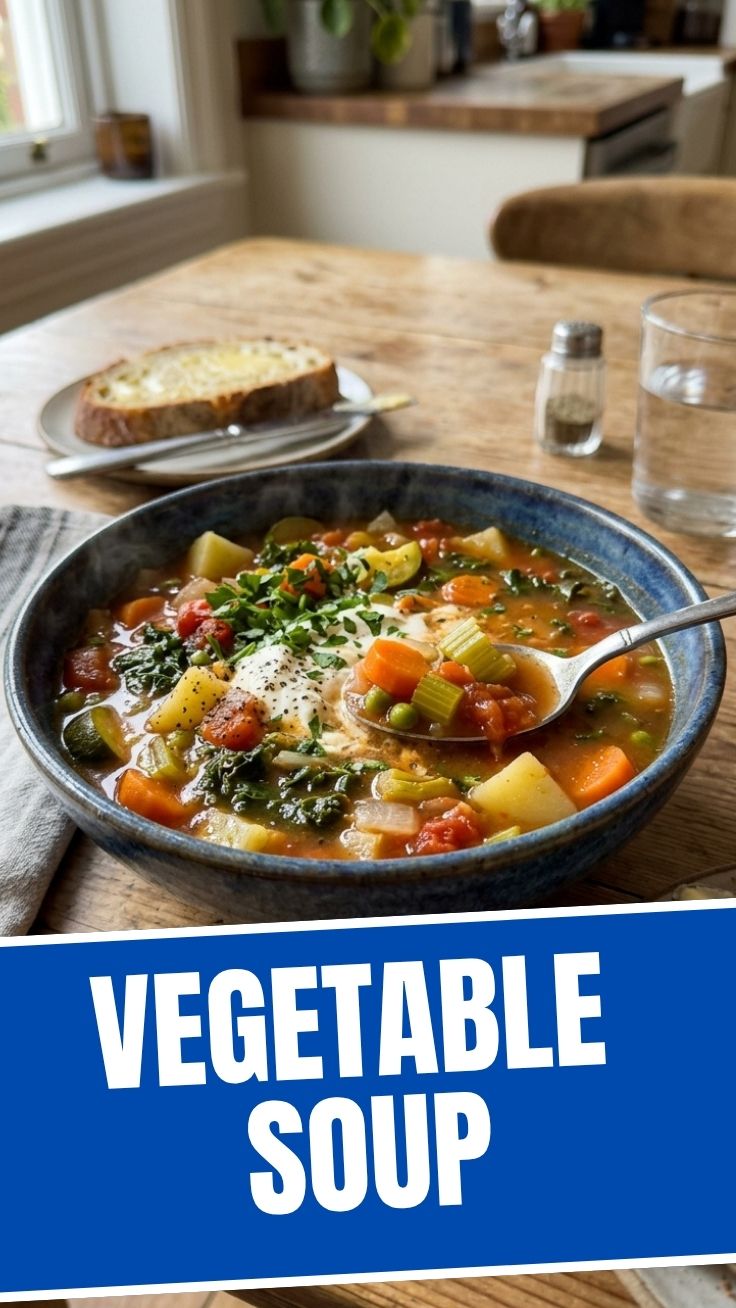
This recipe is surprisingly quick and straightforward, perfect for a weeknight dinner or a leisurely weekend meal prep.
- Prep Time: 20 minutes (mostly chopping!)
- Cook Time: 30-35 minutes
- Total Time: Approximately 50-55 minutes
Plan to have all your vegetables prepped and ready before you start cooking, as this significantly streamlines the process. The passive simmering time allows for flavors to meld beautifully, creating a rich and complex broth.
Step-by-Step Instructions
Follow these steps carefully to achieve a flavorful and satisfying Vegetable Soup.
1. Sauté Aromatics: Heat the olive oil in your large Dutch oven or stockpot over medium heat. Add the chopped onion, carrots, and celery. Sauté for 5-7 minutes, stirring occasionally, until the vegetables begin to soften and become fragrant. This step is crucial for building a foundational flavor.
2. Add Garlic & Seasonings: Stir in the minced garlic, dried thyme, and dried rosemary. Cook for another minute until fragrant, being careful not to burn the garlic.
3. Introduce Liquids & Tomatoes: Pour in the vegetable broth and diced tomatoes (undrained). Add the bay leaf. Bring the mixture to a gentle boil, then reduce the heat to low, cover, and simmer for 15 minutes to allow the flavors to deepen.
4. Incorporate Remaining Vegetables & Pasta: Add the diced zucchini, green beans, and small pasta to the pot. Continue to simmer, stirring occasionally, for another 10-15 minutes, or until the pasta is al dente and the vegetables are tender. At this stage, your kitchen should be filled with the wonderful aroma of a simmering Hearty Vegetable Soup.
5. Season and Finish: Remove the bay leaf. Taste the soup and season generously with salt and freshly ground black pepper. Stir in the fresh parsley just before serving for a burst of freshness.
Nutritional Benefits & Advantages
This Vegetable Soup is a powerhouse of nutrition. It’s naturally low in calories and fat, yet incredibly filling due to its high fiber content from the variety of vegetables. Carrots provide beta-carotene (Vitamin A), celery offers antioxidants, and tomatoes are rich in lycopene. The inclusion of green beans and zucchini adds essential vitamins and minerals. It’s an excellent way to incorporate more vegetables into your diet, promote digestive health, and boost overall well-being.
Tips, Variations & Cooking Advice
- Flavor Boost: For an extra layer of umami, sauté 1/2 cup of sliced mushrooms along with the initial aromatics.
- Spice It Up: Add a pinch of red pepper flakes with the garlic for a subtle kick.
- Creamy Texture: For a creamier soup, blend about 1-2 cups of the finished soup with an immersion blender (or transfer to a regular blender and blend carefully) and then return it to the pot. Alternatively, stir in a splash of plant-based milk or heavy cream at the end.
- Ingredient Swaps: Feel free to substitute any of the vegetables with what you have on hand or what’s in season. Spinach, kale, bell peppers, or potatoes are all excellent additions.
- Gluten-Free: Ensure your vegetable broth is gluten-free and use a gluten-free pasta or substitute with quinoa or rice.
Common Mistakes to Avoid
- Overcooking Vegetables: Simmering for too long can turn your vibrant vegetables into mush. Add them in stages, considering their cooking times.
- Skimping on Seasoning: Vegetables need proper seasoning to truly shine. Taste and adjust salt and pepper throughout the process.
- Not Sautéing Aromatics: Skipping the initial sauté of onions, carrots, and celery will result in a less flavorful broth. Develop that flavor base!
- Forgetting the Bay Leaf: While small, a bay leaf adds a subtle, complex savory note that elevates the soup. Remember to remove it before serving.
Storage & Meal Prep Tips
This Vegetable Soup is fantastic for meal prep!
- Refrigeration: Store cooled soup in an airtight container in the refrigerator for up to 3-4 days.
- Freezing: This soup freezes beautifully. Allow it to cool completely, then transfer to freezer-safe containers or bags, leaving some headspace for expansion. It can be frozen for up to 3 months.
- Reheating: Reheat gently on the stovetop over medium-low heat, stirring occasionally, until heated through. If it’s too thick, add a splash of vegetable broth or water.
Conclusion
Crafting a wholesome and delicious Vegetable Soup from scratch is a rewarding experience that offers a perfect balance of flavor, nutrition, and comfort. This Hearty Vegetable Soup recipe, with its simple steps and versatile ingredients, demonstrates just how easy it is to bring a truly satisfying meal to your table. We encourage you to try this recipe, experiment with your favorite vegetables, and share your delightful results! What’s your go-to ingredient for adding an extra special touch to your vegetable soup?
FAQs
Q1: Can I make this soup in a slow cooker?
A1: Yes! Sauté the aromatics on the stovetop first, then transfer them to the slow cooker with the remaining ingredients (except pasta and fresh parsley). Cook on low for 6-8 hours or high for 3-4 hours. Add the pasta during the last 30 minutes of cooking.
Q2: How can I make this soup thicker?
A2: You can blend a portion of the soup with an immersion blender, or mash some of the potatoes if you’ve added them. Alternatively, create a slurry with a tablespoon of cornstarch mixed with a little cold water and stir it into the simmering soup until thickened.
Q3: What are some good protein additions?
A3: Canned white beans (cannellini or garbanzo), lentils, cooked chicken, or ground turkey would all be excellent protein enhancements. Add beans or lentils with the broth, and cooked meat towards the end to simply warm through.
Q4: Can I use fresh herbs instead of dried?
A4: Absolutely! As a general rule, use three times the amount of fresh herbs compared to dried herbs (e.g., 1 tablespoon fresh for 1 teaspoon dried). Add fresh herbs towards the end of cooking to preserve their vibrant flavor.