Unlock Culinary Magic: Your Ultimate Guide to Perfect Lemon Garlic Chicken
Ever wondered how to transform simple ingredients into a dish that explodes with flavor and leaves everyone asking for more? The answer lies in the incredible power of a perfectly executed Lemon Garlic Chicken. This classic, yet effortlessly elegant, dish isn’t just about dinner; it’s about creating a memorable culinary experience right in your own kitchen. Preparing delicious lemon garlic chicken recipes at home offers unparalleled control over ingredients, ensuring fresh, wholesome meals tailored to your family’s tastes. Say goodbye to bland weeknight dinners and hello to a vibrant, aromatic feast that’s surprisingly easy to master.
Ingredients & Kitchen Tools
To embark on your journey to a fantastic Lemon Garlic Chicken, gather these essential items:
- 1.5-2 lbs Boneless, Skinless Chicken Thighs or Breasts: Thighs offer more flavor and moisture; breasts are leaner.
- 4-5 Cloves Garlic, Minced: The heart of the aroma and flavor. Don’t skimp!
- 1/4 Cup Fresh Lemon Juice: About 2-3 lemons; essential for brightness and tenderizing.
- 2 Tablespoons Olive Oil: Good quality extra virgin for flavor, or regular for higher smoke point.
- 1 Teaspoon Dried Oregano: Adds a lovely Mediterranean note.
- 1/2 Teaspoon Dried Thyme: Complements the lemon and garlic beautifully.
- Salt and Freshly Ground Black Pepper, to taste: Season generously to enhance all flavors.
- Fresh Parsley, Chopped (for garnish): Adds a pop of color and freshness.
- Optional: Lemon Slices (for garnish/roasting): Enhances presentation and adds more lemon zest.
- Large Mixing Bowl: For marinating the chicken.
- Heavy-Bottomed Skillet or Roasting Pan: Cast iron or oven-safe for searing and baking.
- Tongs: For handling hot chicken safely.
- Whisk: For emulsifying the marinade.
- Cutting Board & Sharp Knife: For preparing chicken, garlic, and herbs.
- Meat Thermometer: Ensures chicken is cooked through to 165°F (74°C).
Prep Time & Cooking Schedule
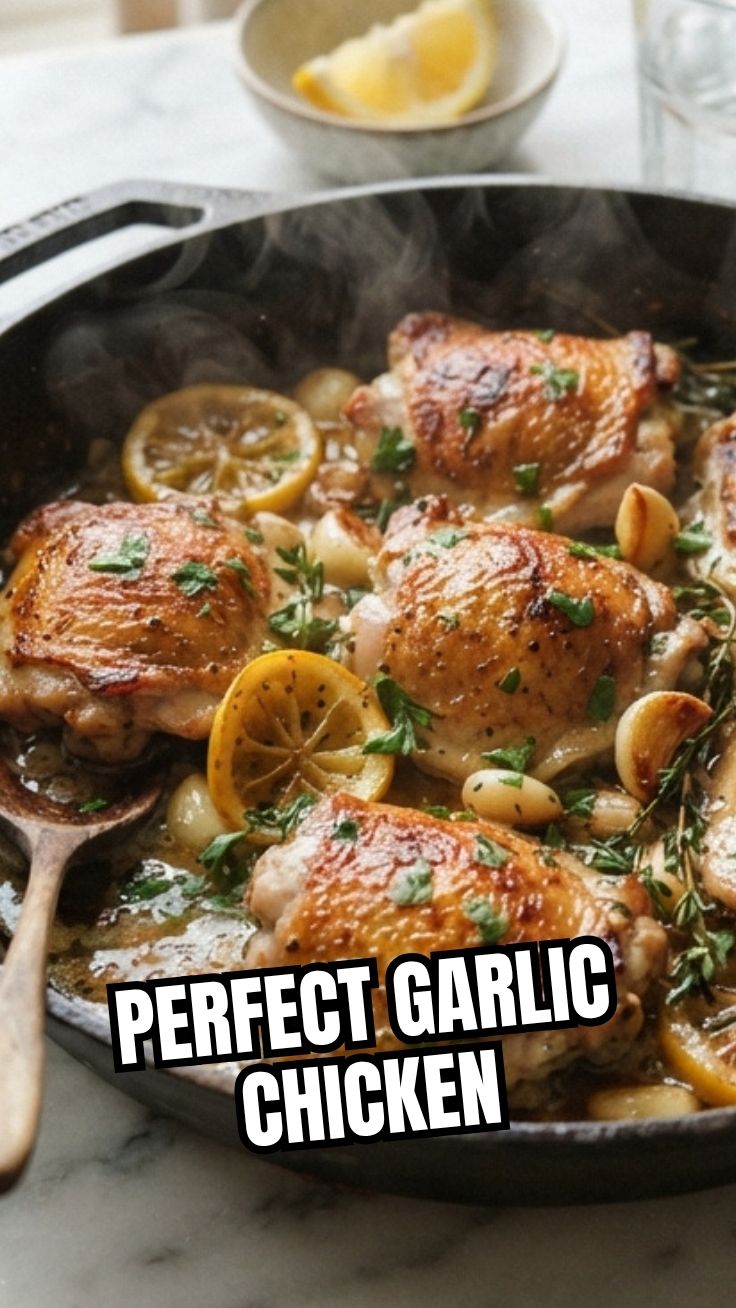
Planning is key for a stress-free cooking experience. This Lemon Garlic Chicken dish is relatively quick but benefits from a little foresight.
- Prep Time: 15 minutes (active chopping and mixing)
- Marinating Time: 30 minutes (minimum, for flavor infusion) up to 4 hours (for deeper flavor and tenderness). If short on time, even 15 minutes is better than none!
- Cook Time: 20-25 minutes (depending on thickness of chicken and cooking method)
- Resting Time: 5 minutes (crucial for juicy chicken)
For best results, aim to marinate the chicken for at least an hour. This allows the lemon and garlic to truly permeate the meat, resulting in a more flavorful and tender final product.
Step-by-Step Instructions
1. Prepare the Chicken: Pat your chicken thighs or breasts dry with paper towels. This helps achieve a better sear. Trim any excess fat.
2. Make the Marinade: In a large mixing bowl, whisk together the minced garlic, fresh lemon juice, olive oil, dried oregano, dried thyme, salt, and black pepper.
3. Marinate the Chicken: Add the chicken to the bowl, ensuring each piece is thoroughly coated with the marinade. Cover the bowl and refrigerate for at least 30 minutes, or up to 4 hours.
4. Preheat & Sear: If using a skillet, preheat it over medium-high heat with a tablespoon of olive oil until shimmering. For roasted Lemon Garlic Chicken, preheat your oven to 400°F (200°C). Remove chicken from marinade, letting excess drip off. Sear chicken for 3-4 minutes per side until golden brown, creating that beautiful crust.
5. Finish Cooking:
* Skillet Method: Reduce heat to medium-low, cover, and cook for another 8-12 minutes, or until internal temperature reaches 165°F (74°C).
* Oven Method (for more lemon garlic chicken recipes): Transfer seared chicken (and any pan juices) to a baking dish. Bake for 10-15 minutes, or until an internal temperature of 165°F (74°C) is reached.
6. Rest & Serve: Remove chicken from heat and let it rest on a cutting board for 5 minutes before slicing. This allows the juices to redistribute, ensuring moist, tender chicken. Garnish with fresh parsley and lemon slices.
Nutritional Benefits & Advantages
This Lemon Garlic Chicken is not only delicious but also packed with health benefits. Chicken is an excellent source of lean protein, essential for muscle repair and growth. Garlic is a powerful antioxidant known for its immune-boosting and anti-inflammatory properties. Lemons provide a burst of Vitamin C, vital for skin health and immunity. The healthy fats from olive oil contribute to heart health. This dish is naturally gluten-free and can easily be made dairy-free, making it suitable for various dietary needs.
Tips, Variations & Cooking Advice
- Spice It Up: Add a pinch of red pepper flakes to the marinade for a subtle kick.
- Herb Power: Experiment with fresh rosemary or dill instead of, or in addition to, oregano and thyme.
- Creamy Twist: Stir in a tablespoon of heavy cream or coconut milk at the end to create a rich, creamy lemon garlic sauce.
- Veggie Boost: Roast vegetables like asparagus, broccoli, or bell peppers alongside the chicken in the same pan for a complete sheet pan meal.
- Grilled Version: This marinade is fantastic for grilling! Grill chicken over medium-high heat for 4-6 minutes per side, or until cooked through.
- Dietary Adaptations: For a low-carb option, serve with cauliflower rice or zoodles.
Common Mistakes to Avoid
- Overcooking: The biggest culprit for dry chicken. Use a meat thermometer to ensure it reaches 165°F (74°C) and no higher.
- Not Patting Chicken Dry: This prevents a good sear and a flavorful crust.
- Skipping the Rest: Resting allows juices to settle back into the meat, resulting in much juicier chicken.
- Using Bottled Lemon Juice: Freshly squeezed makes a world of difference in flavor.
- Overcrowding the Pan: If searing, cook chicken in batches if necessary to avoid steaming instead of searing.
Storage & Meal Prep Tips
Leftover Lemon Garlic Chicken is fantastic for meal prep!
- Refrigeration: Store cooked chicken in an airtight container in the refrigerator for up to 3-4 days.
- Freezing: For longer storage, freeze cooked and cooled chicken in a freezer-safe bag or container for up to 2-3 months. Thaw overnight in the refrigerator before reheating.
- Reheating: Reheat gently in the microwave, oven (at 325°F/160°C until warmed through), or on the stovetop with a splash of broth to prevent drying out. Sliced chicken reheats faster and more evenly.
Conclusion
Mastering the art of Lemon Garlic Chicken is a truly rewarding experience, opening up a world of versatile and delicious meal possibilities. With its vibrant flavors, tender texture, and straightforward preparation, it’s no wonder this dish remains a favorite among home cooks. By following these simple steps and incorporating our expert tips, you’ll be creating mouthwatering lemon garlic chicken recipes that impress every time. Don’t hesitate—give this recipe a try tonight and share your culinary successes with us!
FAQs
Q1: Can I use chicken with bones and skin?
A1: Absolutely! Bone-in, skin-on chicken will yield even more flavor and juiciness. Adjust cooking time accordingly (it will take longer) and ensure it reaches 165°F (74°C) internally.
Q2: What can I serve with Lemon Garlic Chicken?
A2: This dish pairs beautifully with roasted potatoes, rice pilaf, quinoa, a fresh green salad, steamed asparagus, or sautéed spinach.
Q3: My chicken always turns out dry. What am I doing wrong?
A3: The most common reasons are overcooking (not using a meat thermometer) or not letting the chicken rest after cooking. Ensure you cook only to 165°F (74°C) and let it rest for at least 5 minutes.
Q4: Can I prepare this recipe ahead of time for meal prep?
A4: Yes! Cooked Lemon Garlic Chicken can be stored in the refrigerator for 3-4 days and reheated. You can also marinate the chicken for up to 24 hours in advance.
Q5: What if I don’t have fresh herbs?
A5: While fresh herbs offer the best flavor, you can substitute with dried herbs. As a general rule, use one-third the amount of dried herbs compared to fresh (e.g., 1 tsp dried for 1 tbsp fresh).