Unlock the Golden Secret: Crafting the Perfect Homemade Cornbread
Ever wonder why some cornbread crumbles perfectly while others fall flat? The secret to a truly unforgettable Cornbread lies in understanding its fundamental elements and mastering a few simple techniques. Forget the dry, tasteless imitations you might have encountered; preparing authentic, moist, and flavorful cornbread at home is not only incredibly rewarding but surprisingly straightforward. This guide will walk you through creating a golden masterpiece that will elevate any meal, all while exploring various cornbread recipes to inspire your culinary journey.
Ingredients & Kitchen Tools
Crafting the perfect cornbread relies on a handful of simple ingredients and basic kitchen essentials.
- Yellow Cornmeal (fine or medium grind): The star of the show. Choose high-quality cornmeal for superior flavor and texture. Avoid instant or self-rising varieties unless specified.
- All-Purpose Flour: Provides structure and tenderizes the crumb. A gluten-free flour blend can be substituted for a dietary adaptation.
- Baking Powder: Leavening agent that helps the cornbread rise and become fluffy.
- Baking Soda: Reacts with buttermilk (or other acidic ingredients) to create air pockets for a lighter texture.
- Salt: Enhances all the other flavors.
- Granulated Sugar (optional, or to taste): Adds a touch of sweetness; adjust based on preference. Southern-style cornbread is often less sweet.
- Buttermilk: Provides moisture, tang, and reacts with baking soda for lift. If unavailable, combine regular milk with a tablespoon of white vinegar or lemon juice and let sit for 5 minutes.
- Large Eggs (room temperature): Bind the ingredients and add richness.
- Unsalted Butter (melted): Adds flavor and moisture. Vegetable oil can be a substitute for a dairy-free option.
- Cast Iron Skillet (10-inch) or 9×9 inch baking pan: Essential for achieving that coveted crispy crust. Preheating the pan with butter or oil is key.
- Mixing Bowls (large and medium): For wet and dry ingredients.
- Whisk: To combine dry ingredients evenly.
- Spatula or Wooden Spoon: For mixing the batter.
- Measuring Cups & Spoons: For accurate ingredient portions.
Prep Time & Cooking Schedule
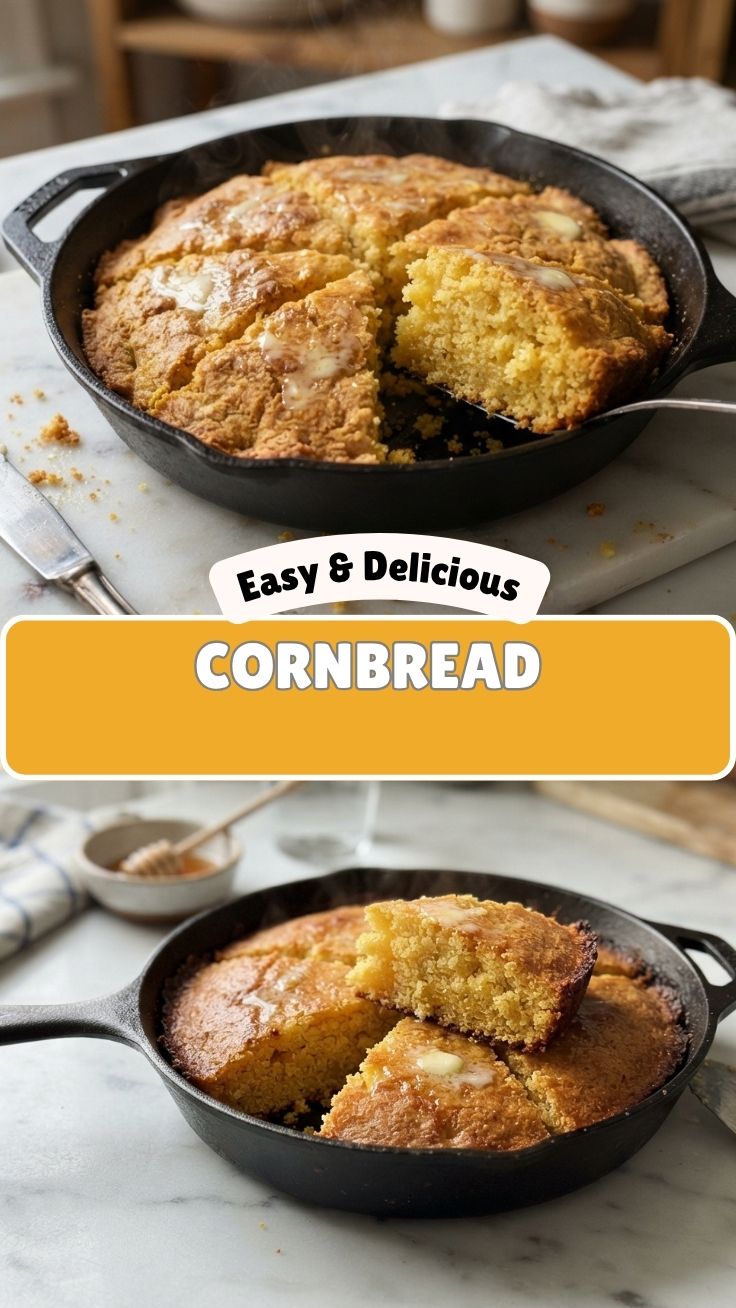
This Cornbread recipe is designed for ease and efficiency, making it perfect for a weeknight side dish or a last-minute potluck contribution.
- Prep Time: 10-15 minutes (includes gathering ingredients and preheating the oven/skillet).
- Cook Time: 20-25 minutes (until golden brown and a toothpick inserted comes out clean).
- Resting Time: 5-10 minutes (allows the cornbread to set and cool slightly before slicing, preventing crumbling). This schedule ensures that your warm, delightful cornbread can be on the table in under 45 minutes from start to finish.
Step-by-Step Instructions
Follow these steps for a perfectly golden and tender Cornbread:
1. Preheat Oven & Skillet: Preheat your oven to 400°F (200°C). Place your cast iron skillet (or baking pan) in the oven with 2 tablespoons of butter or oil to heat up while the oven preheats. This creates an incredibly crispy crust.
2. Combine Dry Ingredients: In a large bowl, whisk together the cornmeal, flour, baking powder, baking soda, salt, and sugar (if using). Ensure they are thoroughly combined to prevent pockets of leavening agents.
3. Combine Wet Ingredients: In a separate medium bowl, whisk the buttermilk and eggs until well combined. Gradually whisk in the melted butter.
4. Combine Wet and Dry: Pour the wet ingredients into the dry ingredients. Mix with a spatula or wooden spoon just until combined. Do not overmix! A few lumps are perfectly fine; overmixing develops gluten, leading to tough cornbread. This step is crucial for many cornbread recipes.
5. Pour into Hot Skillet: Carefully remove the hot skillet from the oven. Swirl the melted butter/oil around to coat the bottom and sides, then pour the batter evenly into the hot skillet. The batter should sizzle lightly.
6. Bake: Bake for 20-25 minutes, or until the cornbread is golden brown around the edges and a toothpick inserted into the center comes out clean.
7. Cool & Serve: Let the cornbread cool in the skillet for 5-10 minutes before slicing and serving. This allows it to set and prevents it from crumbling.
Nutritional Benefits & Advantages
Cornbread, especially when made with whole grain cornmeal, offers several nutritional benefits. It’s a good source of dietary fiber, which aids digestion and can help regulate blood sugar levels. Cornmeal also provides essential B vitamins like thiamine, riboflavin, and niacin, crucial for energy metabolism. Furthermore, this simple bread is naturally gluten-free if made without wheat flour (or with a dedicated GF blend), making it a versatile option for those with dietary restrictions. The healthy fats from butter (or oil) contribute to satiety, and the moderate protein from eggs adds to its nutritional profile.
Tips, Variations & Cooking Advice
- Sweet vs. Savory: For a sweeter cornbread, increase the sugar to ¼ cup. For a more savory, traditional Southern style, omit the sugar or use only a tablespoon.
- Add-ins: Incorporate ½ cup of shredded cheddar cheese, diced jalapeños, cooked and crumbled bacon, or a handful of fresh corn kernels for flavor variations.
- Dairy-Free: Substitute the buttermilk with a plant-based milk + 1 tbsp vinegar and use a neutral oil (like canola or grapeseed) instead of butter.
- Gluten-Free: Ensure you use a certified gluten-free cornmeal and an all-purpose gluten-free flour blend.
- Crispier Crust: For an extra crispy bottom, ensure your skillet is scorching hot when the batter goes in. Some chefs even melt a tablespoon of bacon grease in the skillet for added flavor and crispness.
- Muffin Form: Pour the batter into a greased muffin tin and reduce baking time to 15-20 minutes for individual cornbread muffins.
Common Mistakes to Avoid
Overmixing the Batter: This is the cardinal sin of cornbread! Overmixing develops the gluten in the flour, resulting in a tough, rubbery texture. Mix just* until the dry ingredients are incorporated into the wet.
- Not Preheating the Skillet: A cold skillet will prevent that desirable crispy, golden crust. Always preheat your cast iron skillet with fat in the oven.
- Underbaking: An underbaked cornbread will be gummy and prone to crumbling. Bake until a toothpick comes out clean and the top is golden.
- Ingredient Temperature: Using room temperature eggs and buttermilk helps them incorporate more smoothly into the batter, leading to a better texture.
Storage & Meal Prep Tips
Leftover cornbread is a treasure!
- Refrigeration: Store cooled cornbread in an airtight container at room temperature for up to 2-3 days, or in the refrigerator for up to 5 days.
- Freezing: For longer storage, wrap individual slices or the whole loaf tightly in plastic wrap, then an additional layer of aluminum foil. Freeze for up to 3 months. Thaw at room temperature or reheat directly from frozen.
- Reheating: To maintain its deliciousness, reheat slices in a toaster oven, a warm skillet, or a conventional oven at 300°F (150°C) until warmed through and the crust has re-crisped slightly. Avoid microwaving, as it can make the cornbread soggy.
- Meal Prep: Bake a batch of cornbread at the beginning of the week to serve as a quick side, a base for breakfast with eggs, or cubed into salads.
Conclusion
Mastering homemade Cornbread is a culinary triumph that opens doors to a world of delicious possibilities. From simple dinner accompaniments to the star of a hearty cornbread dressing, its versatility is unmatched. By following these clear steps and incorporating our expert tips, you’re well on your way to baking a perfect, golden loaf every time. Don’t be afraid to experiment with different cornbread recipes and make this classic your own. We encourage you to try this recipe and share your results in the comments below! What are your favorite cornbread variations?
FAQs
Q1: Can I use white cornmeal instead of yellow?
A1: Yes, absolutely! White cornmeal will result in a lighter-colored cornbread with a slightly milder, less “corny” flavor. The texture and baking method remain the same.
Q2: My cornbread came out dry. What went wrong?
A2: Overbaking is the most common cause of dry cornbread. Check for doneness earlier next time, and ensure you’re not overmixing the batter, which can also contribute to a tougher, drier texture.
Q3: Can I make this recipe in a regular baking pan?
A3: Yes, a 9×9 inch square baking pan or an 8-inch round cake pan will work. For the crispiest crust, still preheat the pan with butter or oil before adding the batter. A cast iron skillet is preferred for its heat retention and even cooking.
Q4: How can I make my cornbread sweeter?
A4: You can increase the sugar content up to ¼ cup for a sweeter result. Honey or maple syrup can also be added to the wet ingredients for a different kind of sweetness, but consider that liquid sweeteners might slightly alter the texture.