Unlock Authentic Flavors: Master the Art of Homemade Chicken Satay with Peanut Sauce
Have you ever dreamt of recreating the vibrant and aromatic flavors of your favorite Southeast Asian dishes in your own kitchen? Well, get ready to turn that dream into a delicious reality! Today, we’re diving into the delightful world of Chicken Satay with Peanut Sauce. This iconic dish, known for its succulent grilled chicken and rich, creamy sauce, is surprisingly accessible for home cooks. Preparing it yourself not only offers the joy of a truly fresh and personalized meal but also allows you to control the quality of your ingredients, ensuring a healthier and more flavorful experience than any takeout. Forget bland imitations; with our comprehensive guide, you’ll unlock the secrets to a perfect homemade satay, complete with an incredibly delectable peanut sauce recipe that will have everyone asking for your secret!
Ingredients & Kitchen Tools
Gather your culinary arsenal! Here’s what you’ll need to create this culinary masterpiece:
- For the Chicken Satay:
* 1.5 lbs Boneless, Skinless Chicken Thighs or Breasts: Thighs are recommended for juicier results, while breasts offer a leaner option. Cut into 1-inch strips.
* 1 tbsp Lemongrass, minced: Adds a distinct citrusy and fragrant aroma. Available in the produce section, or use paste for convenience.
* 1 tbsp Fresh Ginger, minced: Provides a warm, spicy kick.
* 2 cloves Garlic, minced: Essential for savory depth.
* 1 tsp Turmeric Powder: Imparts a beautiful golden color and earthy flavor.
* 1 tsp Ground Coriander: Adds a warm, citrusy note.
* ½ tsp Cumin Powder: Earthy and slightly peppery.
* 2 tbsp Soy Sauce (or Tamari for gluten-free): Adds umami and saltiness.
* 1 tbsp Fish Sauce (optional, but recommended): Enhances authentic Southeast Asian flavor.
* 1 tbsp Brown Sugar (or Coconut Sugar): Balances the savory elements and aids in caramelization.
* 1 tbsp Vegetable Oil (or preferred cooking oil): For grilling the chicken.
* Wooden or Metal Skewers: If using wooden, soak them in water for at least 30 minutes to prevent burning.
- For the Peanut Sauce:
* ½ cup Creamy Peanut Butter: The star of the show. Choose natural, unsweetened for best results.
* 2-3 tbsp Hot Water (or Coconut Milk): Adjust consistency as needed.
* 1 tbsp Soy Sauce (or Tamari): For savory depth.
* 1 tbsp Rice Vinegar: Adds a tangy brightness.
* 1 tbsp Honey or Maple Syrup: Balances the flavors with sweetness.
* 1 tsp Sriracha or Chili Garlic Sauce (optional): For a touch of heat.
* 1 clove Garlic, minced: Enhances the savory profile.
* ½ tsp Fresh Ginger, minced: Aromatic and slightly spicy.
* Juice of ½ Lime: Adds a crucial fresh, zesty finish.
- Kitchen Tools: Mixing bowls, whisk, cutting board, sharp knife, grill (indoor electric or outdoor), tongs, and a small saucepan (for the sauce).
Prep Time & Cooking Schedule
- Prep Time: 20-25 minutes (includes chopping ingredients and assembling skewers)
- Marinating Time: Minimum 30 minutes, ideally 2-4 hours, or even overnight for maximum flavor infusion. This step is crucial for tender, flavorful chicken.
- Cook Time: 10-15 minutes (grilling)
- Sauce Prep: 5 minutes
Total Time (Hands-on): Approximately 40-45 minutes (excluding Marinating Time)
To plan your meal, prepare the marinade and chicken in the morning or the night before. This allows the flavors to truly meld. The peanut sauce recipe can also be made ahead of time and stored in the refrigerator, making dinner assembly a breeze.
Step-by-Step Instructions
1. Prepare the Chicken Marinade: In a large bowl, combine the minced lemongrass, ginger, garlic, turmeric, coriander, cumin, soy sauce, fish sauce (if using), brown sugar, and vegetable oil. Mix well. Add the cut chicken strips to the bowl and toss to ensure each piece is thoroughly coated. Cover and refrigerate for at least 30 minutes, or preferably longer.
2. Soak Skewers (if using wooden): While the chicken marinates, soak your wooden skewers in water. This prevents them from burning on the grill.
3. Thread the Chicken: Once marinated, thread the chicken strips onto the prepared skewers. Don’t pack them too tightly; leave a little space for even cooking.
4. Prepare the Peanut Sauce: In a small saucepan or microwave-safe bowl, combine the peanut butter, hot water (start with 2 tbsp and add more if needed), soy sauce, rice vinegar, honey/maple syrup, sriracha (if desired), minced garlic, and minced ginger. Whisk until smooth and creamy. If using a saucepan, gently heat over low heat, stirring constantly, until warm and the desired consistency is reached. Stir in the lime juice at the end. For an authentic and incredibly flavorful peanut sauce recipe, taste and adjust seasonings – you might want more heat, sweetness, or tanginess depending on your preference.
5. Grill the Chicken Satay with Peanut Sauce: Preheat your grill (outdoor or indoor) to medium-high heat. Lightly oil the grates. Place the chicken skewers on the hot grill. Cook for 2-4 minutes per side, turning occasionally, until the chicken is golden brown, cooked through, and has nice char marks. The internal temperature should reach 165°F (74°C).
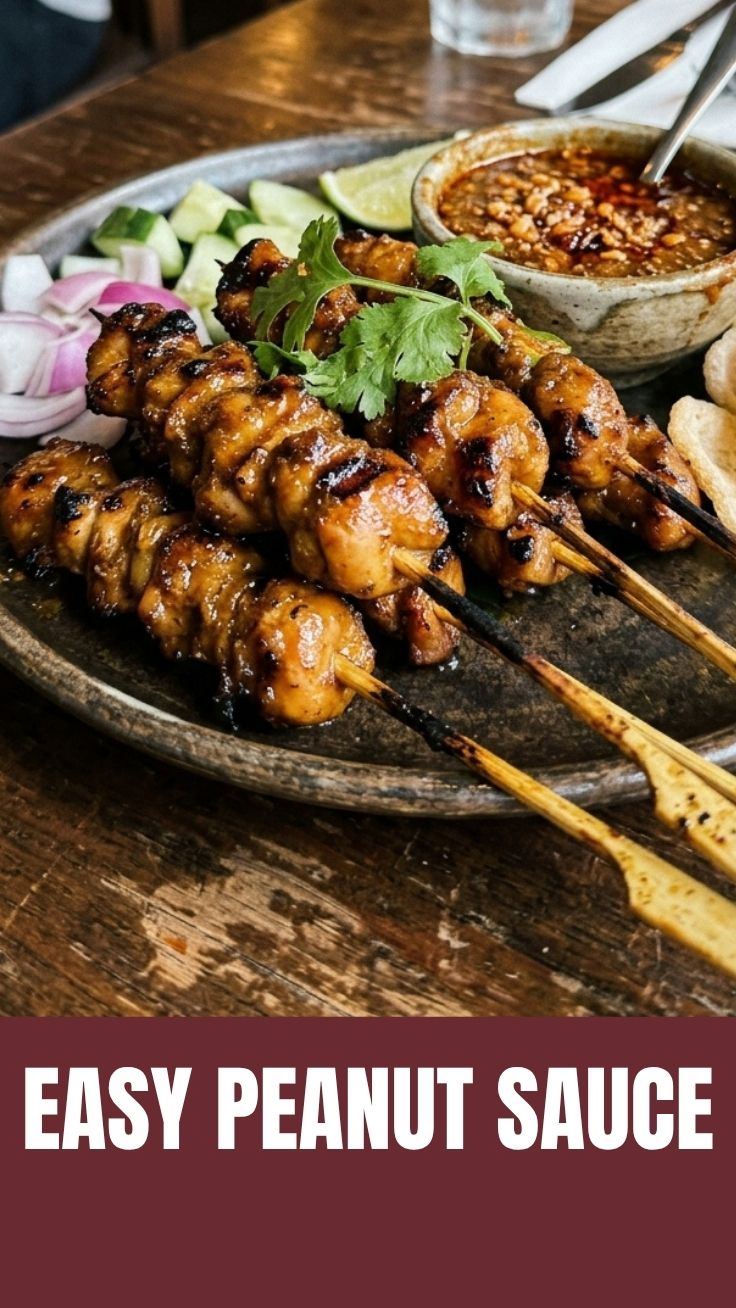
6. Serve: Arrange the grilled satay on a platter and serve immediately with the warm peanut sauce for dipping. Garnish with chopped fresh cilantro or crushed peanuts if desired.
Nutritional Benefits & Advantages
This homemade satay dish offers several nutritional perks. Chicken is an excellent source of lean protein, essential for muscle repair and growth. Turmeric, a key ingredient in the marinade, is celebrated for its powerful anti-inflammatory properties. Peanut butter, while calorie-dense, provides healthy monounsaturated fats, protein, and dietary fiber. By making it at home, you control the amount of sugar and sodium, avoiding the excessive levels often found in restaurant versions. Plus, using fresh ingredients like ginger, garlic, and lemongrass adds a vital boost of vitamins and antioxidants.
Tips, Variations & Cooking Advice
- Spice Level: Adjust the sriracha or chili garlic sauce in the peanut sauce to your preferred heat. For a milder version, omit it entirely.
- Protein Swaps: This marinade works wonderfully with shrimp, firm tofu, or even beef strips for different protein options. Adjust cooking times accordingly.
- Vegetarian/Vegan: Replace chicken with extra-firm tofu or tempeh, pressed and cut into strips. Ensure to use tamari instead of soy sauce for a gluten-free option, and coconut sugar/maple syrup instead of honey for vegan.
- Cooking Methods: If you don’t have a grill, you can cook the satay in a hot pan (cast iron works great!) or bake it in the oven at 400°F (200°C) for 15-20 minutes, flipping halfway.
- Serving Suggestions: Serve with steamed jasmine rice, a fresh cucumber salad, or a simple side of blanched green beans for a complete meal.
Common Mistakes to Avoid
- Overcooking the Chicken: This is the most common mistake! Overcooked chicken becomes dry and tough. Use a meat thermometer to ensure it reaches 165°F (74°C) and then remove it promptly from the heat.
- Not Soaking Wooden Skewers: This leads to burnt, splintered skewers that can ruin your presentation and potentially release unwanted flavors.
- Bland Marinade: Don’t skimp on the marinating time. The longer the chicken soaks in the aromatic marinade, the more flavorful and tender it will be.
- Thin or Lumpy Peanut Sauce: Adjust the hot water or coconut milk in the peanut sauce gradually until you achieve a smooth, rich, and dippable consistency.
- Not Tasting and Adjusting: Always taste your marinade and sauce! Seasonings, especially saltiness and acidity, can vary. Adjust to your palate before serving.
Storage & Meal Prep Tips
Leftover Chicken Satay can be stored in an airtight container in the refrigerator for up to 3-4 days. The peanut sauce can also be stored separately in an airtight container in the fridge for up to a week. To reheat the chicken, gently warm it in a microwave or a pan over medium heat until just heated through to prevent drying it out. The sauce might thicken in the fridge; simply add a teaspoon or two of hot water or coconut milk and whisk to restore its creamy consistency. This dish is excellent for meal prep, as both components can be made ahead of time and assembled quickly.
Conclusion
Creating delicious, restaurant-quality dishes like this Chicken Satay with Peanut Sauce at home is not only rewarding but empowers you to tailor flavors to your exact liking. We hope this guide has inspired confidence in your culinary journey. With its perfect balance of savory, sweet, and tangy, beautifully complemented by an easy-to-follow peanut sauce recipe, this dish is sure to become a cherished favorite in your repertoire. Don’t hesitate – give it a try tonight! We’d love to hear about your experience in the comments below, or share your culinary creations with us!
FAQs
Q1: Can I make the peanut sauce ahead of time?
A1: Absolutely! The peanut sauce can be made up to a week in advance and stored in an airtight container in the refrigerator. You might need to add a splash of hot water or coconut milk and whisk it to loosen it up before serving.
Q2: What if I don’t have fresh lemongrass?
A2: If fresh lemongrass is unavailable, you can use 1 teaspoon of lemongrass paste (available in tubes in the produce section) as a substitute. If neither is available, you can omit it, but the flavor profile will be slightly different.
Q3: How can I make this dish spicier?
A3: To amp up the heat, increase the amount of sriracha or chili garlic sauce in the peanut sauce. You can also add a pinch of red pepper flakes to the chicken marinade.
Q4: Can I use different types of nuts for the sauce?
A4: While traditional satay uses peanuts, you can experiment with other nut butters like almond butter or cashew butter for a different flavor profile. Just be aware the taste will vary significantly.
Q5: Is it necessary to marinate the chicken for a long time?
A5: While a minimum of 30 minutes will still yield good results, marinating for 2-4 hours or even overnight truly allows the flavors to penetrate the chicken, resulting in a more tender and robustly flavored satay experience.