Elevate Your Dinner Game: The Ultimate Balsamic Chicken Experience
Tired of the same old weeknight dinners? Ready to infuse your culinary routine with a dish that’s both elegant and incredibly simple to prepare at home? Look no further than this magnificent Balsamic Chicken. This recipe isn’t just about cooking; it’s about transforming ordinary ingredients into an extraordinary meal that delights the senses and satisfies the soul. We’ll delve into how a rich balsamic glaze can elevate your chicken to new heights, proving that gourmet flavors are easily attainable right in your own kitchen. Prepare to impress yourself and your loved ones with a dish that promises both comfort and sophistication.
Ingredients & Kitchen Tools
Crafting the perfect Balsamic Chicken requires a thoughtfully curated selection of ingredients and the right tools. Here’s what you’ll need:
- 1.5 lbs Boneless, Skinless Chicken Thighs or Breasts: Thighs offer richer flavor and juicier results, while breasts are leaner.
- 2 tbsp Olive Oil: For searing the chicken and building a flavorful base.
- 3 cloves Garlic, minced: Adds aromatic depth to the sauce.
- 1/2 cup Balsamic Vinegar: The star of our balsamic glaze, providing tangy sweetness.
- 2 tbsp Brown Sugar (packed): To balance the acidity of the vinegar and create a rich caramelization.
- 1 tbsp Dijon Mustard: Adds a subtle tang and emulsifies the sauce.
- 1 tsp Dried Italian Seasoning: A blend of savory herbs like oregano, basil, and thyme.
- Salt and Black Pepper to taste: Essential for seasoning the chicken and sauce.
- Fresh Parsley, chopped (for garnish): Adds a touch of freshness and color.
- Optional: 1/4 cup Chicken Broth: To thin the sauce if desired, or for deglazing.
- Optional: 1 tbsp Cornstarch Slurry (1 tbsp cornstarch + 1 tbsp water): For a thicker glaze.
Kitchen Tools:
- Large Skillet (oven-safe preferred): For searing and simmering.
- Tongs: For handling chicken safely.
- Whisk: To combine sauce ingredients smoothly.
- Measuring Cups and Spoons: For accurate ingredient ratios.
- Cutting Board and Knife: For prepping chicken and garlic.
Prep Time & Cooking Schedule
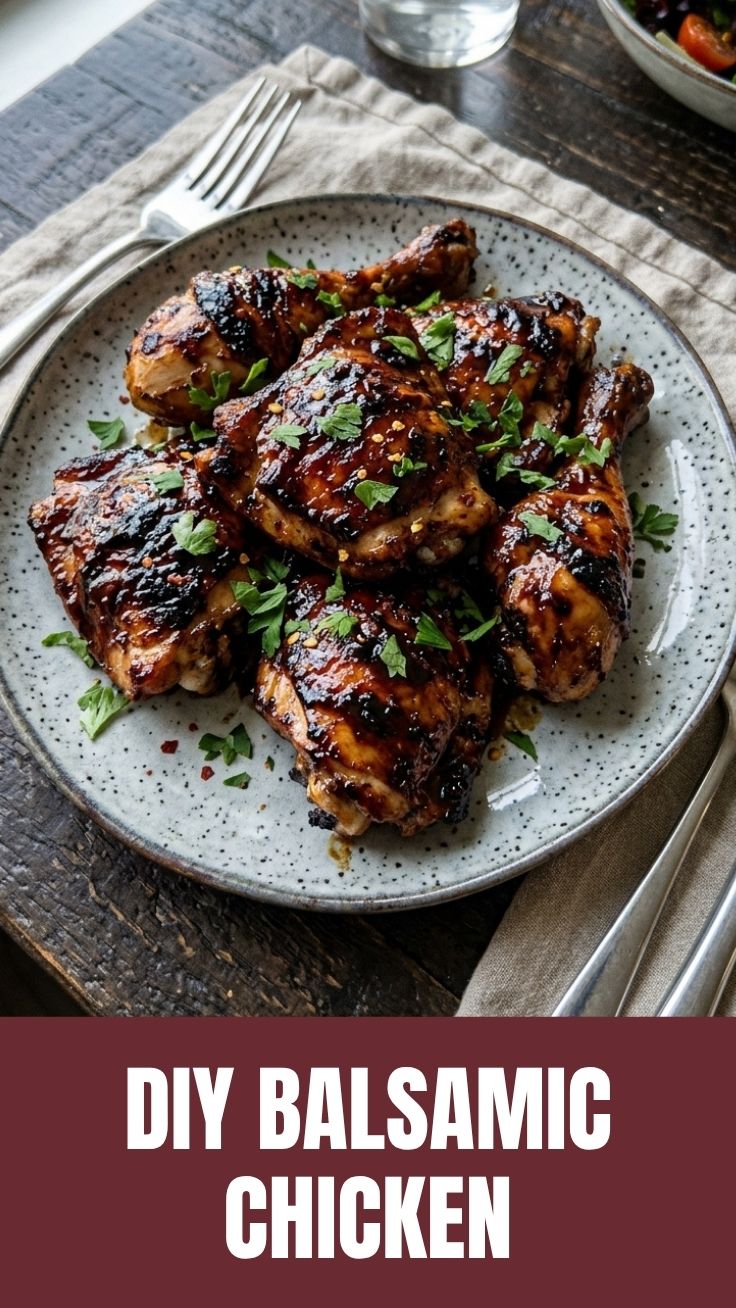
This Balsamic Chicken recipe is perfect for weeknights and weekend gatherings alike, thanks to its efficient timing.
- Prep Time: 15 minutes (Includes trimming chicken and mincing garlic)
- Cook Time: 20-25 minutes (Searing and simmering)
- Resting Time: 5 minutes (Allows juices to redistribute in the chicken)
Total Time: Approximately 40-45 minutes. This schedule allows for a quick marinade if you have extra time (30 minutes to an hour) but is not essential for a delicious result. Plan to have all your ingredients prepped before you start cooking to ensure a smooth, enjoyable process.
Step-by-Step Instructions
Let’s bring this flavorful Balsamic Chicken to life!
1. Prepare the Chicken: Pat the chicken pieces dry with paper towels. Season generously on both sides with salt, pepper, and Italian seasoning. This step is crucial for flavor development.
2. Sear the Chicken: Heat olive oil in a large skillet over medium-high heat. Once shimmering, add the chicken in a single layer, ensuring not to overcrowd the pan. Sear for 5-7 minutes per side, until golden brown and cooked through (internal temperature reaches 165°F/74°C). Remove chicken from the skillet and set aside on a plate, tented with foil.
3. Sauté Garlic: Reduce heat to medium. Add minced garlic to the skillet and sauté for 30 seconds until fragrant, being careful not to burn it. If the pan looks dry, add a touch more olive oil.
4. Deglaze and Create the Glaze: Pour in the balsamic vinegar, chicken broth (if using), brown sugar, and Dijon mustard. Bring to a simmer, scraping up any browned bits from the bottom of the pan to incorporate all that delicious flavor into your luscious balsamic glaze.
5. Thicken the Glaze (Optional): If you prefer a thicker glaze, whisk in the cornstarch slurry and simmer for another 1-2 minutes until the sauce thickens to your desired consistency.
6. Combine and Serve: Return the cooked chicken to the skillet, spooning the glaze over the top to coat thoroughly. Simmer for another 2-3 minutes to allow the flavors to meld. Garnish with fresh parsley before serving.
Nutritional Benefits & Advantages
This Balsamic Chicken offers more than just incredible flavor. Chicken provides a high-quality protein source, essential for muscle repair and growth. Balsamic vinegar, a key component of our rich glaze, contains antioxidants and may aid in digestion. The balance of protein, healthy fats from olive oil, and the modest sweetness of brown sugar creates a satisfying and nutrient-dense meal. Opting for chicken breasts reduces fat content, while thighs offer more iron and a richer flavor profile.
Tips Variations & Cooking Advice
- Spicy Kick: Add a pinch of red pepper flakes with the garlic for a touch of heat.
- Herbaceous Boost: Integrate fresh rosemary or thyme sprigs during the glaze simmering for an enhanced herbal aroma.
- Vegetable Medley: Sauté sliced bell peppers, onions, or cherry tomatoes along with the garlic for a one-pan meal.
- Gluten-Free: This recipe is naturally gluten-free.
- Dairy-Free: This recipe is naturally dairy-free.
- Marinade Magic: For extra tender chicken, marinate the seasoned chicken in 2 tablespoons of balsamic vinegar and 1 tablespoon of olive oil for at least 30 minutes before searing.
Common Mistakes to Avoid
- Overcrowding the Pan: This lowers the pan temperature, preventing proper searing and resulting in steamed, rather than browned, chicken. Work in batches if necessary.
- Skipping the Pat Dry: Moisture on the chicken skin prevents it from browning effectively. Always pat chicken dry.
- Burning the Garlic: Garlic cooks quickly; keep a close eye on it and adjust heat to prevent bitterness.
- Reducing the Glaze Too Much: If the glaze becomes too thick and syrupy, it can be too overpowering. Add a splash of water or chicken broth to thin it out if needed.
- Not Resting the Chicken: Resting allows the juices to redistribute, leading to more tender and flavorful chicken.
Storage & Meal Prep Tips
Leftover Balsamic Chicken is fantastic for meal prepping.
- Refrigeration: Store cooked chicken and glaze in an airtight container in the refrigerator for up to 3-4 days.
- Freezing: For longer storage, freeze in an airtight, freezer-safe container for up to 2-3 months. Thaw overnight in the refrigerator before reheating.
- Reheating: Gently reheat in a skillet over medium-low heat or in the microwave until warmed through. Add a splash of water or broth if the glaze has thickened too much. Serve with fresh rice, pasta, or roasted vegetables.
Conclusion
This Balsamic Chicken recipe demonstrates how effortlessly you can create a truly memorable meal at home. The rich, tangy sweetness of the balsamic glaze transforms simple chicken into a dish worthy of any occasion. We encourage you to try this recipe, experiment with the suggested variations, and savor the delicious results. Share your culinary creations with us – we love seeing how you make these recipes your own!
FAQs
Q1: Can I use chicken breasts instead of thighs?
A1: Absolutely! Chicken breasts work well, but you may need to adjust cooking times slightly as they cook faster. Be careful not to overcook them to maintain juiciness.
Q2: What can I serve with Balsamic Chicken?
A2: This dish pairs beautifully with mashed potatoes, roasted asparagus, steamed green beans, rice pilaf, or a simple side salad.
Q3: My balsamic glaze isn’t thickening. What should I do?
A3: Ensure you’ve allowed enough time for simmering. If it’s still too thin, create a cornstarch slurry (1 tbsp cornstarch mixed with 1 tbsp cold water) and whisk it into the simmering sauce. Stir constantly until it reaches your desired consistency.
Q4: Can I prepare the sauce in advance?
A4: Yes, you can prepare the balsamic glaze up to 2-3 days in advance and store it in the refrigerator. Reheat gently before adding to the cooked chicken.
Q5: Is there an alternative to brown sugar?
A5: You can use maple syrup or honey as alternatives to brown sugar, though they will slightly alter the flavor profile of the glaze. Start with a smaller amount and adjust to taste.