Unlock Authentic Flavors: Your Guide to Mastering Homemade Beef Bulgogi
Ever craved that tantalizing sweet and savory symphony of flavors found in your favorite Korean BBQ restaurant, but thought it was too complex to recreate at home? Think again! Preparing homemade Beef Bulgogi is not only incredibly rewarding but surprisingly accessible, bringing an explosion of umami and tenderness right to your dinner table. This iconic Korean dish, celebrated for its thinly sliced marinated beef, offers a delightful culinary adventure that’s perfect for both weeknight meals and special gatherings. By mastering this recipe, you’ll not only impress your taste buds but also gain a deeper appreciation for the nuanced artistry of Korean cuisine. Let’s dive into creating a dish that’s far more than just a meal; it’s an experience.
Ingredients & Kitchen Tools
To embark on your culinary journey to a perfect Beef Bulgogi, gather these essentials:
- For the Beef:
* 1 ½ lbs thinly sliced beef (ribeye or sirloin suggested): The hallmark of bulgogi. Thin slices ensure quick cooking and maximum flavor absorption. You can often find pre-sliced bulgogi beef at Asian markets.
- For the Marinade:
* ½ cup soy sauce: Provides the foundational savory, umami flavor. Use low-sodium if preferred.
* ¼ cup brown sugar: Balances the savory notes with a touch of sweetness, contributing to caramelization.
* 2 tablespoons sesame oil: Adds a distinctive nutty aroma and flavor. Don’t skip this!
* 2 tablespoons grated fresh ginger: Aromatic and pungent, it tenderizes the meat and adds zest.
* 3 cloves garlic, minced: Essential for that classic garlicky kick.
* ¼ cup grated Asian pear or apple: A traditional tenderizer and natural sweetener that deepens the flavor profile.
* 1 tablespoon gochujang (Korean chili paste, optional): For a subtle spicy kick. Adjust to your heat preference.
* 2 tablespoons mirin (sweet rice wine, optional): Enhances sweetness and adds a touch of acidity.
* ¼ cup water or beef broth: Helps create a saucier marinade.
- For Garnish/Serving:
* 1 tablespoon toasted sesame seeds: For an appealing finish and nutty crunch.
* 2 green onions, thinly sliced: Adds freshness and a mild oniony bite.
* Cooked rice: The perfect base for soaking up all the delicious sauce.
* Lettuce leaves: For traditional wraps, providing a fresh contrast.
* Kimchi: A classic accompaniment for an authentic experience.
- Kitchen Tools:
* Large mixing bowl: For marinating the beef.
* Whisk: To combine marinade ingredients smoothly.
* Large skillet or cast-iron griddle: For searing the beef. A cast-iron pan provides excellent heat retention for a good sear.
* Tongs or spatula: For flipping the meat.
* Cutting board and sharp knife: For prepping ingredients.
Prep Time & Cooking Schedule
- Prep Time: 20-25 minutes (includes slicing and grating)
- Marinating Time: Minimum 2 hours, ideally 4-6 hours, or overnight for best flavor and tenderness. This step is crucial for infusing the beef with its characteristic taste.
- Cook Time: 10-15 minutes (per batch)
- Total Time (active): Approximately 30-40 minutes
Plan your cooking around the marinating time. If you’re short on time, even 30 minutes will yield a tasty dish, but longer marination truly enhances the depth of flavor and tenderizes the beef.
Step-by-Step Instructions
1. Prepare the Beef: If your beef isn’t pre-sliced, place it in the freezer for about 20-30 minutes to firm up, making it easier to slice very thinly against the grain.
2. Make the Marinade: In your large mixing bowl, whisk together the soy sauce, brown sugar, sesame oil, grated ginger, minced garlic, grated Asian pear (or apple), gochujang (if using), mirin (if using), and water/beef broth until well combined and the sugar has dissolved.
3. Marinate the Beef: Add the thinly sliced beef to the marinade, ensuring every piece is thoroughly coated. Cover the bowl and refrigerate for at least 2 hours, or up to 24 hours. The longer, the better for that authentic Beef Bulgogi experience.
4. Cook the Beef: Heat your large skillet or griddle over medium-high heat. Add a tablespoon of neutral oil (like vegetable or canola) if your pan isn’t non-stick.
5. Sear in Batches: Do not overcrowd the pan. Cook the beef in small batches to ensure a good sear rather than steaming. Place a single layer of marinated beef in the hot pan. Cook for 2-3 minutes per side, flipping once, until beautifully caramelized and cooked through. The beef cooks quickly due to its thinness.
6. Reduce Marinade (Optional): After cooking all the beef, you can pour any remaining marinade into the hot pan and simmer for a few minutes until slightly thickened, creating a glaze to spoon over the cooked beef. This adds an extra layer of rich flavor, reminiscent of gourmet Korean BBQ establishments.
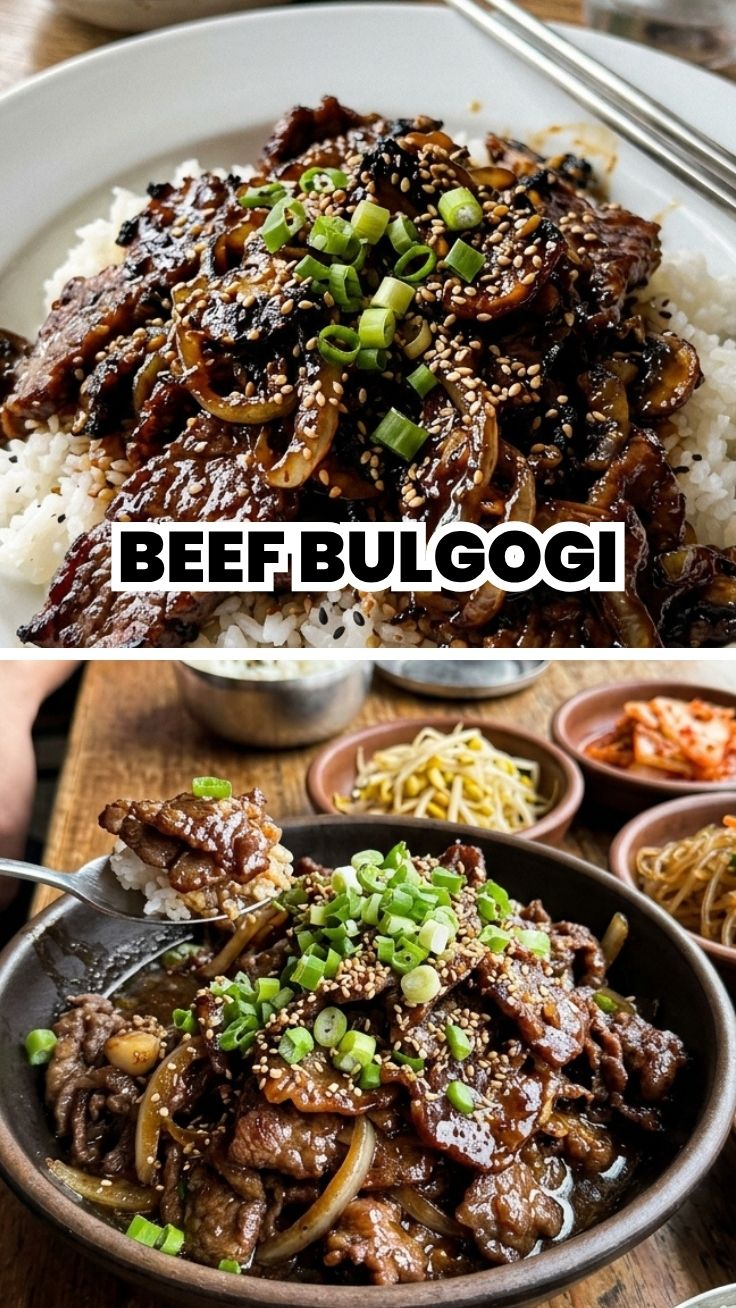
7. Serve & Garnish: Transfer the cooked beef to a serving platter. Garnish generously with toasted sesame seeds and sliced green onions. Serve immediately with warm rice, lettuce wraps, and kimchi.
Nutritional Benefits & Advantages
This homemade Beef Bulgogi is more than just delicious; it offers several nutritional perks. Beef is an excellent source of high-quality protein, iron, and B vitamins, essential for energy production and muscle health. The inclusion of ginger and garlic provides anti-inflammatory and immune-boosting properties. By making it at home, you have full control over the ingredients, allowing you to reduce sodium or sugar if desired, and avoid artificial additives often found in store-bought marinades. Furthermore, serving it with plentiful vegetables in lettuce wraps boosts fiber intake and adds vital nutrients.
Tips, Variations & Cooking Advice
- Vegetable Boost: Sauté some sliced onions, bell peppers, or mushrooms alongside the beef for added texture and nutrition.
- Spice It Up: If you love heat, increase the amount of gochujang or add a pinch of Korean chili flakes (gochugaru) to the marinade.
- Alternative Meats: While beef is traditional, this marinade works wonderfully with thinly sliced pork or even chicken thighs.
- Grilling: For an authentic Korean BBQ experience, cook the marinated beef on a hot grill or under a broiler.
- Gluten-Free: Use tamari instead of soy sauce for a gluten-free version.
- Dairy-Free: This recipe is naturally dairy-free!
- Vegan Option: Substitute the beef with thinly sliced king oyster mushrooms or firm tofu/tempeh for a delicious plant-based bulgogi.
Common Mistakes to Avoid
- Overcrowding the Pan: This is the most common mistake! Too much meat in the pan lowers the temperature, causing the beef to steam instead of sear, resulting in a less flavorful and tougher texture. Cook in batches!
- Not Marinating Long Enough: While some marination is better than none, short marination times won’t allow the flavors to penetrate deeply or the tenderizers to work their magic. Always aim for at least 2 hours.
- Overcooking the Beef: Thinly sliced beef cooks very quickly. Overcooking will dry it out and make it tough. Keep a close eye on it and remove it from the heat as soon as it’s cooked through.
- Ignoring the Quality of Beef: Since beef is the star, choose a good quality cut for the best results.
Storage & Meal Prep Tips
Leftover Beef Bulgogi can be stored in an airtight container in the refrigerator for up to 3-4 days. It’s excellent for meal prepping; simply cook a large batch and portion it out with rice and vegetables for quick and delicious lunches or dinners throughout the week. To reheat, gently warm in a skillet over medium heat or in the microwave until heated through, being careful not to overcook. Freezing thoroughly cooked bulgogi is not recommended, as it can alter the texture of the thinly sliced beef. However, you can freeze the marinated raw beef for up to 2-3 months. Thaw overnight in the refrigerator before cooking.
Conclusion
You’ve now unlocked the secrets to creating exquisite homemade Beef Bulgogi, a dish that will undoubtedly become a beloved staple in your culinary repertoire. From the tender, flavorful beef to the perfectly balanced sweet and savory marinade, each bite transports you to the heart of Korean cuisine. This recipe proves that authentic, restaurant-quality Korean BBQ is well within reach, right in your own kitchen. Don’t be afraid to experiment with the tips and variations to personalize your bulgogi experience. We encourage you to try this recipe, share your delicious results with us in the comments, and embark on a flavorful journey that will delight your family and friends alike!
FAQs
Q1: Can I use a different type of beef?
A1: Yes, while ribeye or sirloin are ideal, you can use other cuts like flank steak or even ground beef (for a bulgogi bowl style). Just ensure it’s sliced very thinly for optimal tenderness and flavor absorption.
Q2: What if I don’t have Asian pear or apple?
A2: While they add a unique sweetness and tenderizing effect, you can omit them if unavailable, or use a tablespoon of pineapple juice or kiwi pulp (in smaller amounts as they are potent tenderizers).
Q3: How do I prevent the beef from sticking to the pan?
A3: Ensure your pan is adequately hot before adding the beef, and use a little neutral cooking oil. Avoid overcrowding the pan; cook in smaller batches.
Q4: Can I prepare the marinade ahead of time?
A4: Absolutely! The marinade can be prepared up to 2-3 days in advance and stored in the refrigerator. This can be a great time-saver for meal planning.
Q5: What are good side dishes to serve with Bulgogi?
A5: Steamed white rice, various kinds of kimchi, pickled radishes, quick cucumber salads, and assorted lettuce leaves for wraps are all traditional and highly recommended accompaniments.