Master the Art of the Perfect Smoked Brisket: Your Ultimate Home BBQ Guide
Ever wondered if you could truly recreate that melt-in-your-mouth, smoky perfection of restaurant-quality BBQ right in your own backyard? The answer is a resounding yes! Mastering the art of making a Smoked Brisket at home is not just about culinary skill; it’s about embracing a delicious journey, elevating your home cooking game, and impressing friends and family with a dish that embodies the heart of authentic American barbecue. This comprehensive guide will walk you through every step, ensuring your homemade Smoked Brisket is nothing short of spectacular, bringing the spirit of Texas BBQ straight to your table.
Ingredients & Kitchen Tools
Crafting an exceptional Smoked Brisket requires quality ingredients and the right tools.
- For the Brisket:
* 1 whole packer brisket (10-15 lbs): A “whole packer” includes both the flat and the point, crucial for juicy results. Look for good marbling.
* Coarse salt: Essential for the rub, provides flavor and helps form a bark.
* Coarse black pepper: The other half of the classic “Dalmatian rub.”
* Garlic powder: Adds an aromatic depth to the rub.
* Onion powder: Complements the garlic and enhances savory notes.
* Optional beef broth or apple cider vinegar: For spritzing, adds moisture and flavor.
- Essential Kitchen Tools:
* Smoker (pellet, offset, or electric): The heart of your Smoked Brisket endeavor.
* Large cutting board: For trimming and slicing the brisket.
* Sharp boning or carving knife: Crucial for precise trimming.
* Meat thermometer (leave-in and instant-read): Non-negotiable for monitoring internal temperature and ensuring doneness.
* Aluminum foil or butcher paper: For wrapping during the “stall” and resting. Butcher paper allows for a better bark.
* Heat-resistant gloves: For handling hot brisket.
* Spray bottle: For spritzing (if using).
* Large sheet pan: For holding the brisket during prep.
Prep Time & Cooking Schedule
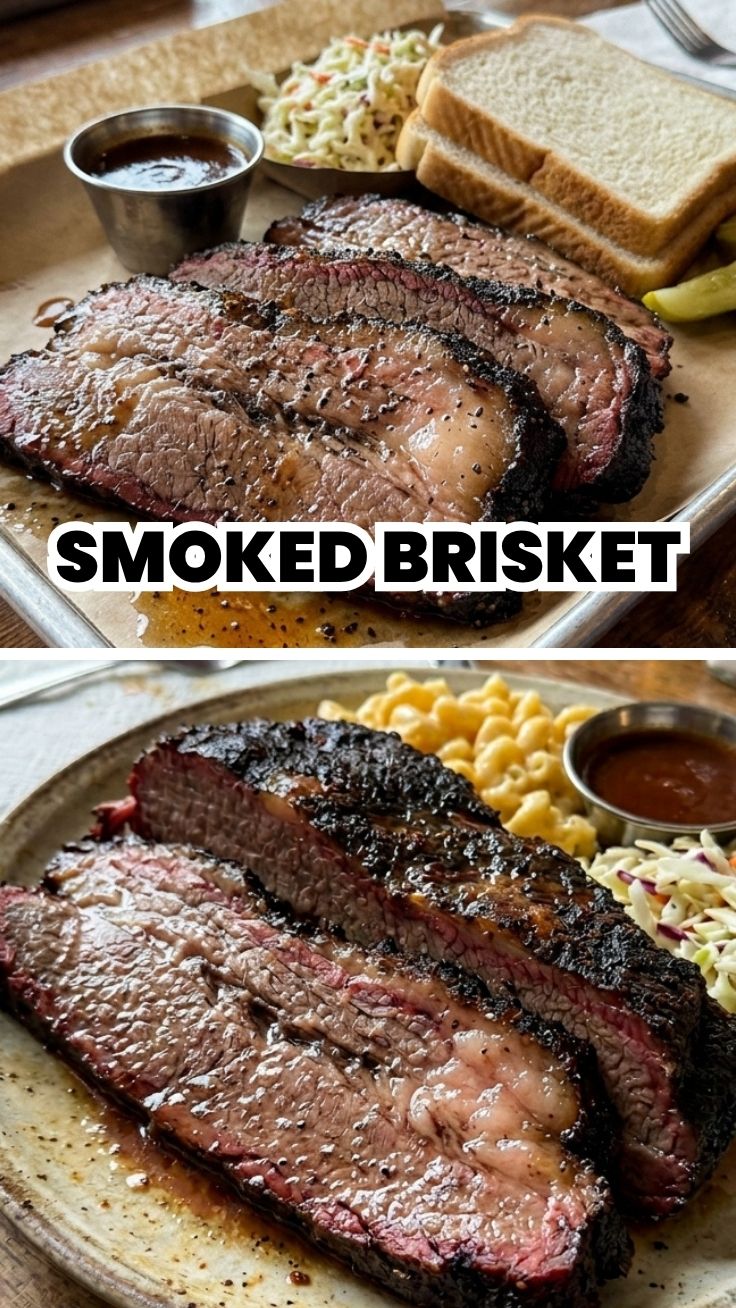
Planning is key for a successful Smoked Brisket. This isn’t a quick meal, but the low and slow process is incredibly rewarding.
- Prep Time: 30-60 minutes (for trimming and seasoning)
- Smoking Time: 10-16 hours (approximately 1 hour per pound at 225°F, but can vary)
- Resting Time: 2-4 hours
Begin your prep the day before or early morning, factoring in the long smoke and crucial resting period. A good rule of thumb is to start smoking around 10-12 PM for a lunch/dinner the next day, allowing ample time for the cook and rest.
Step-by-Step Instructions
Achieving the perfect Smoked Brisket is a test of patience and technique, akin to mastering the craft of traditional Texas BBQ.
1. Trim the Brisket: This is arguably the most crucial step. Trim the hard, thick fat to about 1/4 inch thickness. Remove any silver skin. Shape the brisket for even cooking.
2. Apply the Rub: Generously coat the entire brisket with your salt, pepper, garlic powder, and onion powder mixture. Don’t be shy!
3. Preheat Smoker: Set your smoker to a consistent 225-250°F (107-121°C). Use your preferred wood; oak, hickory, or pecan are excellent choices for brisket.
4. Smoke the Brisket: Place the brisket fat-side up (or towards the main heat source) in the smoker. Close the lid and resist the urge to peek!
5. The Stall: After 5-8 hours, the internal temperature will likely plateau, often around 150-165°F (65-74°C). This is known as “the stall,” where moisture evaporating from the surface cools the meat.
6. Wrap the Brisket: Once the internal temperature hits the stall (or if you prefer a juicier result and less bark), wrap the brisket tightly in butcher paper or heavy-duty aluminum foil. Return to the smoker.
7. Continue Cooking: Cook until the internal temperature reaches 200-205°F (93-96°C) and the probe slides in with minimal resistance (like butter). This “probe tender” feel is more important than an exact temperature.
8. Rest the Brisket: This cannot be stressed enough. Remove the brisket from the smoker, still wrapped, and place it in a cooler (without ice) or a warm oven for at least 2-4 hours. This allows the juices to redistribute, ensuring maximum tenderness and flavor.
9. Slice Against the Grain: Brisket has two different grain directions (flat and point). Identify both and slice against the grain for tender, easy-to-chew pieces.
Nutritional Benefits & Advantages
Beyond its incredible taste, making Smoked Brisket at home offers several advantages. Beef brisket is a rich source of protein, essential for muscle repair and growth. It also provides iron, zinc, and B vitamins, crucial for energy metabolism and overall health. While it can be higher in fat, trimming properly helps reduce this, and the slow smoking process renders much of the remaining fat, contributing to flavor and tenderness. Preparing it yourself allows control over seasonings, avoiding excessive sodium or undesirable additives often found in commercially prepared meats.
Tips, Variations & Cooking Advice
- Wood Choice: Experiment with different wood types. Oak is classic for Texas BBQ, providing a strong, clean smoke flavor. Hickory adds a bolder, savory note, while pecan is milder and sweeter.
- The Spritz: Some pitmasters spritz their brisket every hour or so during the initial smoke with apple cider vinegar, beef broth, or a mix of both to keep the surface moist and enhance bark development.
- Fat-Side Up or Down? This is a hotly debated topic. Fat-side up allows the melting fat to baste the meat, while fat-side down provides a protective barrier from direct heat, especially in offset smokers. Experiment to see what works best with your smoker.
- Injecting: For added moisture and flavor, some inject their brisket with beef broth or a specialized brine before rubbing.
- Leftover Magic: Smoked Brisket leftovers are fantastic in tacos, sandwiches, chili, or even breakfast hash.
Common Mistakes to Avoid
- Not Trimming Properly: Too much fat creates a greasy product; too little leads to dry meat.
- Rushing the Cook: Brisket thrives on low and slow. Don’t crank up the heat.
- Not Resting: Skipping the rest period results in dry, tough meat as juices escape when sliced.
- Over-seasoning: While generous, the rub should complement, not overpower, the smoky beef flavor.
- Slicing with the Grain: This turns tender meat into chewy shoe leather. Always slice against the grain.
- Opening the Smoker Too Often: “If you’re lookin’, it ain’t cookin’!” Each time you open the lid, you lose heat and valuable smoke.
Storage & Meal Prep Tips
Properly stored Smoked Brisket can be a meal prep champion.
- Refrigeration: Store sliced or unsliced brisket in an airtight container in the refrigerator for up to 3-4 days. To maintain moisture, you can add a little beef broth before sealing.
- Freezing: For longer storage, slice the brisket and vacuum seal or wrap tightly in plastic wrap and then foil. Freeze for up to 3 months.
- Reheating: The best way to reheat sliced brisket is low and slow in an oven, ideally covered with a bit of beef broth or water to keep it moist. You can also re-steam it gently. Avoid microwaving, as it can dry out the meat.
Conclusion
Creating a sensational Smoked Brisket at home is a culinary endeavor that rewards patience with unparalleled flavor. From meticulous trimming to the crucial resting period, every step contributes to a dish that rivals the best Texas BBQ joints. We encourage you to embrace this smoky adventure, experiment with different woods and techniques, and share your delicious results. There’s immense satisfaction in serving a beautifully executed Smoked Brisket that you’ve crafted yourself.
FAQs
Q1: What’s the biggest mistake beginners make with brisket?
A1: The most common mistake is impatience – not allowing enough time for the full cook and, critically, not resting the brisket long enough.
Q2: Should I wrap my brisket in foil or butcher paper?
A2: Butcher paper is preferred by many pitmasters as it breathes better, allowing for a better bark while still helping to push through the stall. Foil creates a tighter seal, steaming the meat more, which can make it juicier but soften the bark.
Q3: How do I know when my brisket is truly done?
A3: Doneness is best judged by “probe tenderness.” When an instant-read thermometer or skewer slides into the thickest part of the flat with very little resistance, like pushing into soft butter, it’s ready. This usually occurs between 200°F and 205°F.
Q4: Can I make brisket in a regular oven?
A4: While you won’t get the authentic smoke flavor, you can cook a brisket in a regular oven using a “low and slow” method. You might use liquid smoke in a rub or a smoker box on a gas grill for some smoky essence, but a dedicated smoker is ideal.
Q5: What internal temperature should I aim for when I wrap the brisket?
A5: Most pitmasters wrap when the bark is set and the internal temperature reaches the “stall,” typically between 150-165°F (65-74°C).