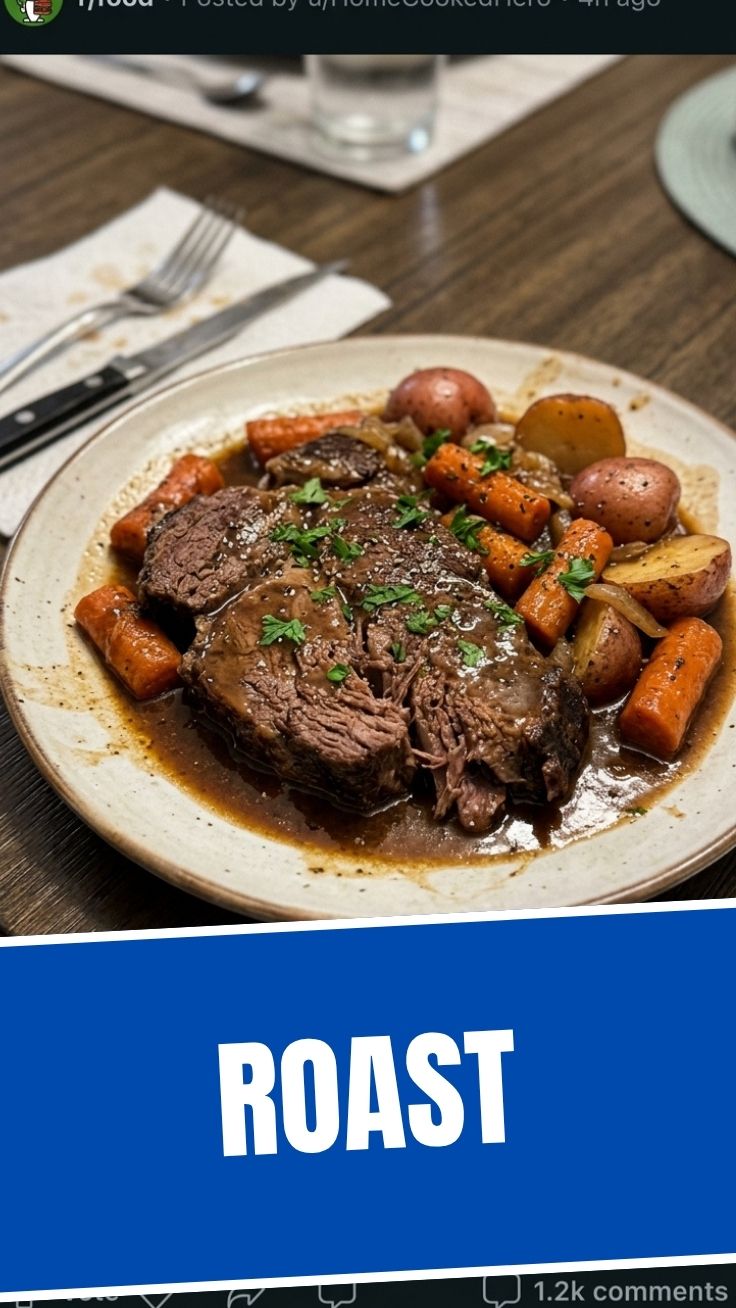
Transforming a simple cut of beef into a fork-tender masterpiece might seem daunting, but what if I told you it’s within reach, even for the busiest home cook? Mastering a delicious homemade Pot Roast is not just about a meal; it’s about nourishing your family with wholesome ingredients and creating lasting memories around the dinner table. This recipe, perfectly executed in your Slow Cooker, promises to deliver that rich, savory goodness without the culinary acrobatics. We’ll delve into a method that maximizes flavor with minimal effort, making hearty, home-cooked deliciousness accessible to everyone.
Ingredients & Kitchen Tools
- 3-4 lb Chuck Roast: The ideal cut for a tender pot roast, rich in marbling for flavor.
- 2 tbsp Olive Oil (or Avocado Oil): For searing the roast, adding a crucial layer of flavor.
- 1 large Yellow Onion: Quartered, providing aromatic depth.
- 4-5 Carrots: Peeled and cut into large chunks; for sweetness and texture.
- 3-4 Celery Stalks: Cut into large chunks; adds subtle bitterness and freshness.
- 1.5 lb Baby Red Potatoes (or Yukon Gold): Whole or halved; they absorb the rich flavors beautifully.
- 3 cloves Garlic: Minced; an essential aromatic base.
- 1 tsp Dried Thyme: Classic herb pairing for beef, earthy and fragrant.
- 1 tsp Dried Rosemary: Adds a piney, peppery note that complements beef.
- 1 tsp Smoked Paprika (optional): For a subtle smoky depth.
- 1 tsp Salt: Essential seasoning to enhance all flavors.
- 0.5 tsp Black Pepper: Freshly ground for best results.
- 2 cups Beef Broth (or Beef Stock): The liquid base for braising, ensuring moisture and flavor.
- 2 tbsp Tomato Paste: Adds umami and richness to the gravy.
- 2 tbsp Worcestershire Sauce: Boosts umami and adds a tangy complexity.
- Optional Thickener: 2 tbsp Cornstarch mixed with 2 tbsp cold water (for gravy).
Kitchen Tools:
- Large Slow Cooker (6-quart or larger): The star appliance for this recipe.
- Large Skillet/Dutch Oven: For searing the chuck roast.
- Tongs: For handling hot meat safely.
- Measuring Cups & Spoons: For accurate ingredient portions.
- Sharp Knife & Cutting Board: For prepping vegetables.
Prep Time & Cooking Schedule
- Prep Time: 20-25 minutes
* This includes searing the meat and chopping all vegetables.
- Cook Time:
* Low Setting: 8-10 hours
* High Setting: 4-6 hours
- Resting Time: 15-20 minutes
* Crucial for retaining juices and achieving optimum tenderness after cooking. Plan to let the cooked pot roast rest on a cutting board, covered loosely with foil, before shredding or slicing. This waiting period significantly improves the final texture.
Step-by-Step Instructions
1. Prepare the Roast: Pat the chuck roast dry with paper towels. Season generously all over with salt and black pepper. This step is vital for developing a flavorful crust.
2. Sear the Meat: Heat olive oil in a large skillet or Dutch oven over medium-high heat until shimmering. Sear the roast on all sides until a deep golden-brown crust forms, about 3-4 minutes per side. This browning, known as the Maillard reaction, is key to developing rich, complex flavors for your Pot Roast. Remove the roast from the skillet and set aside.
3. Sauté Aromatics: Add chopped onions, carrots, and celery to the same skillet. Sauté for 5-7 minutes until softened, scraping up any browned bits from the bottom of the pan. Stir in minced garlic, dried thyme, dried rosemary, and smoked paprika (if using), cooking for another minute until fragrant.
4. Assemble the Slow Cooker: Transfer the sautéed vegetables and aromatics to the bottom of your slow cooker. Place the seared chuck roast on top of the vegetables. Scatter the baby potatoes around the roast.
5. Create the Braising Liquid: In a separate bowl, whisk together beef broth, tomato paste, and Worcestershire sauce. Pour this mixture over the roast and vegetables in the slow cooker.
6. Cook: Cover the slow cooker and cook on the LOW setting for 8-10 hours, or on the HIGH setting for 4-6 hours, or until the roast is incredibly tender and easily pulls apart with a fork.
7. Rest & Thicken (Optional): Once cooked, carefully remove the roast and vegetables from the slow cooker and place them on a platter. Tent with foil and let rest for 15-20 minutes. If you desire a thicker gravy, strain the liquid from the slow cooker into a saucepan, bring to a simmer, and whisk in the cornstarch slurry. Cook, stirring constantly, until thickened to your desired consistency.
Nutritional Benefits & Advantages
This hearty Pot Roast isn’t just delicious; it’s a nutritional powerhouse. Chuck roast provides high-quality protein, essential for muscle repair and growth, along with vital B vitamins (B12, niacin) and minerals like iron and zinc. The abundance of vegetables—carrots, celery, onions, and potatoes—contributes a wide array of vitamins, minerals, and dietary fiber, promoting digestive health and boosting immunity. Cooking in a Slow Cooker also helps retain nutrients that might be lost with other high-heat cooking methods, making it a truly wholesome meal.
Tips Variations & Cooking Advice
- Herb Power-Up: For fresh herb flavor, add a few sprigs of fresh rosemary and thyme directly into the slow cooker during the last hour of cooking.
- Wine Infusion: Replace 1 cup of beef broth with 1 cup of dry red wine (like Cabernet Sauvignon or Merlot) for a richer, more sophisticated flavor profile.
- Spice It Up: A pinch of red pepper flakes can add a subtle kick if you enjoy a touch of heat.
- Mushroom Magic: Add a cup of sliced cremini mushrooms during the last 2 hours of cooking for an earthy umami boost.
- Dietary Adaptations:
* Gluten-Free: This recipe is naturally gluten-free! If thickening the gravy, ensure your beef broth is gluten-free.
* Dairy-Free: The recipe is naturally dairy-free.
- Vegetarian Version: While not a pot roast, you can adapt this concept. Use a hearty vegetable medley (e.g., mushrooms, sweet potatoes, parsnips, hearty beans) and a rich vegetable broth for a vegetarian stew.
Common Mistakes to Avoid
- Not Searing the Meat: Skipping the initial sear means missing out on crucial flavor development. Don’t rush this step!
- Overcrowding the Slow Cooker: Ensure there’s enough room for heat circulation and even cooking.
- Lifting the Lid Too Often: Each time you lift the slow cooker lid, you release accumulated heat, extending the cooking time by an average of 20-30 minutes. Resist the urge to peek!
- Not Resting the Meat: Resting allows the juices to redistribute throughout the roast, resulting in a more tender and moist final product.
- Cutting Vegetables Too Small: Large chunks of vegetables are preferred as they hold up better during the long cooking process without turning mushy.
Storage & Meal Prep Tips
- Refrigeration: Store leftover Pot Roast and vegetables in an airtight container in the refrigerator for up to 3-4 days. The flavors often deepen overnight!
- Freezing: For longer storage, transfer cooled pot roast (with some gravy) into freezer-safe containers or heavy-duty freezer bags. It can be frozen for up to 3 months. Thaw overnight in the refrigerator before reheating.
- Reheating: Gently reheat leftovers on the stovetop over low heat, in the microwave, or in a covered oven-safe dish at 300°F (150°C) until warmed through. Adding a splash of beef broth can help maintain moisture.
Conclusion
There you have it: a foolproof guide to crafting a magnificent homemade Pot Roast that will impress without stressing you out. The beauty of the Slow Cooker lies in its ability to transform simple ingredients into a deeply flavorful, tender meal while you go about your day. This recipe delivers a comforting, nutrient-dense dinner that truly embodies the warmth of home cooking. We encourage you to give this recipe a try, savor the rich aromas filling your kitchen, and share your delicious results with us!
FAQs
Q1: Can I use a different cut of beef?
A1: While chuck roast is highly recommended for its marbling and tenderness, you can use other cuts like bottom round or brisket. However, they may require slightly longer cooking times and might not be as fork-tender.
Q2: My pot roast isn’t tender. What went wrong?
A2: The most common reason for tough pot roast is not cooking it long enough. Cooking at a low temperature for an extended period is key to breaking down connective tissues. Also, ensure your slow cooker reaches and maintains the correct temperature.
Q3: Can I add other vegetables?
A3: Absolutely! Parsnips, button mushrooms, or even green beans can be added. If adding softer vegetables like green beans, add them during the last hour of cooking to prevent mushiness.
Q4: How do I make the gravy thicker without cornstarch?
A4: You can use a roux (equal parts butter and flour cooked together), or for a gluten-free option, blend a portion of the cooked vegetables and liquid until smooth, then stir back into the main liquid.
Q5: Is it safe to leave the slow cooker on overnight?
A5: Yes, modern slow cookers are designed for safe unattended cooking, making them perfect for preparing meals like this pot roast while you’re asleep or out of the house. Just ensure it’s on a stable, heat-resistant surface.