Unlock the Secret to Creamy, Homemade Hummus: A Culinary Journey!
Ever wondered if that velvety, store-bought Hummus you love could be even better – fresher, more flavorful, and incredibly satisfying, all from your own kitchen? The answer is a resounding yes! Preparing this Middle Eastern staple at home isn’t just about saving a few dollars; it’s about a culinary adventure that allows you to control every ingredient, ensuring a healthier and more delicious experience. Imagine the aroma of perfectly blended chickpea, infused with bright lemon and earthy tahini, ready to elevate any meal or snack. This guide will walk you through crafting the ultimate homemade Hummus, turning simple ingredients into a gourmet delight.
Ingredients & Kitchen Tools
Crafting the perfect Hummus requires a few essential ingredients and tools. Here’s what you’ll need:
- 1 (15-ounce) can chickpeas, drained and rinsed (garbanzo beans): The star of our show, providing a creamy base. For extra smoothness, consider peeling them, though it’s optional.
- 1/2 cup tahini: A sesame paste that adds a characteristic nutty depth and richness.
- 1/4 cup fresh lemon juice: Essential for brightness and balancing the richness. Always use fresh for the best flavor.
- 2 cloves garlic, minced: Provides a pungent, aromatic kick. Adjust to your preference.
- 1/2 teaspoon ground cumin: Adds an earthy warmth that complements the other flavors.
- 1/4 teaspoon salt (or to taste): Enhances all the flavors.
- 2-4 tablespoons cold water or ice water: Helps achieve that ultra-creamy, smooth texture.
- Optional garnishes: Olive oil, paprika, fresh parsley, pine nuts.
- Food processor: Indispensable for achieving a silky-smooth consistency.
- Rubber spatula: For scraping down the sides of the food processor.
- Measuring cups and spoons: For precise ingredient amounts.
Prep Time & Cooking Schedule
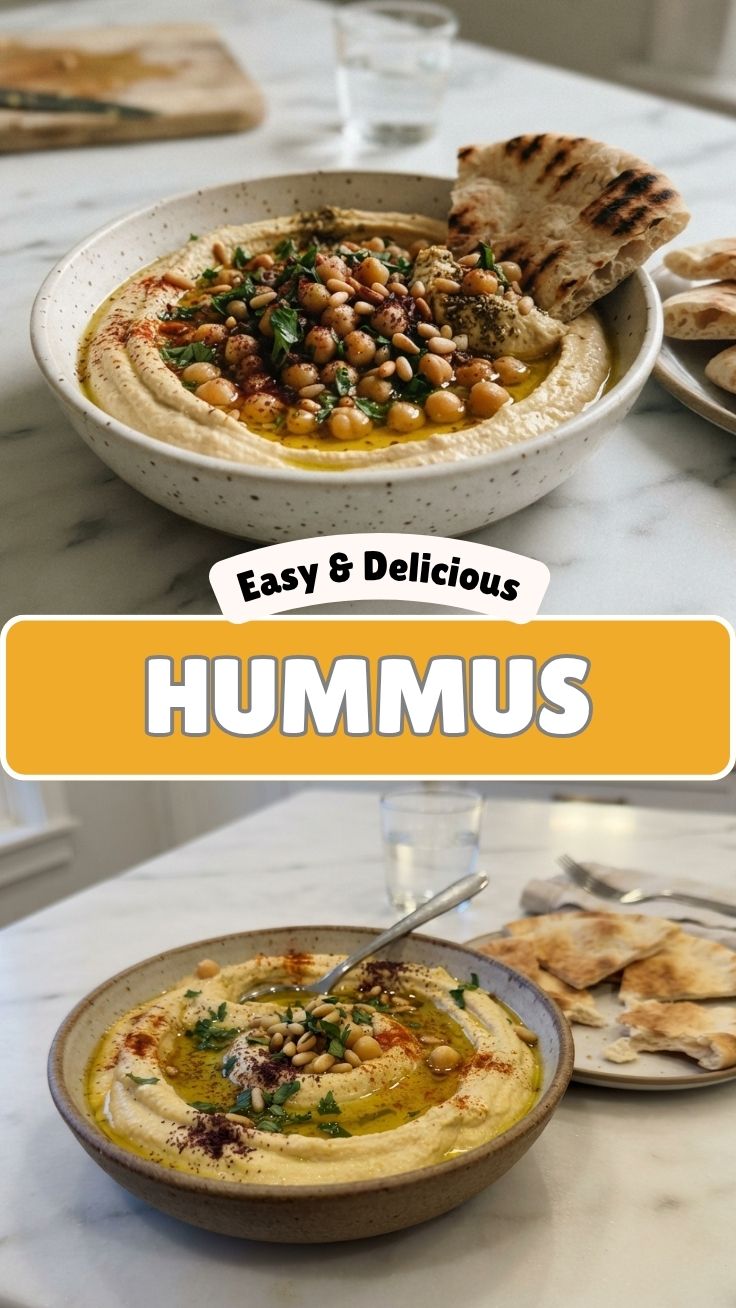
Making homemade Hummus is surprisingly quick! The total preparation time for this recipe is approximately 15 minutes. There is no cooking involved, only blending. This makes it an ideal last-minute appetizer or a quick addition to your meal prep. You can even prepare it the day before, as the flavors often deepen overnight.
Step-by-Step Instructions
Follow these steps to achieve a consistently creamy and flavorful Hummus:
1. Prepare the chickpeas: Drain and thoroughly rinse your canned chickpeas under cold running water. For an incredibly smooth texture, you can optionally remove the outer skins from each chickpea. This step is time-consuming but yields superior results.
2. Combine ingredients (initial blend): In the bowl of your food processor, combine the rinsed chickpeas, tahini, fresh lemon juice, minced garlic, ground cumin, and salt.
3. Process to creamy perfection: Process the mixture on high for 2-3 minutes, scraping down the sides with a spatula periodically. The mixture will start to look crumbly and then gradually become smoother.
4. Achieve desired consistency: While the food processor is running, slowly add the cold water (or ice water) one tablespoon at a time until the Hummus reaches your desired creamy consistency. Some prefer it thick, others slightly looser. This is a crucial step for the perfect texture.
5. Taste and adjust: Taste the Hummus and adjust seasoning as needed. You might want more salt, lemon juice, or even a tiny pinch more cumin. Blend again briefly to incorporate.
6. Serve and garnish: Transfer the finished Hummus to a serving bowl. Drizzle generously with good quality olive oil, sprinkle with paprika, and garnish with fresh parsley or pine nuts for extra flavor and visual appeal.
Nutritional Benefits & Advantages
Homemade Hummus is not just delicious; it’s a powerhouse of nutrition. The primary ingredient, the humble chickpea, is an excellent source of plant-based protein and dietary fiber, which aids in digestion, promotes satiety, and helps regulate blood sugar levels. Tahini contributes healthy monounsaturated fats and essential minerals like calcium and iron. Lemon juice provides Vitamin C, and garlic offers immune-boosting properties. This combination makes Hummus a heart-healthy, gut-friendly, and energy-sustaining dip or spread, perfect for those seeking balanced nutrition.
Tips, Variations & Cooking Advice
- Roasted Garlic Hummus: For a milder, sweeter garlic flavor, roast a head of garlic before adding it to the food processor.
- Spicy Hummus: Add a pinch of cayenne pepper, a dash of hot sauce, or a roasted red chili to the blend.
- No Tahini? While tahini is classic, you can omit it for a lighter version, or substitute with a tablespoon of almond butter or sunflower seed butter for a different flavor profile.
- Soaking Dried chickpeas: For the absolute best flavor and texture, consider soaking and cooking dried chickpeas yourself. This requires more time but is incredibly rewarding.
Common Mistakes to Avoid
- Not rinsing the chickpeas: The brine from canned chickpeas can impart an off-flavor. Always rinse thoroughly.
- Too little lemon juice or salt: These are crucial for balancing the richness of the tahini and chickpeas. Don’t be afraid to adjust to taste.
- Not enough processing: For truly smooth Hummus, you need to let the food processor run for several minutes, allowing the friction to warm the mixture slightly and break down the fibers.
- Adding all the water at once: Drizzle in the cold water slowly to achieve the perfect consistency without making it too thin.
- Ignoring the quality of tahini: A good quality, runny tahini will make a significant difference in the final taste and texture.
Storage & Meal Prep Tips
Homemade Hummus can be stored in an airtight container in the refrigerator for up to 5-7 days. To prevent it from drying out, press a piece of plastic wrap directly onto the surface of the Hummus before sealing the container. You can also drizzle a thin layer of olive oil on top for added preservation and flavor. This makes it an excellent option for meal prepping, as it’s ready to go for quick snacks, lunches, or as a condiment throughout the week. Hummus freezes well too! Freeze in small portions for up to 3 months. Thaw overnight in the refrigerator and stir well before serving, adding a splash of water or lemon juice if needed to regain consistency.
Conclusion
Crafting your own creamy, flavorful Hummus from scratch is a culinary reward that far outweighs the minimal effort involved. From the velvety texture derived from perfectly blended chickpea to the vibrant zing of fresh lemon and the earthy depth of tahini, homemade Hummus offers an unparalleled taste experience. We encourage you to try this simple yet profound recipe, experiment with the variations, and discover the joy of creating something truly delicious and nourishing in your own kitchen. Share your results with us and let us know your favorite ways to enjoy this incredible dip!
FAQs
Q1: Can I make Hummus without a food processor?
A1: While a food processor is ideal for the creamiest texture, you can use a high-speed blender. You might need to add a bit more liquid and scrape down the sides more frequently. Alternatively, a mortar and pestle or potato masher can work for a chunkier, rustic style.
Q2: What’s the secret to super smooth Hummus?
A2: The top secrets are peeling the chickpeas, using good quality tahini, and processing for a longer time (5+ minutes), often with ice water, which helps create a light and airy emulsion.
Q3: My Hummus tastes bitter. What went wrong?
A3: Bitterness usually comes from poor quality or old tahini, or sometimes from too much raw garlic. Ensure your tahini is fresh and use less garlic if you’re sensitive. Adding a touch more lemon juice or a pinch of sugar can help balance the flavor.
Q4: How can I make my Hummus thinner or thicker?
A4: To thin your Hummus, simply blend in more cold water or lemon juice, one tablespoon at a time, until you reach your desired consistency. If it’s too thin, you can try adding a few more cooked chickpeas or letting it chill in the fridge, as it tends to thicken slightly when cold.
Q5: What are some great ways to serve homemade Hummus?
A5: Hummus is incredibly versatile! Serve it with warm pita bread, fresh vegetable sticks (carrots, cucumbers, bell peppers), as a spread in sandwiches and wraps, a base for bowls, or as a side with grilled meats or falafel.