Unleash Your Inner Grill Master: Crafting the Perfect High-Protein Salmon
Ever wondered if you could create a restaurant-quality meal right in your backyard, one that’s both incredibly delicious and packed with goodness? Look no further! Today, we’re diving into the world of high protein grilled salmon recipes, a culinary journey that promises flavor, nutrition, and a satisfying cooking experience. Preparing this dish at home offers unparalleled control over ingredients, ensuring fresh, wholesome goodness free from unnecessary additives. This guide will empower you to master the art of grilling salmon, transforming simple ingredients into healthy grilled salmon meals that will impress even the most discerning palates.
Ingredients & Kitchen Tools
Gather your culinary arsenal; success starts with the right components.
- Salmon Fillets (4-6 oz each): Opt for skin-on, wild-caught salmon for superior flavor and quality. You’ll need four fillets.
- Olive Oil (2 tbsp): Extra virgin for rich flavor, or light olive oil for a more neutral taste. Helps prevent sticking and promotes even browning.
- Lemon (1 large): Freshly squeezed juice and zest are essential for brightening the flavor.
- Garlic Powder (1 tsp): A convenient way to infuse garlic flavor without mincing.
- Smoked Paprika (1 tsp): Adds a beautiful color and a smoky depth that complements the salmon.
- Dried Dill (1 tsp): A classic pairing with salmon, offering a fresh, herbaceous note.
- Salt & Black Pepper (to taste): Essential for seasoning and bringing out the natural flavors. Use sea salt or kosher salt.
- Fresh Parsley (2 tbsp, chopped): For garnish and an additional layer of freshness.
- Grill: A gas grill or charcoal grill will work perfectly. Ensure it’s clean and well-maintained.
- Grill Tongs: Essential for safely flipping the fish.
- Spatula (fish spatula recommended): A thin, flexible spatula makes it easier to lift delicate fish.
- Basting Brush (optional): For applying marinades or oils during grilling.
- Small Mixing Bowl: For combining seasonings.
- Aluminum Foil (heavy-duty): Useful for tenting the salmon after grilling and for cleanup.
Prep Time & Cooking Schedule
This recipe is designed for efficiency without sacrificing flavor.
- Prep Time: 15 minutes
- Marinating Time: 15-30 minutes (optional, but highly recommended for richer flavor) – do not marinate for too long, as the acid can “cook” the fish.
- Cook Time: 12-15 minutes (depending on thickness and desired doneness)
- Resting Time: 5 minutes
Plan to start marinating your salmon about 30 minutes before you want to begin grilling. This allows the flavors to meld beautifully without over-tenderizing the fish.
Step-by-Step Instructions
Let’s get grilling! Follow these steps for perfectly cooked, flavorful salmon.
1. Prepare the Salmon: Gently pat the salmon fillets dry with paper towels. This crucial step helps create a crispy skin and prevents sticking.
2. Make the Marinade/Rub: In a small bowl, combine the olive oil, lemon juice, garlic powder, smoked paprika, dried dill, salt, and black pepper. Stir well until all ingredients are incorporated.
3. Season the Salmon: Place the salmon fillets on a plate or in a shallow dish. Evenly brush the marinade over both sides of each fillet, ensuring full coverage, especially on the flesh side. Let it marinate for 15-30 minutes at room temperature, or up to an hour in the refrigerator.
4. Preheat the Grill: Preheat your grill to a medium-high heat (around 400-450°F or 200-230°C). Clean the grates thoroughly with a wire brush and then oil them carefully using a paper towel dipped in cooking oil held by tongs. This prevents sticking.
5. Grill the Salmon: Place the salmon fillets skin-side down on the preheated, oiled grill grates. Close the lid and cook for 6-8 minutes. Resist the urge to move or flip the salmon too early; this allows the skin to crisp up and release cleanly from the grates.
6. Flip and Finish: Using a fish spatula, carefully flip the salmon fillets. Cook for another 6-7 minutes, or until the internal temperature reaches 145°F (63°C) and the fish flakes easily with a fork. For those seeking high protein grilled salmon recipes, ensuring proper cooking is key to nutrient retention.
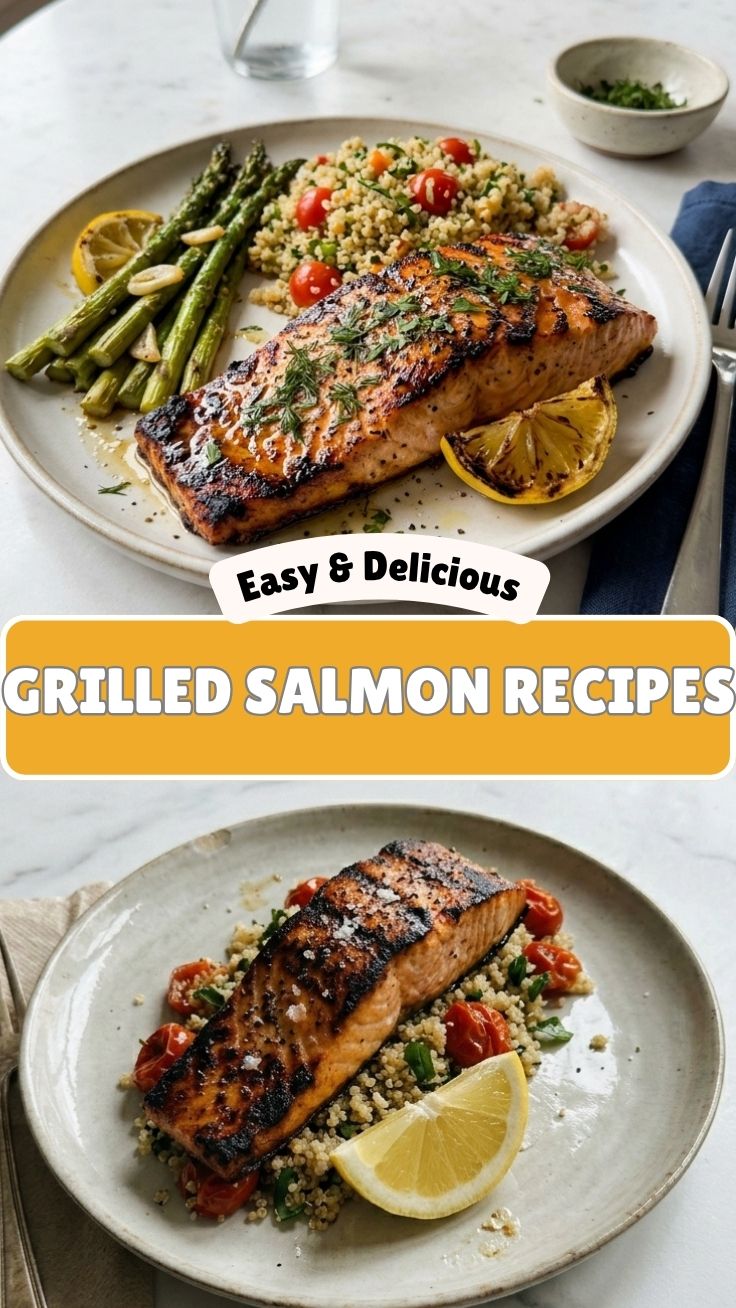
7. Rest and Serve: Transfer the grilled salmon to a plate, tent loosely with aluminum foil, and let it rest for 5 minutes. This allows the juices to redistribute, resulting in a moister fish. Garnish with fresh chopped parsley and a squeeze of fresh lemon juice. These healthy grilled salmon meals are perfect served with a side of roasted vegetables or a fresh salad.
Nutritional Benefits & Advantages
Salmon is a nutritional powerhouse! It’s an excellent source of high-quality protein, essential for muscle repair and growth. Rich in Omega-3 fatty acids (EPA and DHA), it supports heart health, reduces inflammation, and boosts brain function. Salmon also provides a significant amount of Vitamin D, crucial for bone health and immune system regulation, and B vitamins, vital for energy metabolism. Grilling is a lean cooking method that requires minimal added fats, further enhancing its health advantages.
Tips Variations & Cooking Advice
- Flavor Variations: Experiment with different herbs like thyme or rosemary, or add a pinch of cayenne for a subtle kick. A touch of maple syrup or honey can add a lovely caramelized glaze.
- Ingredient Swaps: No fresh lemon? Bottled lemon juice works in a pinch, though the fresh zest offers a brighter flavor. Smoked paprika can be replaced with regular paprika if preferred.
- Alternative Cooking Methods: If grilling isn’t an option, you can bake the salmon at 400°F (200°C) for 12-18 minutes, or pan-sear it in a hot skillet with a little olive oil, skin-side down first, for a crispy exterior.
- Dietary Adaptations: This recipe is naturally gluten-free and dairy-free.
- Perfecting Doneness: For a medium-rare salmon, aim for an internal temperature of 125-130°F (52-54°C). The salmon will continue to cook slightly after being removed from the heat.
Common Mistakes to Avoid
- Not Drying the Salmon: Wet salmon leads to steaming instead of searing, resulting in a less crispy texture and difficulty with grates sticking. Always pat dry!
- Moving Too Soon: Resist flipping the salmon too early. It needs time to develop a good crust and naturally release from the grill grates.
- Overcooking: Salmon dries out quickly when overcooked. Use a meat thermometer to ensure perfect doneness (145°F or 63°C for well-done, lower for medium-rare).
- Cold Grill Grates: Always preheat your grill thoroughly and oil the grates to prevent sticking.
Storage & Meal Prep Tips
- Refrigeration: Cooked salmon can be stored in an airtight container in the refrigerator for up to 3-4 days.
- Freezing: For longer storage, cooked salmon can be frozen for up to 2-3 months. Wrap individual portions tightly in plastic wrap and then aluminum foil before placing them in a freezer-safe bag. Thaw overnight in the refrigerator before reheating.
- Reheating: Gently reheat salmon in the oven at a low temperature (275°F or 135°C) for about 10-15 minutes, or in a microwave on a low power setting to prevent drying out. A splash of water or broth can help maintain moisture.
Conclusion
Mastering grilled salmon is incredibly rewarding, offering a delicious and incredibly nutritious meal for any occasion. By following these steps, you’ll consistently create high protein grilled salmon recipes that are moist, flavorful, and perfectly cooked, proving that healthy grilled salmon meals can also be exciting and easy. Don’t be afraid to experiment with seasonings and sides to make this dish truly your own. Give this recipe a try and share your results – your taste buds (and your body) will thank you!
FAQs
Q1: How do I know when the salmon is done without a thermometer?
A1: The salmon is done when it flakes easily with a fork in its thickest part and the flesh turns from translucent to opaque. However, a meat thermometer is the most reliable way to ensure perfect doneness.
Q2: Can I use frozen salmon fillets?
A2: Yes, but ensure they are fully thawed in the refrigerator overnight before preparing. Pat them very dry to remove excess moisture.
Q3: My salmon always sticks to the grill. What can I do?
A3: Ensure your grill grates are very clean and well-oiled before placing the salmon. Also, make sure the grill is sufficiently preheated, and resist moving the salmon too soon – it will naturally release when a good crust has formed.
Q4: How can I add more flavor to this recipe?
A4: Consider adding a compound butter (butter mixed with herbs like chives or basil, and lemon zest) on top after grilling, or serving with a fresh salsa (e.g., mango salsa or avocado salsa).
Q5: Is it better to grill salmon with the skin on or off?
A5: Grilling with the skin on is generally recommended as it helps keep the fish from drying out and prevents it from sticking to the grates. The crispy skin is also delicious!