Savor the Goodness: Your Ultimate Guide to a Nutrient-Packed Vegetable Stew
Ever wondered how to transform simple vegetables into a hearty, satisfying meal that both nourishes your body and tantalizes your taste buds? Look no further! Preparing a delicious, homemade vegetable stew isn’t just about cooking; it’s about embracing a lifestyle of wholesome eating and culinary creativity. In a world brimming with quick fixes, taking the time to craft a vibrant, healthy vegetable stew recipe offers unparalleled rewards, from boosting your immunity to simply bringing joy to your dinner table. This comprehensive guide will walk you through every step, ensuring you master the art of making an incredibly flavorful and easy vegetable stew recipe that you’ll want to revisit again and again.
Ingredients & Kitchen Tools
Gathering your mise en place is the first step to culinary success. Here’s what you’ll need:
- 1 tbsp Olive Oil: A healthy fat for sautéing, adding depth of flavor.
- 1 Large Onion, chopped: The aromatic foundation for our stew. Yellow or white onions work best.
- 2 Carrots, peeled and diced: For a touch of sweetness and vibrant color.
- 2 Celery Stalks, diced: Adds a subtle, earthy flavor and aroma.
- 3 cloves Garlic, minced: Essential for pungent, aromatic depth.
- 1 tsp Dried Thyme: A classic herb for stews, offering earthy, slightly floral notes.
- 1 tsp Dried Rosemary: Adds a piney, peppery aroma that complements vegetables beautifully.
- 1 (28 ounce) Can Diced Tomatoes, undrained: Provides a rich, tangy base and liquid for the stew.
- 4 cups Vegetable Broth: The primary liquid, ensuring a flavorful and well-hydrated stew. Low-sodium is recommended.
- 2 cups Potatoes, peeled and cubed: Adds heartiness and thickens the stew naturally. Russet or Yukon Gold are great choices.
- 1 cup Green Beans, trimmed and cut: For a pop of color, crunch, and freshness.
- 1 cup Zucchini, diced: A light, slightly sweet squash that cooks quickly.
- 1 cup Corn Kernels (fresh or frozen): Adds sweetness and an extra layer of texture.
- Salt and Black Pepper, to taste: Essential for seasoning and bringing out all the flavors.
- Fresh Parsley, chopped (for garnish): Brightens the dish with color and a fresh, herbaceous finish.
Optional Substitutions: Feel free to swap vegetables based on what’s in season or what you prefer. Sweet potatoes instead of white potatoes, bell peppers for zucchini, or even a handful of spinach at the end are excellent additions.
Kitchen Tools:
- Large Dutch Oven or Stockpot: Essential for simmering the stew evenly.
- Cutting Board and Sharp Knife: For efficient vegetable prep.
- Measuring Cups and Spoons: For accurate ingredient quantities.
- Ladle: For serving.
Prep Time & Cooking Schedule
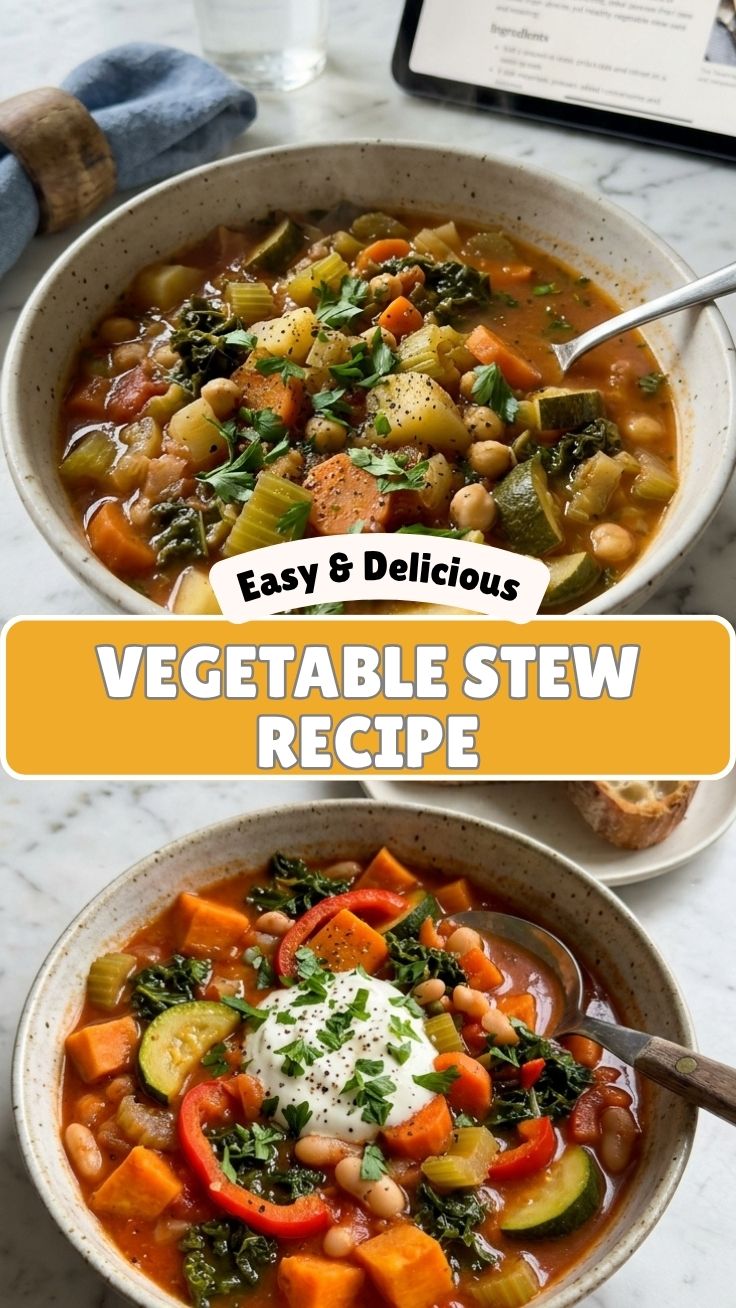
- Prep Time: 20 minutes
- Cook Time: 40-45 minutes
- Total Time: Approximately 1 hour 5 minutes
This stew is perfect for a weeknight meal or a leisurely Sunday lunch. The active prep is manageable, and the majority of the time is hands-off simmering, allowing the flavors to meld beautifully. There’s no resting or marinating time required, making it a straightforward culinary project.
Step-by-Step Instructions
1. Sauté Aromatics: Heat olive oil in a large Dutch oven or stockpot over medium heat. Add chopped onion, carrots, and celery. Sauté for 5-7 minutes, or until the vegetables begin to soften. This initial step builds the flavor base for a truly satisfying healthy vegetable stew recipe.
2. Add Garlic and Herbs: Stir in the minced garlic, dried thyme, and dried rosemary. Cook for another minute until fragrant, being careful not to burn the garlic.
3. Incorporate Liquids and Potatoes: Pour in the diced tomatoes (undrained) and vegetable broth. Add the cubed potatoes. Bring the mixture to a gentle boil, then reduce heat to low, cover, and simmer for 15-20 minutes, or until the potatoes are almost tender.
4. Add Remaining Vegetables: Stir in the green beans, zucchini, and corn kernels. Continue to simmer, uncovered, for another 10-15 minutes, or until all vegetables are tender but not mushy. This step is crucial for achieving an easy vegetable stew recipe that still boasts varied textures.
5. Season and Serve: Season generously with salt and black pepper to taste. Ladle the hot stew into bowls and garnish with fresh chopped parsley.
Nutritional Benefits & Advantages
This vegetable stew is a powerhouse of nutrition. It’s packed with vitamins (A, C, K), minerals (potassium, manganese), and dietary fiber from the array of fresh vegetables. The high fiber content aids digestion and promotes satiety, helping you feel fuller for longer. Tomatoes contribute potent antioxidants like lycopene, while garlic offers immune-boosting properties. This dish is naturally low in calories and fat, making it an excellent choice for a healthy, balanced diet. It’s also suitable for vegetarian and vegan lifestyles.
Tips, Variations & Cooking Advice
- Flavor Boost: A splash of red wine or balsamic vinegar added with the broth can deepen the flavor profile.
- Spice It Up: Add a pinch of red pepper flakes for a subtle kick.
- Protein Boost: For non-vegetarians, shredded chicken or lean ground turkey can be added during the simmering phase. For plant-based protein, consider adding a can of drained and rinsed chickpeas or lentils with the other vegetables.
- Thickening Agent: If you prefer a thicker stew, mash a few of the cooked potatoes against the side of the pot, or create a quick slurry with a tablespoon of cornstarch mixed with a little cold water and stir it in during the last 5 minutes of cooking.
Common Mistakes to Avoid
- Overcooking Vegetables: This can lead to mushy textures. Add vegetables in stages based on their cooking times, ensuring each retains some bite.
- Insufficient Seasoning: Vegetables need proper seasoning to truly shine. Taste and adjust salt and pepper throughout the cooking process. Don’t be afraid to add a little more!
- Too Much Liquid: If your stew seems too thin, let it simmer uncovered for a bit longer to allow some of the liquid to evaporate and the flavors to concentrate.
- Not Sautéing Aromatics First: Skipping this step robs your stew of its foundational flavor. Don’t rush the initial sauté.
Storage & Meal Prep Tips
Leftover vegetable stew stores beautifully.
- Refrigeration: Store in an airtight container in the refrigerator for up to 3-4 days. The flavors often deepen and improve overnight!
- Freezing: For longer storage, portion out the cooled stew into freezer-safe containers or bags. It freezes well for up to 3 months.
- Reheating: Reheat gently on the stovetop over medium-low heat, stirring occasionally, until warmed through. You might need to add a splash of water or broth to loosen it up. Microwaving individual portions is also an option.
Conclusion
Crafting a hearty and nutritious vegetable stew is a rewarding culinary experience that offers both comfort and nourishment. By following this detailed guide, you can confidently create a truly delicious healthy vegetable stew recipe that will impress your family and friends. This adaptable and easy vegetable stew recipe is a testament to the power of simple, fresh ingredients expertly combined. We encourage you to try this recipe and share your culinary successes! What are your favorite stew variations? Let us know in the comments below!
FAQs
Q: Can I use frozen mixed vegetables in this stew?
A: Absolutely! Frozen mixed vegetables are a convenient substitution. Add them during step 4, without thawing, and adjust simmering time as needed until tender.
Q: How can I make this stew creamier?
A: For a creamier texture, you can stir in a spoonful of dairy-free cream cheese, a splash of coconut milk, or a few tablespoons of pureed white beans during the last 10 minutes of cooking.
Q: My stew turned out too watery. What went wrong?
A: This usually means there was too much liquid or the stew didn’t simmer long enough uncovered. To fix it, you can simmer it uncovered for an additional 10-15 minutes or create a cornstarch slurry (1 tbsp cornstarch with 2 tbsp cold water) and stir it in.
Q: Can I prepare this stew in a slow cooker?
A: Yes! Sauté the aromatics (onion, carrots, celery, garlic) first for best flavor. Then, transfer everything to a slow cooker and cook on low for 6-8 hours or on high for 3-4 hours, adding softer vegetables like zucchini and corn during the last hour.
Q: What are some good accompaniments for this stew?
A: This stew pairs wonderfully with crusty bread, a side salad, brown rice, or quinoa. It’s a complete meal on its own, but these additions can make it even more satisfying.