Elevate Your Summer Plate: Crafting the Perfect Greek Salad at Home
Ever wondered how to bring the vibrant flavors of the Mediterranean to your dinner table without a passport? Today, we’re diving into the art of making a homemade Greek Salad – a dish that isn’t just a side, but a celebration of fresh, wholesome ingredients. Forget limp lettuce and bland dressings; preparing this classic at home allows you to control the quality and create a truly unforgettable culinary experience. It’s an accessible and endlessly customizable dish, perfect for everything from quick lunches to elegant dinner parties. This guide will walk you through every step, ensuring your homemade Greek Salad is nothing short of spectacular.
Ingredients & Kitchen Tools
Crafting the perfect Greek Salad starts with selecting top-notch produce and having the right equipment.
Ingredients:
- 2-3 ripe Tomatoes: Roma or heirloom varieties work best for their firm texture and rich flavor.
- 1 large English Cucumber: Seedless and less watery than traditional cucumbers, ensuring a crisp bite.
- 1 Red Onion: Thinly sliced for a touch of pungent sweetness.
- 1 Green Bell Pepper: Diced for crunch and a fresh, slightly bitter note.
- 1/2 cup Kalamata Olives: Pitted, with their distinctive briny, fruity flavor.
- 4 oz Feta Cheese: Block feta is preferred over crumbles; it’s creamier and you can crumble it yourself.
- 1/4 cup Extra Virgin Olive Oil: Crucial for the dressing, opt for high-quality for best flavor.
- 2 tbsp Red Wine Vinegar: Provides the essential zesty tang to the dressing.
- 1 tsp Dried Oregano: The quintessential Greek herb, adds aromatic depth.
- Salt and Freshly Ground Black Pepper: To taste, enhancing all the flavors.
Kitchen Tools:
- Large Mixing Bowl: For tossing all the ingredients together.
- Sharp Chef’s Knife: Essential for precise chopping and dicing.
- Cutting Board: A stable surface for preparing your vegetables.
- Whisk or Fork: For emulsifying the salad dressing.
- Measuring Spoons and Cups: For accurate ingredient proportions.
- Salad Tongs: For easy and gentle tossing.
Prep Time & Cooking Schedule
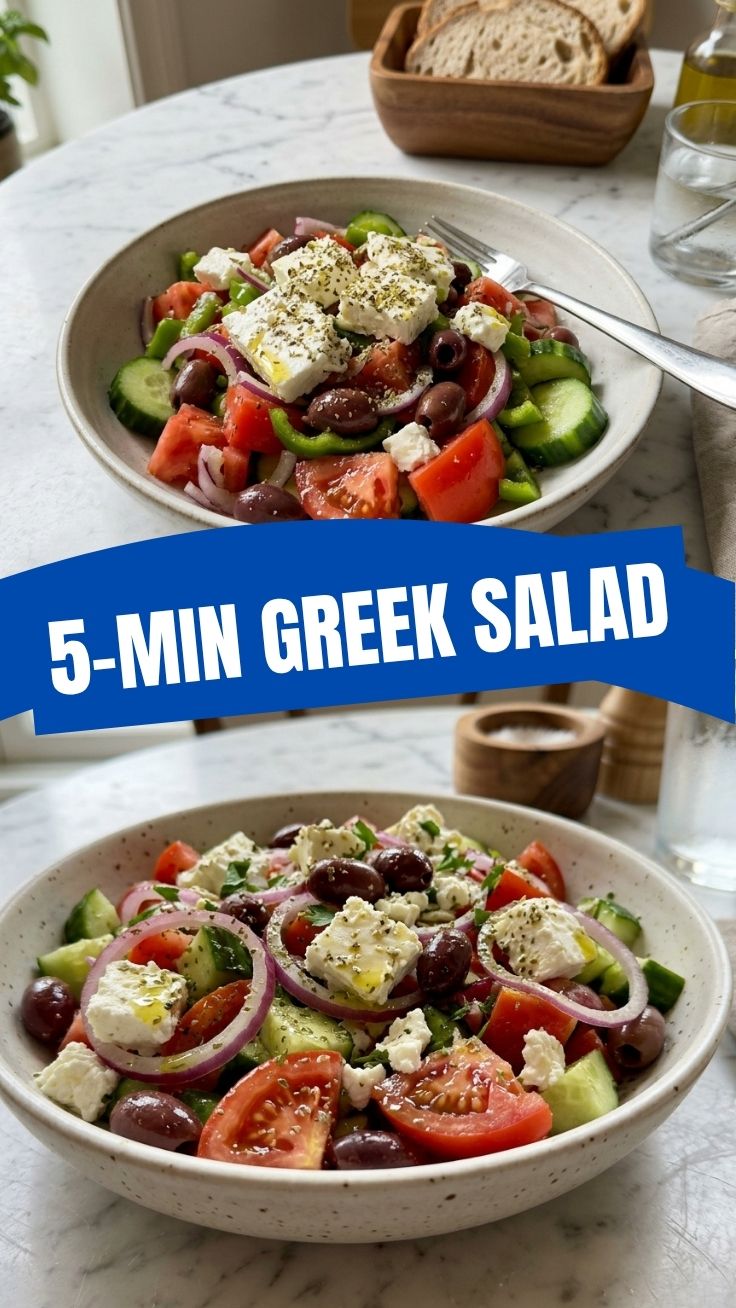
This Greek Salad is a breeze to prepare, making it ideal for busy weeknights or impromptu gatherings.
- Prep Time: 15-20 minutes (includes chopping and dressing preparation).
- Cook Time: 0 minutes (no cooking required!).
- Resting Time: 10 minutes (optional, but allows flavors to meld beautifully).
Planning is simple for this dish. You can chop all the vegetables a few hours ahead and store them separately in the refrigerator. Prepare the dressing just before serving, or up to an hour in advance. Combining everything too far ahead can lead to watery salad, so timing is key for optimal freshness.
Step-by-Step Instructions
Follow these simple steps to create a vibrant and delicious Greek Salad that captures the essence of the Mediterranean.
1. Prepare the Vegetables: Wash all your produce thoroughly. Dice the tomatoes and green bell pepper into bite-sized pieces. Thinly slice the English cucumber into half-moons or dice it. Slice the red onion very thinly, then separate the rings. For a milder onion flavor, soak the slices in ice water for 10 minutes, then drain well.
2. Combine Salad Ingredients: In your large mixing bowl, gently combine the diced tomatoes, cucumber, green bell pepper, red onion slices, and Kalamata olives.
3. Crumble the Feta: If using a block of feta, gently crumble it over the vegetables. If using pre-crumbled feta, add it at this stage.
4. Make the Dressing: In a small bowl, whisk together the extra virgin olive oil, red wine vinegar, and dried oregano. Season generously with salt and freshly ground black pepper. Taste and adjust seasonings as needed.
5. Dress the Salad: Pour the prepared dressing over the vegetables and feta.
6. Toss Gently: Using salad tongs, gently toss the ingredients until everything is evenly coated with the dressing. Be careful not to over-mix, as this can bruise the vegetables.
7. Serve Immediately: For the best texture and flavor, serve your homemade Greek Salad right away. If you wish, let it rest for 10 minutes to allow the flavors to deepen.
Nutritional Benefits & Advantages
The Greek Salad is more than just tasty; it’s a powerhouse of nutrition. Rich in fresh vegetables, it provides an abundance of vitamins (A, C, K), minerals, and dietary fiber, supporting digestive health. Tomatoes are packed with lycopene, a potent antioxidant, while cucumbers offer hydration. The olive oil, a cornerstone of the Mediterranean diet, is renowned for its monounsaturated fats, which are beneficial for heart health. Feta cheese contributes calcium and protein, making this salad a well-rounded and satisfying meal or side.
Tips, Variations & Cooking Advice
- Add Protein: For a heartier meal, grill some chicken breast, shrimp, or chickpeas and add them to your salad.
- Herb Twist: While oregano is classic, a sprinkle of fresh mint or parsley can add another layer of freshness.
- Spice It Up: A pinch of red pepper flakes in the dressing can give it a subtle kick.
- Vegetable Variations: Feel free to add other crisp vegetables like thinly sliced radishes or sweet mini bell peppers.
- No Red Wine Vinegar?: Apple cider vinegar or fresh lemon juice can be used in a pinch, though the flavor profile will shift slightly.
- Serving Suggestion: Serve alongside grilled fish, souvlaki, or with warm pita bread for dipping.
Common Mistakes to Avoid
- Pre-Dressing Too Early: Dressing the salad too far in advance will make the vegetables wilt and watery.
- Using Crumbled Feta: While convenient, pre-crumbled feta often contains anti-caking agents that affect its texture and flavor. Opt for a block and crumble it yourself.
- Skipping the Rinsing of Onions: If you find raw red onion too pungent, soaking it in ice water significantly mellows its flavor.
- Over-Tossing: This can bruise the delicate vegetables. Use a gentle hand when combining ingredients.
- Ignoring Quality Ingredients: A simple dish like Greek Salad truly shines when made with the freshest, highest-quality produce and extra virgin olive oil.
Storage & Meal Prep Tips
While best served fresh, if you have leftovers, store the undressed salad components (chopped vegetables and feta) separately from the dressing in airtight containers in the refrigerator for up to 2-3 days. Dress individual portions just before serving to maintain freshness and prevent sogginess. This salad does not freeze well due to the high water content of the vegetables.
Conclusion
There you have it – a vibrant, flavorful, and incredibly nutritious homemade Greek Salad that brings the sunny disposition of the Mediterranean right to your plate. By following these steps and tips, you’re not just making a salad; you’re crafting a balanced, refreshing meal that’s perfect for any occasion. We encourage you to try this recipe, experiment with the variations, and discover your perfect rendition of this timeless classic. Share your creations with us – we’d love to see how you make this dish your own!
FAQs
Q1: Can I use different types of olives?
A1: While Kalamata olives are traditional and provide a distinct flavor, you can certainly experiment with other briny olives like Gaeta or even a mix for variety.
Q2: How can I make this salad a complete meal?
A2: Add grilled chicken, shrimp, salmon, or a can of drained and rinsed chickpeas for added protein to transform it into a satisfying main course.
Q3: My red onion is too strong. What can I do?
A3: After thinly slicing the red onion, place the slices in a bowl of ice water for about 10-15 minutes. This process significantly mellows their pungent flavor. Drain well before adding to the salad.
Q4: Can I prepare the dressing in advance?
A4: Yes, the dressing can be made up to 3-4 days in advance and stored in an airtight container in the refrigerator. Give it a good whisk or shake before using, as the oil and vinegar may separate.
Q5: What are the best tomatoes to use for Greek Salad?
A5: Look for firm, ripe tomatoes like Roma, Beefsteak, or even colorful heirloom varieties. Avoid overly soft or watery tomatoes, which can make the salad soggy.