Unlocking the Freshest Flavors: Your Guide to a Perfect Garden Salad
Ever wonder how to elevate a simple meal into a vibrant, health-boosting experience? The answer often lies in the art of a perfectly crafted salad. Today, we’re diving into the delightful world of a classic Garden Salad – a culinary cornerstone that, when done right, is anything but basic. Preparing this dish at home isn’t just about saving money; it’s about controlling the quality of your ingredients, experimenting with fresh produce, and truly personalizing a dish to your taste. And for those seeking a burst of seasonal flavor, incorporating an Heirloom Tomato Salad element can transform your greens into an unforgettable culinary journey. Let’s explore how to create a masterpiece that will tantalize your taste buds and nourish your body.
Ingredients & Kitchen Tools
Crafting the ideal salad requires a thoughtful selection of fresh produce and a few essential kitchen aids.
Mixed Greens (6-8 cups): A blend of romaine, butter lettuce, spring mix, or spinach for varied textures and flavors. For a more robust base, consider adding kale or arugula.*
Cherry Tomatoes (1 cup): Halved or quartered for bursts of sweetness. Alternatively, use a chopped large Beefsteak tomato for a juicier bite.*
Cucumber (1 large): Peeled and sliced or diced for a refreshing crunch. English cucumbers are excellent for their mild flavor and fewer seeds.*
Carrots (2 medium): Shredded or thinly sliced into ribbons for color and sweetness. Baby carrots can be roughly chopped for convenience.*
Bell Peppers (1 large): Any color (red, yellow, orange, green) cored and diced for vibrant flavor and crunch. Red bell peppers offer the most sweetness.*
Red Onion (1/4 small): Thinly sliced or finely minced for a pungent kick. Soak in cold water for 10 minutes to reduce harshness.*
Croutons (1 cup): Homemade or store-bought for a delightful textural contrast. Toasted bread cubes tossed with olive oil and herbs work wonderfully.*
Optional Toppings: Feta cheese, goat cheese, sunflower seeds, pumpkin seeds, walnuts, hard-boiled eggs, grilled chicken, or chickpeas. Customize to your protein preference or dietary needs.*
Vinaigrette Dressing (homemade or store-bought): A simple lemon-herb vinaigrette or a balsamic dressing complements this salad beautifully. Use high-quality extra virgin olive oil and fresh lemon juice for best results.*
Kitchen Tools:
- Large Salad Bowl: Essential for tossing and serving.
- Cutting Board & Sharp Knife: For precise chopping and slicing.
- Salad Spinner: To thoroughly dry your greens, preventing a watery dressing.
- Measuring Cups & Spoons: For accurate ingredient quantities, especially for homemade dressing.
- Whisk: For emulsifying your vinaigrette.
Prep Time & Cooking Schedule
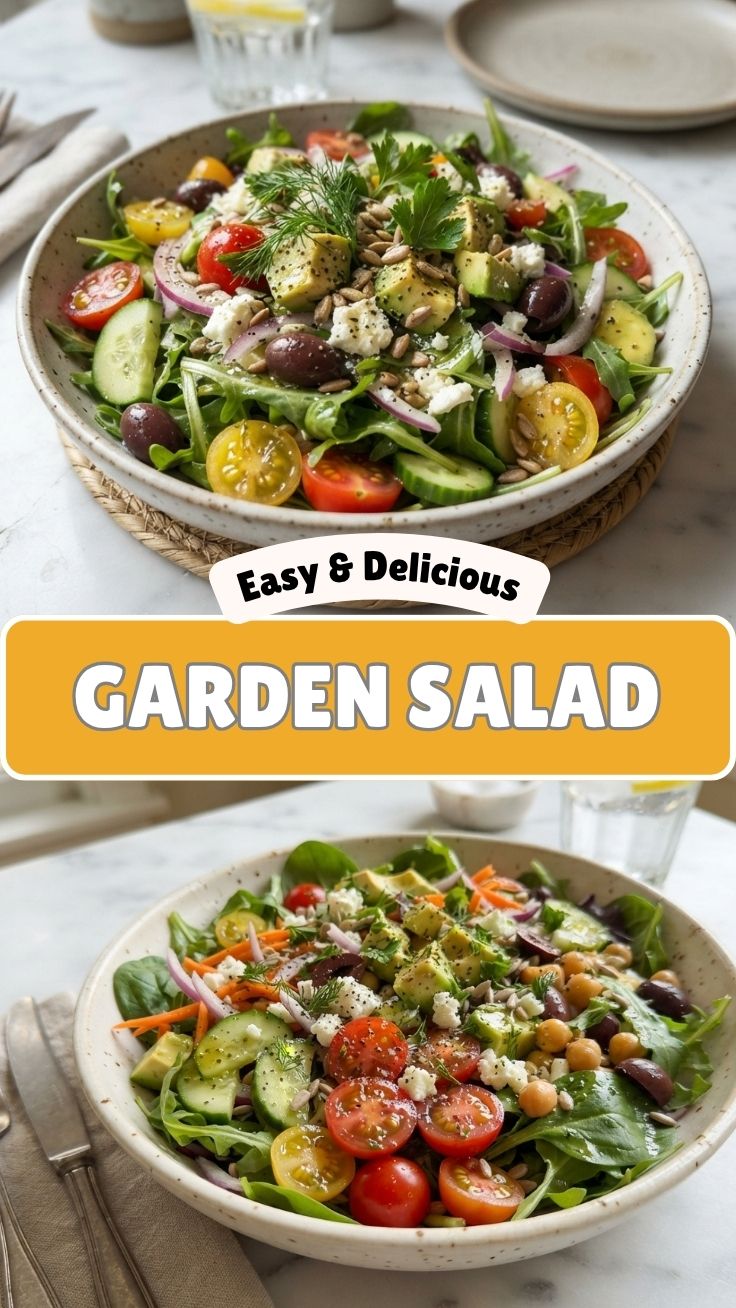
One of the greatest advantages of a fresh salad is its quick preparation!
- Prep Time: 15-20 minutes
- Cook Time: 0 minutes (unless preparing optional grilled protein or homemade croutons)
- Resting Time: 0 minutes
This recipe is perfect for a quick weeknight dinner, a refreshing lunch, or an impressive side dish for a gathering. Most of the prep involves chopping and assembling, making it an excellent choice for those busy days.
Step-by-Step Instructions
Creating a truly memorable Garden Salad is all about technique and fresh ingredients. Let’s walk through it.
1. Wash and Dry Greens: Begin by thoroughly washing your mixed greens under cold water. Use a salad spinner to remove excess moisture; this is crucial for ensuring your dressing adheres properly and doesn’t become diluted. Set aside.
2. Prepare Vegetables: On a clean cutting board, carefully chop your cherry tomatoes, cucumber, bell peppers, and shred your carrots. Thinly slice the red onion. For a burst of seasonal flavor, prepare the elements of an Heirloom Tomato Salad by slicing ripe heirloom tomatoes and arranging them beautifully.
3. Assemble the Base: In your large salad bowl, gently combine the dried mixed greens with the prepared chopped vegetables (tomatoes, cucumber, carrots, bell peppers, and red onion).
4. Add Optional Toppings: If using, sprinkle in croutons, cheese, nuts, seeds, or cooked protein at this stage.
5. Dress and Toss: Just before serving, drizzle your chosen vinaigrette dressing over the salad. Start with a smaller amount and add more to taste. Gently toss the salad with large tongs until all ingredients are lightly coated. This ensures even distribution without over-saturating the greens.
6. Serve Immediately: For the best texture and flavor, serve your freshly tossed salad right away.
Nutritional Benefits & Advantages
The beauty of a Garden Salad lies in its incredible nutritional density. Packed with an array of fresh vegetables, it’s a powerhouse of vitamins, minerals, and dietary fiber. The vibrant colors are a testament to the diverse phytonutrients present, which act as powerful antioxidants, protecting your cells from damage. Ingredients like bell peppers and tomatoes are rich in Vitamin C, while leafy greens provide Vitamin K and folate. The fiber content aids in digestion, promotes satiety, and helps regulate blood sugar levels. Incorporating healthy fats from olive oil in your dressing further enhances nutrient absorption and supports heart health. It’s a low-calorie, nutrient-rich option that supports overall well-being.
Tips, Variations & Cooking Advice
- Vary Your Greens: Don’t limit yourself to just one type! Experiment with butter lettuce, romaine, spinach, arugula, or even finely chopped kale for different textures and nutritional profiles.
- Homemade Dressing is Key: A simple vinaigrette (olive oil, vinegar, Dijon mustard, salt, pepper) elevates any salad. You control the ingredients and can avoid unhealthy additives.
- Add Fruit: Sliced apples, pears, berries, or mandarin oranges can add a delightful sweetness and complexity.
- Roast Your Veggies: For a warmer, heartier salad, lightly roast some of your vegetables (like bell peppers, zucchini, or cherry tomatoes) before adding them.
- Protein Power-Up: Boost satiety and nutritional value with grilled chicken, salmon, hard-boiled eggs, chickpeas, lentils, or tofu.
- Spice It Up: A pinch of red pepper flakes or a dash of hot sauce in your dressing can add an exciting kick.
Common Mistakes to Avoid
- Wet Greens: This is the cardinal sin of salad making! Wet greens dilute your dressing and make your salad soggy. Always use a salad spinner.
- Over-Dressing: Too much dressing can drown your beautiful ingredients and turn a crisp salad into a soupy mess. Add dressing gradually and toss.
- Dressing Too Early: Dress your salad just before serving to prevent the greens from wilting and losing their crispness.
- Lack of Texture Contrast: A good salad needs variety! Ensure you have crunchy elements (croutons, nuts, raw veggies) alongside softer ones.
- Ignoring Seasonality: While some vegetables are available year-round, salads truly shine when made with seasonal produce, which is fresher and more flavorful.
Storage & Meal Prep Tips
While salads are best enjoyed fresh, some components can be prepped ahead of time.
- Pre-Washed Greens: Wash and dry your mixed greens, then store them in an airtight container lined with a paper towel in the refrigerator for up to 3-4 days.
- Chopped Vegetables: Most hard vegetables (carrots, bell peppers, cucumbers) can be chopped and stored separately in airtight containers for 2-3 days. Softer vegetables like tomatoes are best chopped just before serving.
- Homemade Dressing: Prepare your vinaigrette and store it in an airtight jar in the refrigerator for up to a week. Shake well before use.
- Assembly: For meal prepping individual salads, layer the dressing at the bottom of a jar, followed by hard vegetables, then softer vegetables, and finally, greens on top. When ready to eat, simply shake the jar to distribute the dressing.
Conclusion
There you have it – the definitive guide to creating a vibrant and nutritious Garden Salad that transcends its humble origins. By focusing on fresh, high-quality ingredients and a few simple techniques, you can transform this kitchen staple into a culinary highlight. And remember, the addition of seasonal touches, like the bright flavors found in an Heirloom Tomato Salad, elevates the entire experience. We encourage you to experiment with your favorite vegetables, play with dressings, and make this versatile dish your own. Share your creative salad combinations in the comments below – we’d love to see how you bring this classic to life!
FAQs
Q1: How can I prevent my salad greens from wilting quickly?
A1: Thoroughly washing and drying your greens with a salad spinner is crucial. Store them in an airtight container lined with a paper towel in the crisper drawer of your refrigerator.
Q2: What’s the best way to make a simple, healthy homemade dressing?
A2: A classic vinaigrette is easy! Combine 3 parts extra virgin olive oil with 1 part acid (lemon juice or vinegar), a teaspoon of Dijon mustard (for emulsification), salt, and pepper. Whisk until well combined.
Q3: Can I add cooked grains to my Garden Salad for more substance?
A3: Absolutely! Cooked quinoa, farro, or couscous are excellent additions, adding healthy carbohydrates, protein, and a satisfying texture.
Q4: How long can I store leftover dressed salad?
A4: Dressed salad is best consumed immediately. Once dressing is added, the greens begin to wilt. For best results, only dress the portion you plan to eat.