Unleash Your Inner Carny: Mastering the Art of Homemade Funnel Cake
Ever wonder what makes that iconic fairground aroma so irresistible? That sweet, crispy, golden-brown delight that instantly transports you back to childhood karnival memories? Today, we’re not just reminiscing; we’re empowering you to recreate that magic right in your own kitchen! Forget long lines and expensive tickets – preparing a delectable Funnel Cake at home offers undeniable value. You control the quality of ingredients, customize the sweetness to your liking, and experience the pure joy of crafting a timeless treat from scratch. Get ready to impress your family and friends with an authentic funnel cake recipe that’s surprisingly simple to master.
I’m your guide to navigating the digital culinary landscape, and today we’re diving deep into the art of making the perfect Funnel Cake. This wasn’t just a whim; our data shows that searches for homemade fair foods, especially those that evoke nostalgia, are consistently trending upwards. People crave comfort, and few things deliver it like a warm, sugary Funnel Cake. Plus, with the rise of conscious eating, knowing exactly what goes into your treats is more important than ever. So, let’s unlock the secrets to this beloved dessert.
Ingredients & Kitchen Tools
Crafting the perfect Funnel Cake starts with selecting the right components and having the necessary equipment.
- All-Purpose Flour (2 cups): The structural backbone of our crispy treat.
- Granulated Sugar (¼ cup + extra for dusting): For sweetness in the batter and a delightful finishing touch.
- Baking Powder (2 teaspoons): Our leavening agent, creating the iconic airy texture.
- Salt (½ teaspoon): Balances the sweetness and enhances flavor.
- Milk (1 ½ cups): Provides moisture and helps create a smooth batter. Any milk will do, but whole milk yields a richer taste.
- Large Eggs (2): Act as a binder and add richness to the batter.
- Vanilla Extract (1 teaspoon): Adds a comforting, aromatic depth.
- Vegetable Oil (4-6 cups): For deep-frying. Opt for neutral oils like canola, sunflower, or peanut oil.
- Powdered Sugar (for dusting): The classic topping, offering a delicate sweetness.
- Funnel: The essential tool for pouring the batter into hot oil. If you don’t have one, a squeeze bottle with a wide opening or even a zip-top bag with a corner snipped off can work in a pinch.
- Large Heavy-Bottomed Pot or Dutch Oven: For safe and even deep-frying.
- Slotted Spoon or Spider: For lifting the cooked Funnel Cakes from the oil.
- Wire Rack with Paper Towels underneath: For draining excess oil.
- Whisk: For combining ingredients.
- Measuring Cups and Spoons: For accurate ingredient portions.
Prep Time & Cooking Schedule
- Prep Time: 15 minutes (This includes gathering ingredients and mixing the batter).
- Cook Time: 2-3 minutes per Funnel Cake (Deep-frying is quick!).
- Resting Time: None required for the batter. Ideally, serve immediately for the best crispy texture.
Plan to get started about 30 minutes before you want to serve, allowing ample time for the oil to heat up and for frying in batches. Since Funnel Cakes are best enjoyed fresh and hot, make sure your guests (or your eager self!) are ready to devour them as soon as they come out of the oil.
Step-by-Step Instructions
1. Prepare the Batter: In a large bowl, whisk together the flour, granulated sugar, baking powder, and salt. In a separate bowl, whisk the milk, eggs, and vanilla extract until well combined. Gradually add the wet ingredients to the dry ingredients, whisking until the batter is smooth and free of lumps. It should have the consistency of pancake batter – pourable but not too thin. This is crucial for a perfect Funnel Cake, ensuring it holds its shape while frying.
2. Heat the Oil: Pour 4-6 cups of vegetable oil into your heavy-bottomed pot or Dutch oven, ensuring it’s at least 2-3 inches deep. Heat the oil over medium-high heat until it reaches 350-375°F (175-190°C). Use a candy thermometer for accuracy. Proper oil temperature is key to achieving that golden, crispy exterior without a greasy interior.
3. Fry the Funnel Cakes: Carefully place your funnel (with the bottom opening blocked by your finger or a spoon) over the hot oil. Pour about ½ to ¾ cup of batter into the funnel. Quickly remove your finger/spoon and move the funnel in a circular motion, overlapping the batter to create a lacy, web-like pattern. Continue pouring until most of the batter is out, forming a circular shape. Fry for 1-1 ½ minutes per side, or until golden brown and cooked through. Take care not to overcrowd the pot; fry one at a time. This careful pouring technique is what makes this funnel cake recipe so iconic.
4. Drain and Serve: Using a slotted spoon or spider, carefully lift the cooked Funnel Cake from the oil, allowing excess oil to drip back into the pot. Transfer it to the wire rack lined with paper towels to drain for a few seconds. Immediately dust generously with powdered sugar.
Nutritional Benefits & Advantages
While a Funnel Cake is certainly a treat, it’s not without its merits! The main ingredients like milk and eggs provide protein and essential vitamins such as B vitamins and Vitamin D. Flour offers carbohydrates for energy. Furthermore, the act of making food from scratch means you’re avoiding many of the artificial flavors, preservatives, and excessive high-fructose corn syrup often found in pre-made or commercial versions. Think of it as a controlled indulgence!
Tips, Variations & Cooking Advice
- Flavor Variations: Swirl in a tablespoon of cocoa powder for a chocolate Funnel Cake. Add a pinch of cinnamon or nutmeg to the batter for a warmer spice profile.
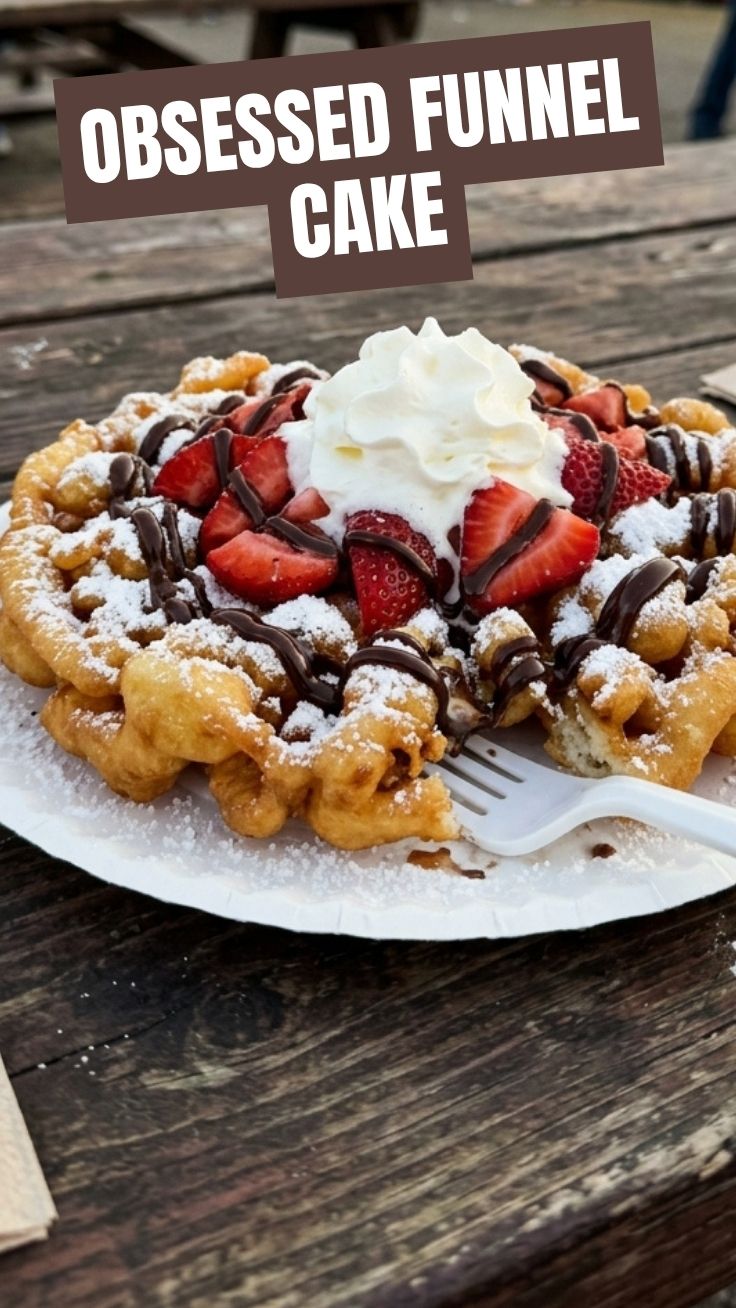
- Topping Ideas: Beyond powdered sugar, consider fresh berries, whipped cream, chocolate syrup, caramel sauce, sprinkles, or even a scoop of ice cream.
- Gluten-Free Version: Substitute the all-purpose flour with a 1:1 gluten-free baking flour blend containing xanthan gum.
- Dairy-Free Version: Use almond milk or soy milk in place of regular milk.
- Portion Control: Make smaller Funnel Cakes for individual servings or a bite-sized treat.
- Oil Temperature is Key: If the oil is too cold, the Funnel Cake will absorb too much oil and be greasy. If it’s too hot, it will burn on the outside before cooking through.
Common Mistakes to Avoid
- Over-mixing the Batter: This can develop the gluten too much, leading to a tough Funnel Cake. Mix until just combined.
- Oil Not Hot Enough: Results in greasy, soggy Funnel Cakes. Always use a thermometer.
- Overcrowding the Pot: Drops the oil temperature and leads to uneven cooking. Fry one at a time.
- Not Draining Properly: Excess oil can make the Funnel Cake heavy and less appealing. Use a wire rack.
- Waiting to Serve: The crispy texture is best right out of the oil. Don’t delay!
Storage & Meal Prep Tips
Funnel Cakes are truly at their best when enjoyed fresh and hot. However, if you do have leftovers, allow them to cool completely. Store them in an airtight container at room temperature for up to 1-2 days. To reheat, place them in a preheated oven at 350°F (175°C) for a few minutes until warmed through and slightly crispy again. Avoid the microwave, as it will make them soft and chewy. Freezing is not recommended as it significantly degrades the texture.
Conclusion
There you have it – the definitive guide to creating your very own fairground masterpiece right in your kitchen! Mastering this delightful Funnel Cake is not just about following a recipe; it’s about embracing the joy of homemade treats and creating unforgettable moments. We hope this comprehensive funnel cake recipe empowers you to whisk, fry, and sprinkle your way to culinary success. Don’t just read about it – try it! Share your creations with us in the comments below, and let’s keep the spirit of delicious, homemade fun alive.
FAQs
Q1: Can I make the batter ahead of time?
A1: While best used fresh, you can make the batter a few hours in advance and store it in the refrigerator. Give it a gentle whisk before using.
Q2: What if I don’t have a funnel?
A2: A squeeze bottle with a wide opening or a zip-top bag with a small corner snipped off can work. The key is a controlled flow of batter.
Q3: How do I know when the oil is hot enough without a thermometer?
A3: A common trick is to drop a tiny bit of batter into the oil. If it immediately sizzles and floats to the top, it’s ready. If it sinks quietly, it’s too cold. If it darkens too quickly, it’s too hot.
Q4: Can I use different flours?
A4: All-purpose flour is ideal for the classic texture. Using self-rising flour will require adjusting the baking powder. Other flours like whole wheat will change the texture significantly.
Q5: My funnel cakes are coming out greasy. What am I doing wrong?
A5: The most common culprit is oil that is not hot enough. Ensure your oil stays within the 350-375°F (175-190°C) range throughout frying. Also, make sure to drain them thoroughly on a wire rack.