Sweet Success: Crafting the Perfect Fruit Salad at Home
Tired of lackluster, store-bought fruit salads that disappoint more often than they delight? What if I told you that creating a vibrant, delicious, and truly satisfying Fruit Salad right in your own kitchen is not only easy but also incredibly rewarding? Preparing this refreshing dish at home allows for unparalleled control over freshness, quality, and flavor combinations, ensuring every spoonful is a burst of natural sweetness. Forget artificial preservatives and enjoy a truly healthy fruit mix tailored to your taste.
Ingredients & Kitchen Tools
To embark on this delightful culinary journey, gather the following:
Mixed Berries (2 cups): Strawberries (hulled and halved), blueberries, raspberries, and blackberries. Tip: Opt for organic berries when possible for enhanced flavor and fewer pesticides.*
Melons (3 cups, cubed): Cantaloupe, honeydew, watermelon. Clarification: Cut into bite-sized pieces for easy consumption.*
Citrus Fruits (2-3): Oranges (peeled and segmented), grapefruit (optional, peeled and segmented). Clarification: Segments should be free of pith.*
Tropical Fruits (1-2): Pineapple (cored and cubed), mango (peeled, pitted, and cubed). Tip: A ripe mango will have a slight give when gently squeezed.*
Grapes (1 cup): Red or green, halved if large. Clarification: Seedless varieties are preferred.*
Kiwi (2-3): Peeled and sliced. Tip: Choose firm kiwis with no soft spots.*
Fresh Mint Leaves (¼ cup, chopped): For garnish and a refreshing aroma. Substitution: Basil can offer an interesting aromatic twist.*
Lime or Lemon Juice (2 tablespoons): To brighten flavors and prevent browning of certain fruits. Clarification: Freshly squeezed is always best.*
Honey or Maple Syrup (1-2 tablespoons, optional): To enhance sweetness, if desired. Substitution: Agave nectar is another vegan-friendly option.*
- Large Mixing Bowl: For combining all ingredients.
- Sharp Knife: For precise fruit cutting.
- Cutting Board: A stable surface for safe slicing.
- Measuring Cups & Spoons: For accurate ingredient quantities.
- Zester (optional): For adding citrus zest.
Prep Time & Cooking Schedule
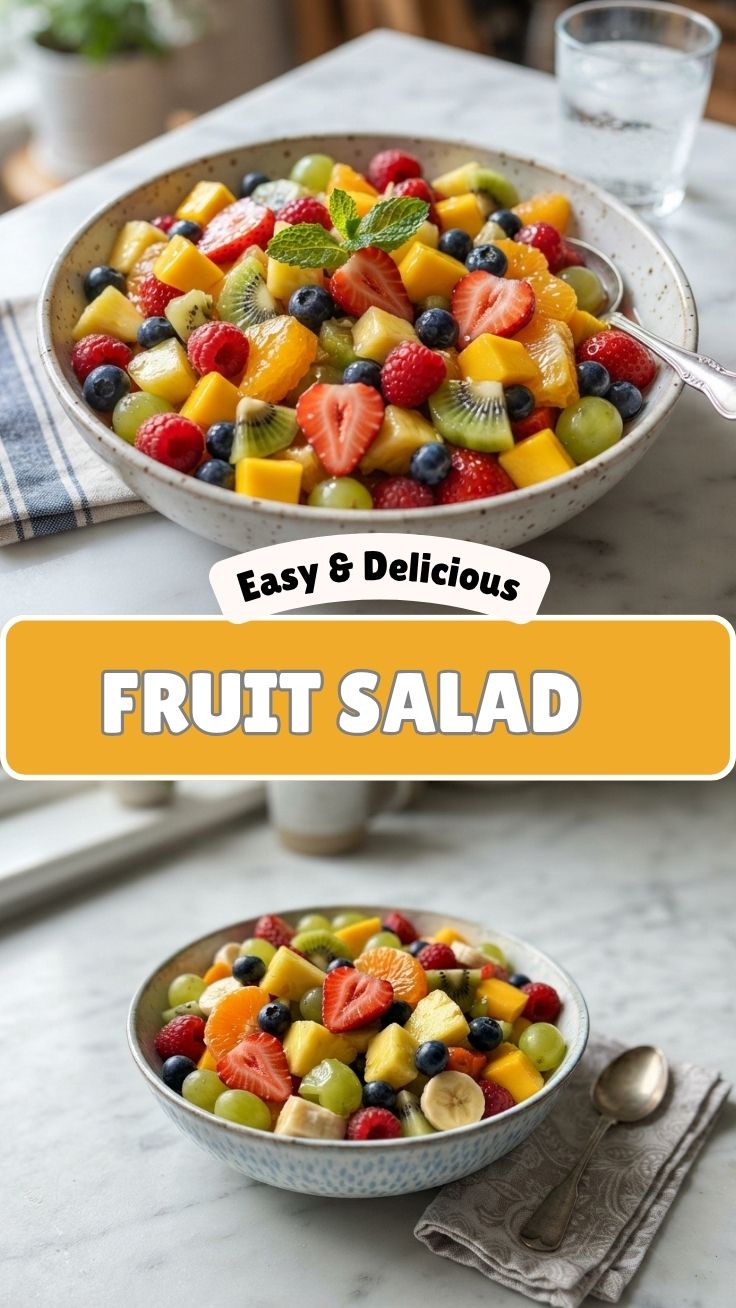
This recipe is wonderfully straightforward and requires no cooking! The emphasis is entirely on preparation and assembly.
- Prep Time: 20-30 minutes
- Chill Time: 30 minutes (minimum, for flavors to meld)
To plan your perfect Fruit Salad, I recommend prepping your fruits a few hours before serving. This allows enough time for the flavors to marry beautifully in the refrigerator, creating a more harmonious taste experience. Avoid cutting fruits too far in advance (more than 24 hours) to maintain optimal freshness and texture.
Step-by-Step Instructions
1. Prepare the Berries: Gently rinse all berries under cold water and pat them dry. Hull and halve the strawberries.
2. Cut the Melons: Carefully remove the rind from the cantaloupe, honeydew, and watermelon. Scoop out any seeds. Cut the melon flesh into uniform, bite-sized cubes.
3. Segment Citrus Fruits: Using a sharp knife, carefully remove the peel and white pith from the oranges and grapefruit. Segment the fruit, discarding any membranes.
4. Cube Tropical Fruits: Core and cube the pineapple. Peel, pit, and cube the mango.
5. Halve Grapes & Slice Kiwi: Wash and halve any large grapes. Peel and slice the kiwis.
6. Combine Fruits: In a large mixing bowl, gently combine all the prepared fruits. Be careful not to mash delicate berries.
7. Dress the Salad: Drizzle the fresh lime or lemon juice over the fruit. If using, add honey or maple syrup and the chopped mint leaves. Toss gently to coat all the fruit evenly. This creates a wonderfully integrated healthy fruit mix.
8. Chill and Serve: Cover the bowl and refrigerate for at least 30 minutes to allow the flavors to meld and for the salad to chill thoroughly. Serve cold.
Nutritional Benefits & Advantages
This vibrant Fruit Salad is a powerhouse of nutrition. Each fruit brings its unique profile of vitamins, minerals, and antioxidants. Berries are rich in Vitamin C and potent anthocyanins, which are great for immune support and anti-aging. Melons provide hydration and electrolytes. Citrus fruits boost Vitamin C, while tropical fruits like pineapple offer bromelain, an enzyme aiding digestion. The collective array of fiber helps regulate digestion and promotes satiety, making this a smart choice for a snack or light meal.
Tips, Variations & Cooking Advice
- Flavor Boost: A pinch of sea salt can surprisingly enhance the sweetness of the fruit.
- Herbal Twist: Experiment with other herbs like fresh basil or even a hint of rosemary for an unexpected aromatic dimension.
- Creamy Addition: For a richer healthy fruit mix, add a dollop of Greek yogurt or whipped cream just before serving.
- Spicy Kick: A very light sprinkle of chili powder or a dash of Tajin can add a unique sweet and spicy contrast, especially with tropical fruits.
- Dietary Adaptations: This recipe is naturally gluten-free and dairy-free. For a vegan option, ensure you use maple syrup or agave instead of honey.
Common Mistakes to Avoid
- Over-mixing: Too much tossing can bruise delicate fruits, especially berries, leading to a mushy salad.
- Cutting Too Early: Preparing fruits like apples or bananas too far in advance without citrus juice will lead to browning. Stick to the fruits listed or add browning-prone fruits right before serving.
- Ignoring Ripeness: Unripe fruit will lack sweetness and proper texture, while overripe fruit can be mushy. Choose fruits at their peak.
- Too Much Dressing: A heavy hand with the lime juice or sweetener can overpower the natural fruit flavors. Start with a little and adjust to taste.
Storage & Meal Prep Tips
Store leftover Fruit Salad in an airtight container in the refrigerator for 2-3 days. While it’s best enjoyed fresh, the flavors can continue to meld. Note that some softer fruits may become slightly mushier over time. Freezing is generally not recommended as it significantly alters the texture of most fruits, making them watery and mushy upon thawing. For meal prep, you can chop most of the fruits ahead of time and store them separately, combining and dressing them just before serving to ensure optimal freshness.
Conclusion
Crafting your own Fruit Salad at home is a simple yet incredibly rewarding experience, offering a burst of freshness and natural sweetness with every bite. By following these steps, you can create a vibrant and customizable healthy fruit mix that is far superior to any store-bought alternative. I encourage you to try this recipe, experiment with your favorite fruit combinations, and share your delicious results in the comments below! What are your go-to fruits for the perfect salad?
FAQs
Q1: Can I use frozen fruit for this recipe?
A1: While fresh fruit is highly recommended for optimal texture and flavor, you can use frozen berries if thawed properly. However, frozen melon or citrus may become too watery.
Q2: How do I prevent my fruit salad from browning?
A2: The lime or lemon juice acts as a natural antioxidant, preventing browning. Ensure all fruits, especially those prone to browning like apples (if added), are coated with the juice.
Q3: What’s the best way to choose ripe fruit?
A3: Look for vibrant colors, a pleasant aroma, and a slight give when gently pressed. Avoid fruits with bruises, soft spots, or a dull appearance.
Q4: Can I add yogurt or granola to the fruit salad?
A4: Absolutely! Adding a dollop of Greek yogurt or a sprinkle of granola just before serving can add protein, probiotics, and a delightful crunch.
Q5: How can I make this fruit salad more kid-friendly?
A5: Use fun cookie cutters to create shapes from melon slices, or include more familiar fruits like bananas and apples. A touch of whipped cream can also make it a special treat.