Elevate Your Weeknight: The Ultimate Guide to Perfect Fried Rice (Classic)
Ever wondered how to transform yesterday’s humble rice into a culinary masterpiece that rivals your favorite takeout? The secret lies in mastering the art of Fried Rice (Classic) – a dish that’s not just a meal, but a canvas for flavor and a testament to clever cooking. Preparing it at home isn’t just about saving money; it’s about control over ingredients, personalized taste, and the sheer satisfaction of creating something incredibly delicious from scratch. Today, we’re diving deep into crafting the perfect batch of Homemade Fried Rice, ensuring each grain is infused with savory goodness and every bite is a delightful experience. Get ready to impress your taste buds and your family with this ultimate guide!
Ingredients & Kitchen Tools
Here’s everything you’ll need to create your culinary delight:
- Cooked and Chilled Day-Old Rice (4 cups): Essential for that perfect, non-clumpy texture. Freshly cooked rice is too moist.
- Eggs (2 large): For scrambling; adds richness and protein.
- Protein of Choice (1 cup): Diced chicken, shrimp, tofu, or even leftover roast pork. Adds substance and flavor.
- Mixed Vegetables (1 cup): Frozen peas, carrots, and corn work beautifully. Fresh diced bell peppers or green beans are also great.
- Garlic (3 cloves): Minced; provides an aromatic foundation.
- Ginger (1-inch piece): Grated; for a pungent, warming kick.
- Green Onions (3-4 stalks): Sliced, white and green parts separated. White for cooking, green for garnish.
- Soy Sauce (3 tbsp): Low-sodium preferred; for umami and seasoning.
- Oyster Sauce (1 tbsp): Optional, but highly recommended for depth and sweetness.
- Sesame Oil (1 tsp): Drizzled at the end for an authentic nutty aroma.
- Vegetable Oil (2 tbsp): High smoke point oil for stir-frying.
- Salt and Black Pepper: To taste.
Kitchen Tools:
- Large Wok or Skillet: Essential for even cooking and stir-frying.
- Spatula: Preferably a sturdy, thin metal one for tossing.
- Small Bowls: For mise en place (prepping ingredients).
- Sharp Knife and Cutting Board: For chopping vegetables and protein.
Prep Time & Cooking Schedule
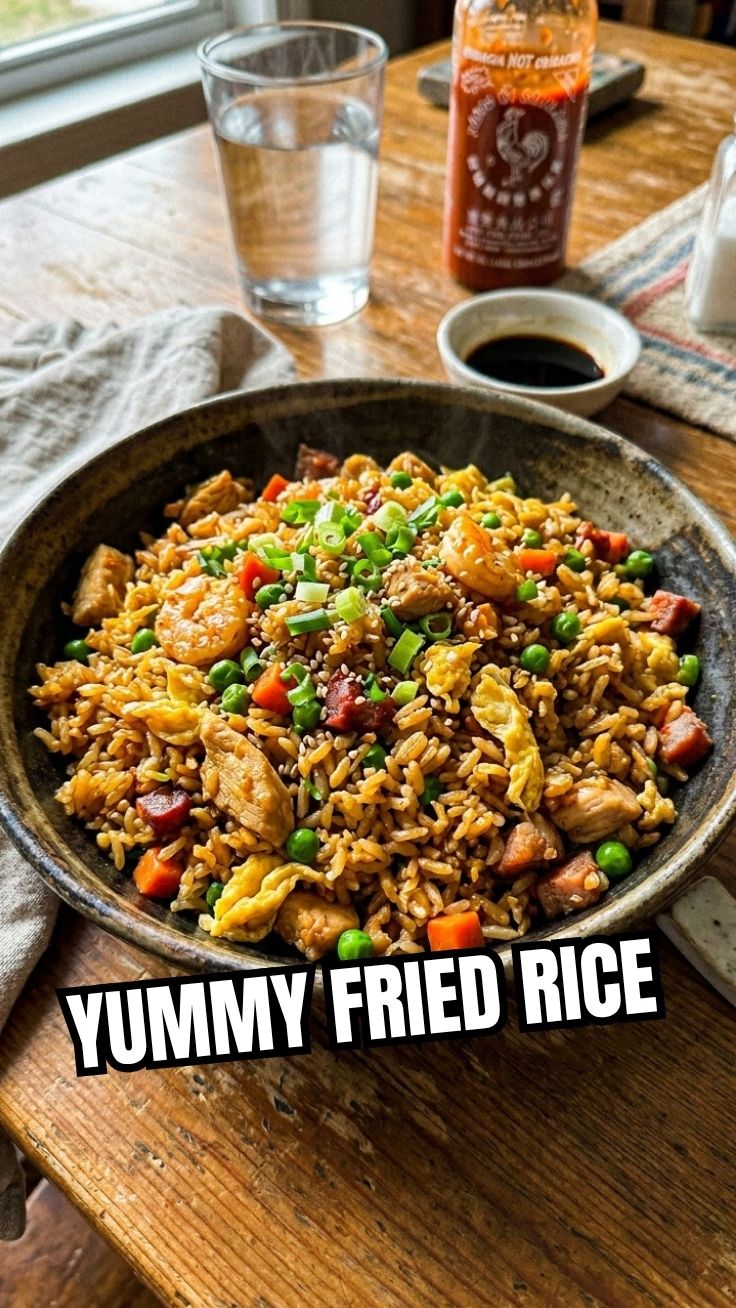
- Prep Time: 15-20 minutes (assuming rice is already cooked and chilled)
- Cook Time: 10-12 minutes
- Total Time: 25-32 minutes
This recipe is designed for speed and efficiency once your ingredients are prepped. The key is to have everything ready to go before you even turn on the heat, as stir-frying requires quick movements and high temperatures. Chilled, day-old rice is critical for the ideal texture – it prevents the dish from becoming mushy.
Step-by-Step Instructions
1. Prep Your Ingredients: Dice your chosen protein into small, bite-sized pieces. Mince garlic and grate ginger. Chop your mixed vegetables and slice your green onions, separating the white and green parts. In a small bowl, whisk the eggs with a pinch of salt and pepper.
2. Scramble the Eggs: Heat ½ tablespoon of vegetable oil in your wok or skillet over medium-high heat. Pour in the whisked eggs and scramble them until just set, then remove from the wok and set aside.
3. Cook Protein and Aromatics: Add another tablespoon of vegetable oil to the hot wok. Add your protein and stir-fry until cooked through. If using chicken, ensure it’s no longer pink. Push the protein to one side, then add the minced garlic, grated ginger, and the white parts of the green onions to the empty side. Sauté for about 30 seconds until fragrant.
4. Add Vegetables: Incorporate the mixed vegetables into the wok with the protein and aromatics. Stir-fry for 2-3 minutes until they are tender-crisp.
5. Introduce the Rice: Add the chilled day-old rice to the wok. Break up any clumps with your spatula. Stir-fry vigorously, mixing all ingredients thoroughly. The goal is to evenly heat the rice and combine the flavors. This is where the magic of Fried Rice (Classic) truly unfolds.
6. Sauce It Up: Pour in the soy sauce and oyster sauce (if using). Continue to stir-fry, ensuring every grain of rice is coated with the delicious sauce. Taste and adjust seasoning with additional soy sauce, salt, or pepper if needed.
7. Final Touches: Return the scrambled eggs to the wok. Add the green parts of the green onions and a drizzle of sesame oil. Give everything a final quick toss. The perfect Homemade Fried Rice is bursting with flavor and perfectly textured.
8. Serve Immediately: Garnish with additional green onions if desired.
Nutritional Benefits & Advantages
Homemade fried rice offers numerous benefits. It’s a fantastic way to utilize leftover rice and vegetables, reducing food waste. By preparing it yourself, you control the amount of sodium and fat, often found in excess in takeout versions. Depending on your choice of protein and vegetables, this dish can be a good source of lean protein, fiber, and essential vitamins. Eggs add choline and high-quality protein, while colorful vegetables bring antioxidants and micronutrients.
Tips, Variations & Cooking Advice
Rice Quality: Always use chilled, day-old cooked rice*. This is non-negotiable for separate grains and a non-soggy result.
- Flavor Boosts: A dash of fish sauce provides extra umami. A pinch of white pepper can add a subtle, authentic spice.
- Protein Swaps: Experiment with diced ham, crispy bacon, Spam, or even edamame for a vegetarian option.
- Vegetable Variety: Broccoli florets, water chestnuts, bamboo shoots, or baby corn can add interesting textures and flavors.
- Spicy Kick: Add a teaspoon of chili garlic sauce or a pinch of red pepper flakes during the stir-fry stage.
- Vegan/Vegetarian: Omit the eggs and oyster sauce, replace with extra soy sauce or a mushroom-based “oyster” sauce, and use tofu or tempeh as your protein.
Common Mistakes to Avoid
- Using fresh hot rice: Leads to sticky, clumpy, and mushy fried rice. Always chill it first.
- Overcrowding the wok: Lowers the temperature, steaming rather than frying your ingredients. Cook in batches if necessary.
- Not enough heat: Fried rice needs high heat for that characteristic “wok hei” (breath of the wok) flavor and crispy texture.
- Adding sauces too early: Can make vegetables and rice release too much moisture, leading to a soggy dish. Add them towards the end.
- Under-seasoning: Taste as you go and adjust. The individual components should be well-seasoned before combining.
Storage & Meal Prep Tips
Leftover fried rice can be stored in an airtight container in the refrigerator for up to 3-4 days. It’s not recommended to freeze cooked fried rice as the texture can become mushy upon thawing. To reheat, stir-fry in a lightly oiled pan over medium heat until warmed through, or microwave, stirring occasionally. Adding a tiny splash of water during reheating can help re-moisturize the rice.
Conclusion
Mastering Fried Rice (Classic) at home opens up a world of culinary possibilities, allowing you to create a dish that’s not only incredibly satisfying but also perfectly tailored to your taste. From the humble grains of day-old rice to a vibrant, flavorful meal, this guide empowers you to craft the perfect Homemade Fried Rice every single time. Don’t be afraid to experiment with different proteins and vegetables – the beauty of this dish lies in its versatility. Give it a try tonight and share your delicious creations with us!
FAQs
Q1: Can I use brown rice for fried rice?
A1: Yes, you can! Just ensure it’s cooked and chilled just like white rice. Brown rice will offer a nuttier flavor and chewier texture.
Q2: What’s the best oil for stir-frying?
A2: high smoke point oils like vegetable oil, canola oil, grapeseed oil, or peanut oil are ideal for stir-frying as they can withstand the high heat without burning.
Q3: My fried rice always turns out mushy. What am I doing wrong?
A3: The most common culprit is using freshly cooked rice. Always use day-old, chilled cooked rice. Also, avoid overcrowding your wok and make sure your heat is high enough.
Q4: How can I add more flavor to my fried rice without extra sodium?
A4: Focus on aromatics like more garlic, ginger, and green onions. Toasted sesame oil, a dash of rice vinegar, or a squeeze of lime juice at the end can also brighten flavors. Mushroom powder is another excellent umami booster.