Unlocking the Secret to Restaurant-Quality French Onion Soup at Home
Ever wondered how to capture that rich, soul-warming essence of a classic bistro French Onion Soup in your own kitchen? Many perceive this iconic dish as intimidating, reserved for professional chefs or fancy dining experiences. But what if I told you that with a few simple techniques and readily available ingredients, you could create a masterpiece that rivals your favorite restaurant, and even inspire some incredible spin-offs like a homemade French onion dip? This comprehensive guide will demystify the art of authentic French Onion Soup, guiding you through each crucial step to achieve that perfect balance of caramelized onions, savory broth, and bubbling, cheesy goodness. Preparing this culinary gem at home not only offers immense satisfaction but also allows for complete control over ingredients, ensuring a healthier and more personalized experience. Ditch the canned versions and embrace the incredible flavor journey of making this beloved soup from scratch!
Ingredients & Kitchen Tools
Crafting the perfect French Onion Soup requires a selection of quality ingredients and a few essential kitchen tools.
Yellow Onions (5-6 large): The star of the show. Their natural sugars caramelize beautifully for depth of flavor. Substitution: Sweet onions (like Vidalia) can be used, but may be slightly less robust.*
- Unsalted Butter (4 tbsp): Essential for slow caramelization and richness.
- Olive Oil (2 tbsp): Helps to prevent butter from burning during the initial sauté.
- Garlic (3 cloves, minced): Adds an aromatic base.
Dry White Wine (1 cup, e.g., Sauvignon Blanc or Pinot Grigio): Deglazes the pan and adds acidity, enhancing flavor. Substitution: Dry sherry or an additional ½ cup of beef broth if avoiding alcohol.*
Beef Broth (6-8 cups, high quality): The backbone of the soup. Use low-sodium for better control over seasoning. Vegetarian option: Robust vegetable broth, though the flavor profile will differ.*
- Fresh Thyme (2 sprigs): Earthy and aromatic, a classic pairing with onions.
- Bay Leaf (1): Deepens the savory notes.
- Salt & Freshly Ground Black Pepper (to taste): Crucial for seasoning at every stage.
- Baguette (½ loaf, day-old): For making crunchy croutons that float on top.
Gruyère Cheese (8 oz, shredded): The traditional choice for its nutty and meltable qualities. Substitution: Emmental, Comté, or even provolone for a different twist.*
- Large Heavy-Bottomed Pot or Dutch Oven: Ideal for slow, even caramelization.
- Chef’s Knife: For precise onion slicing.
- Cutting Board: A stable surface for preparation.
- Ladle: For serving.
- Oven-Safe Crocks or Bowls: Essential for broiler-toasting the cheesy tops.
- Grater: For shredding cheese.
Prep Time & Cooking Schedule
- Prep Time: 25 minutes (mostly for slicing onions).
- Cook Time: 2 hours (1 hour 30 minutes for caramelizing onions, 30 minutes for simmering broth).
- Resting Time: 10 minutes (after broiling, before serving).
Total Active Cooking Time: Approximately 2 hours.
This recipe requires patience, particularly during the onion caramelization stage. Plan for a relaxed afternoon or evening to fully enjoy the process. The long, slow cook develops profound depth of flavor.
Step-by-Step Instructions
1. Slice the Onions: Peel and halve the onions. Slice them thinly (about 1/8 inch thick) using a sharp chef’s knife or a mandoline. Consistency is key for even caramelization.
2. Caramelize the Onions (The Heart of the Soup): In your large heavy-bottomed pot or Dutch oven, melt the butter with the olive oil over medium-low heat. Add the sliced onions and a generous pinch of salt. Cook, stirring occasionally, for at least 60-90 minutes, or until the onions are deeply golden brown and beautifully caramelized. This is the most crucial step for developing the rich flavor of your French Onion Soup. Don’t rush it; patience here will be rewarded.
3. Add Aromatics & Deglaze: Once the onions are caramelized, add the minced garlic and cook for 1 minute until fragrant. Pour in the dry white wine, scraping up any browned bits from the bottom of the pot with a wooden spoon. Let the wine simmer and reduce by half, about 5-7 minutes.
4. Simmer the Broth: Add the beef broth, fresh thyme sprigs, and bay leaf to the pot. Bring to a gentle simmer, then reduce heat to low, cover, and cook for at least 30 minutes to allow the flavors to meld.
5. Prepare Croutons: While the soup simmers, preheat your oven to 375°F (190°C). Slice baguette into ½-inch thick rounds. Arrange on a baking sheet and toast for 8-10 minutes, or until golden and crisp.
6. Season and Serve: Remove the thyme sprigs and bay leaf from the soup. Taste and adjust seasoning with salt and pepper as needed. Ladle the hot soup into individual oven-safe crocks or bowls. Float a toasted baguette slice on top of each serving.
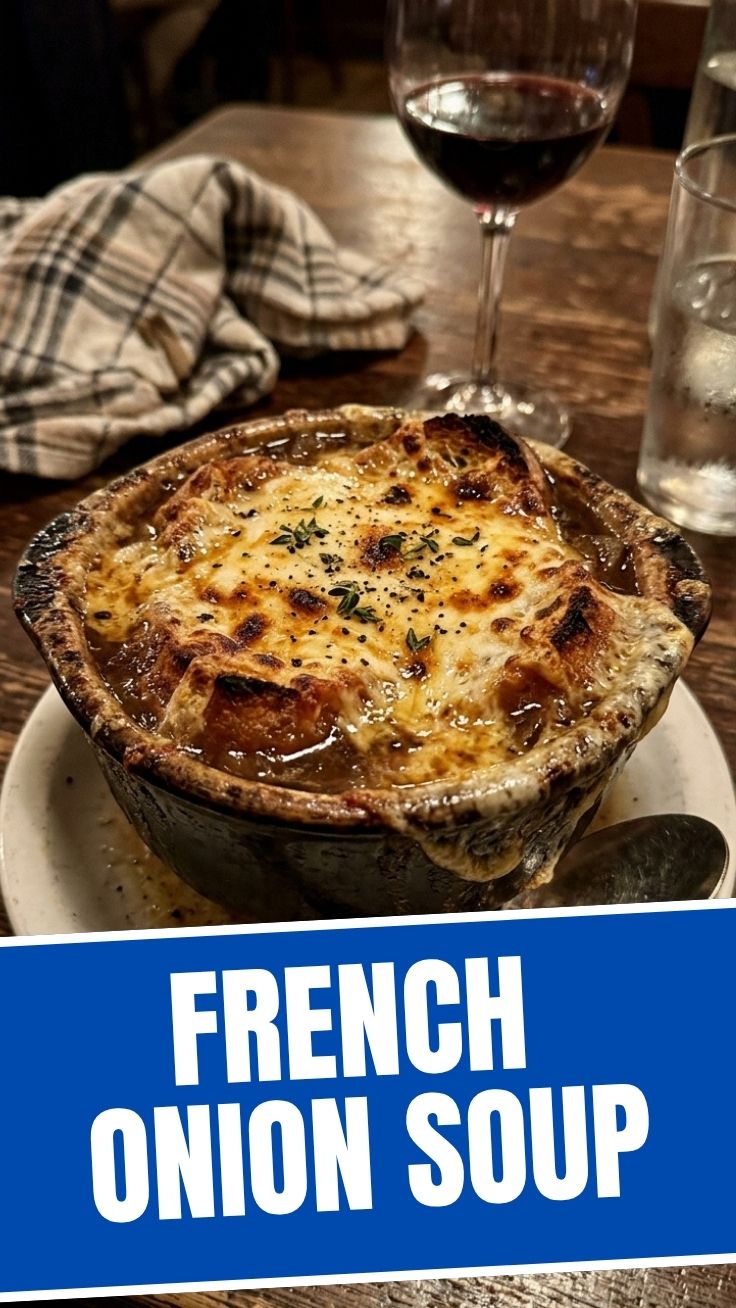
7. Top with Cheese & Broil: Generously sprinkle shredded Gruyère cheese over the baguette, making sure it covers the bread. Carefully place the bowls on a baking sheet and transfer to a preheated broiler. Broil for 2-4 minutes, watching constantly, until the cheese is bubbly, golden brown, and delightfully gooey.
8. Enjoy: Carefully remove from the broiler (the bowls will be extremely hot!) and let rest for a few minutes before serving. Enjoy your homemade French Onion Soup, and perhaps save some inspiration for a future French onion dip!
Nutritional Benefits & Advantages
French Onion Soup, when made from scratch, offers several nutritional advantages. Onions are rich in antioxidants, flavonoids, and sulfur-containing compounds, which are known for their anti-inflammatory and immune-boosting properties. The long caramelization process not only develops incredible flavor but also enhances the bioavailability of some of these beneficial compounds. High-quality beef broth provides collagen and amino acids, supporting gut health and joint function. While cheese adds calories and fat, Gruyère also provides calcium and protein. By making it at home, you avoid the excessive sodium and artificial flavors often found in canned versions, allowing you to control the fat and salt content.
Tips, Variations & Cooking Advice
- Patience is a Virtue: The single most important tip is to give the onions enough time to caramelize properly. Don’t rush this step, as it forms the foundation of the soup’s flavor.
- Flavor Boosters: A splash of brandy or cognac with the wine can add extra depth. For an even richer broth, consider using demi-glace instead of or in addition to beef broth.
- Herb Alternatives: While thyme is classic, a touch of fresh rosemary or a sprinkle of dried marjoram can also complement the onions beautifully.
- Cheese Choices: Experiment with other good melting cheeses like Comté, Fontina, or even a blend for a custom flavor profile.
- Vegetarian Version: Use a robust mushroom or vegetable broth and ensure your butter isn’t clarified (ghee) to keep it truly vegetarian (or use olive oil). The flavor will be different, but still delicious.
- Make Ahead: The soup (without the croutons and cheese topping) can be made a day or two in advance and refrigerated. Reheat gently on the stovetop before proceeding with the croutons and cheese.
Common Mistakes to Avoid
- Under-Caramelizing Onions: This is the most common mistake. Onions that are merely soft and translucent will result in a bland, watery soup. They need to be deep golden brown to develop that signature sweet and savory flavor.
- High Heat Caramelization: Cooking onions on too high heat will scorch them, leading to bitterness instead of sweetness. Keep the heat medium-low and be patient.
- Not Deglazing Properly: Neglecting to scrape up the fond (browned bits) at the bottom of the pot after adding wine means you’re leaving behind a significant amount of flavor.
- Too Much Salt Too Early: Season gradually. Beef broth can be salty, and as the soup reduces, its saltiness will concentrate. Taste and adjust at the end.
- Over-Broiling the Cheese: The broiler works quickly! Watch the cheese carefully to prevent burning; you want golden and bubbly, not blackened.
Storage & Meal Prep Tips
French Onion Soup is an excellent candidate for meal prep. The soup base (without croutons and cheese) can be stored in an airtight container in the refrigerator for up to 4-5 days. It can also be frozen for up to 3 months. To freeze, divide into individual portions in freezer-safe containers or bags.
Reheating:
- Refrigerated: Gently reheat on the stovetop over medium-low heat until simmering.
- Frozen: Thaw overnight in the refrigerator, then reheat on the stovetop.
- To Serve after reheating: Ladle into oven-safe bowls, top with fresh toasted baguette slices and shredded cheese, and broil as per the instructions. Do not freeze the soup with the bread and cheese already on it, as the texture will be compromised upon reheating.
Conclusion
Mastering homemade French Onion Soup is a rewarding culinary achievement that brings the timeless elegance of a French bistro right into your home. This dish, with its profound depth of flavor born from patiently caramelized onions, savory broth, and a glorious cheesy crust, is truly a labor of love that pays off in every spoonful. Don’t let the multi-step process deter you; each stage contributes to an unforgettable experience. And remember, the principles of flavor building learned here can even inspire other culinary creations, perhaps leading to your own gourmet French onion dip. We encourage you to try this recipe and savor the delightful transformation of humble ingredients into a culinary masterpiece. Share your results with us in the comments – did you achieve that perfect golden crust?
FAQs
Q: Can I use different types of onions?
A: Yellow or Spanish onions are ideal due to their sugar content and robust flavor for caramelization. Sweet onions can work but may result in a slightly less intense flavor. Red onions are not recommended as they can impart a purplish hue and stronger flavor.
Q: My onions aren’t caramelizing; what am I doing wrong?
A: The most common reasons are too high heat (causing scorching instead of caramelizing) or not enough time. Ensure your heat is truly medium-low, and be patient – it can take up to 90 minutes for proper deep caramelization. Adding a pinch of baking soda (about ¼ teaspoon) can also sometimes speed up the browning process chemically, but patience is always best.
Q: Do I really need to use dry white wine?
A: The dry white wine adds a crucial layer of acidity and helps deglaze the pan, incorporating all those flavorful browned bits. If you prefer to avoid alcohol, a good quality beef broth with a splash of apple cider vinegar can be a substitute, though the flavor profile will differ slightly.
Q: How do I prevent the bread from getting soggy under the cheese?
A: Using day-old or lightly toasted baguette slices helps maintain their structure. Make sure the soup is piping hot when you add the bread and cheese, and then immediately broil it. The quick broiling helps melt the cheese and create a barrier before the bread has a chance to absorb too much liquid.
Q: Can I make this soup in a slow cooker?
A: While you can simmer the broth in a slow cooker, the initial caramelization of the onions is best done on the stovetop in a Dutch oven. Slow cookers generally don’t get hot enough to achieve the deep, rich caramelization that is essential for authentic French Onion Soup flavor. You could caramelize the onions on the stovetop and then transfer them to a slow cooker with the broth to simmer.