Unveiling the Magic of Homemade French Onion Soup: A Culinary Journey
Have you ever savored the rich, soul-warming depths of a perfect French Onion Soup and wondered if you could replicate that gourmet experience in your own kitchen? The answer is a resounding “yes!” Preparing this classic at home isn’t just about saving money; it’s about infusing your cooking with love, control over ingredients, and the unparalleled satisfaction of creating something truly spectacular. In this comprehensive guide, we’ll delve into the culinary artistry behind a phenomenal Onion soup recipe, transforming humble ingredients into a bowl of pure comfort. Forget bland imitations; we’re crafting a masterpiece that will impress even the most discerning palates.
Ingredients & Kitchen Tools
Crafting the perfect French Onion Soup requires a thoughtful selection of fresh ingredients and essential kitchen gear. Here’s what you’ll need:
- Sweet Onions (5-6 large): Vidalia or Walla Walla are ideal for their natural sweetness, which caramelizes beautifully. Avoid red onions, as they can be too pungent.
- Unsalted Butter (4 tbsp): Essential for slow caramelization and rich flavor development.
- Olive Oil (2 tbsp): Helps prevent butter from burning at higher temperatures.
- Garlic (3 cloves, minced): Adds aromatic depth.
- Dry White Wine (1 cup): A dry Fumé Blanc, Sauvignon Blanc, or Pinot Grigio adds acidity and complexity to deglaze the pan.
- Beef Broth (6 cups): High-quality, low-sodium beef broth is crucial. Consider using homemade for superior flavor.
- Fresh Thyme (1 sprig): Classic herb pairing, adding an earthy aroma.
- Bay Leaf (1): Infuses a subtle, savory note.
- Cognac or Brandy (2 tbsp, optional): Enhances the depth of flavor; burn off the alcohol before adding.
- Salt and Freshly Ground Black Pepper: To taste, adjusting throughout the cooking process.
- Baguette or Ciabatta (1 loaf): Sliced ½ inch thick, for the iconic cheesy croutons.
- Gruyère Cheese (8 oz, grated): The quintessential cheese for its nutty, melty qualities. Other good melting cheeses include Comté or Emmental.
Kitchen Tools:
- Large Dutch Oven or Heavy-Bottomed Pot: Essential for even heat distribution during the lengthy caramelization process.
- Sharp Chef’s Knife: For precise onion slicing.
- Cutting Board: A stable surface for prep work.
- Wooden Spoon or Heat-Resistant Spatula: For stirring.
- Oven-Safe Soup Crocks or Bowls (4-6): Crucial for broiling the cheese topping.
- Baking Sheet: For toasting baguette slices.
- Grater: For the Gruyère cheese.
Prep Time & Cooking Schedule
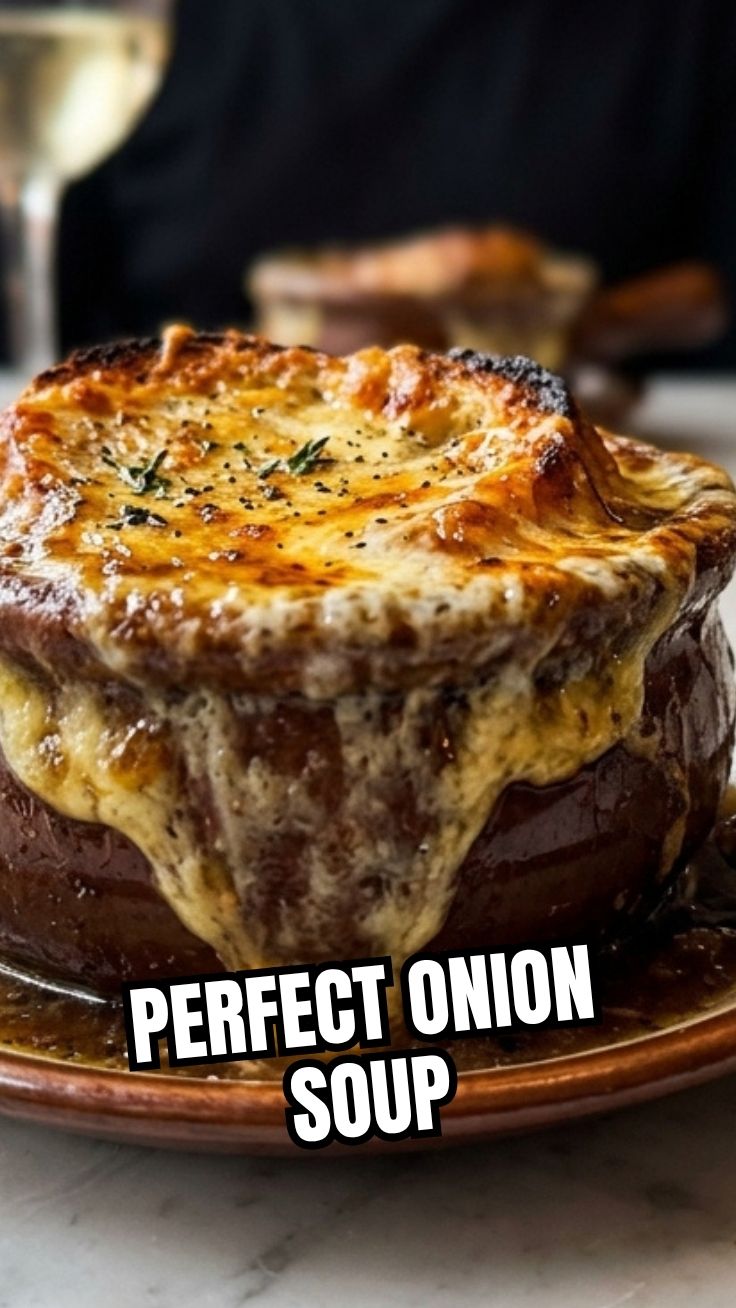
Planning is key for this classic. While the active prep time is minimal, the caramelization process takes patience.
- Prep Time: 20 minutes (slicing onions, mincing garlic, grating cheese)
- Active Cook Time: 1 hour 30 minutes (mostly unattended stirring during caramelization, simmering)
- Total Cook Time: Approximately 1 hour 50 minutes
- Resting Time: None, serve immediately!
Factor in the long caramelization when planning your meal. This is not a rushed weeknight recipe, but a delightful weekend project or a dish to prepare when you have some leisurely time.
Step-by-Step Instructions
1. Prepare the Onions: Peel and thinly slice the sweet onions. Aim for uniform slices so they cook evenly. This is the most critical step for a truly great French Onion Soup.
2. Caramelize the Onions: In your large Dutch oven or heavy-bottomed pot, melt butter and olive oil over medium-low heat. Add the sliced onions, a pinch of salt, and pepper. Stir well to coat. Cook slowly, stirring occasionally, for 45-60 minutes, or until the onions are deeply golden brown and very soft. This low and slow process draws out their natural sugars, creating incredible depth of flavor for your Onion soup recipe. Don’t rush this step! If they start to stick, add a tablespoon of water to deglaze.
3. Aromatics & Deglazing: Add minced garlic to the caramelized onions and cook for another minute until fragrant. Pour in the dry white wine and scrape up any browned bits from the bottom of the pot with your wooden spoon. Increase heat to medium and cook until the wine has almost completely evaporated.
4. Simmer the Broth: Stir in the beef broth, fresh thyme sprig, and bay leaf. If using, add the Cognac or brandy (carefully ignite it with a long match to burn off the alcohol, then extinguish by covering the pot). Bring to a simmer, then reduce heat to low, cover, and cook for at least 30 minutes to allow the flavors to meld.
5. Prepare Croutons: While the soup simmers, preheat your oven to 375°F (190°C). Arrange baguette slices on a baking sheet and toast for 8-10 minutes, or until lightly golden.
6. Assemble and Broil: Ladle the hot soup into oven-safe crocks. Float a toasted baguette slice on top of each bowl, then generously pile grated Gruyère cheese over the bread, ensuring it touches the edges of the crock.
7. Broil to Perfection: Place the crocks on a baking sheet and broil on high for 2-4 minutes, or until the cheese is bubbling, melted, and golden brown. Watch carefully to prevent burning.
8. Serve Immediately: Carefully remove from the oven and serve your magnificent French Onion Soup piping hot!
Nutritional Benefits & Advantages
Beyond its incredible taste, this classic soup offers some notable advantages. Onions, the star ingredient, are packed with antioxidants, vitamins C and B6, and beneficial prebiotics that support gut health. The slow cooking process enhances their nutritional profile. While cheese adds calories, Gruyère provides calcium and protein. The rich broth is hydrating and can be a comforting addition during colder months. Choosing a low-sodium broth allows for better control over salt intake, making this a wholesome and satisfying meal when prepared with care.
Tips, Variations & Cooking Advice
- Sweetness Control: If your onions aren’t as sweet, a pinch of sugar can be added during caramelization to aid the process, but good quality sweet onions usually negate this need.
- Vegetarian Version: For a vegetarian Onion soup recipe, substitute vegetable broth and ensure your wine is vegan. While the depth of beef broth is hard to replicate, a mushroom-based broth can offer an umami alternative.
- Gluten-Free: Use gluten-free baguette for the croutons.
- Cheese Alternatives: While Gruyère is king, Swiss, Provolone, or even a good quality mozzarella can be used in a pinch.
- Flavor Boost: A dash of Worcestershire sauce during the simmering stage can add an extra layer of savory depth.
- Broth Quality: This is non-negotiable. A poor quality broth will result in a bland soup. Invest in the best beef broth you can find, or make your own.
Common Mistakes to Avoid
- Rushing Caramelization: This is the most frequent error. Under-caramelized onions will leave your soup tasting sharp and lacking depth. Patience is paramount.
- Overcrowding the Pot: If you have too many onions for your pot, they will steam rather than caramelize. Cook in batches if necessary, or use a larger pot.
- Skimping on Cheese: The cheesy topping is an integral part of the experience. Be generous!
- Not Deglazing Properly: Those browned bits at the bottom of the pan after sautéing are pure flavor. Always scrape them up with the wine.
- Using the Wrong Broth: Chicken broth will result in a completely different flavor profile and won’t have the rich body of beef broth.
Storage & Meal Prep Tips
French Onion Soup is an excellent candidate for meal prep, as it tastes even better the next day.
- Soup Storage: The soup base can be stored in an airtight container in the refrigerator for up to 3-4 days. It can also be frozen for up to 3 months. Thaw overnight in the refrigerator before reheating.
- Croutons and Cheese: Always store the croutons and grated cheese separately. The croutons will get soggy if stored in the soup.
- Reheating: Reheat the soup gently on the stovetop until simmering. Then, proceed with adding fresh toasted baguette and cheese, and broil as directed. This ensures the best texture for both the bread and cheese.
Conclusion
Mastering a classic French Onion Soup is a truly rewarding culinary achievement. From the patient caramelization of onions to the final bubbling, cheesy crust, every step builds towards a dish that embodies comfort and sophistication. This comprehensive Onion soup recipe isn’t just about following instructions; it’s about embracing the process and understanding the nuances that elevate simple ingredients into something extraordinary. We encourage you to try this recipe in your own kitchen, savoring the aromas and the eventual triumph of a perfectly crafted bowl. Share your results with us, and let’s celebrate the magic of homemade cooking! You’ll find yourself returning to this recipe again and again.
FAQs
Q1: My onions aren’t caramelizing, they’re just getting soft. What am I doing wrong?
A1: This usually means the heat is too low or you’re not cooking them long enough. Increase the heat slightly to medium-low and be patient. It takes 45-60 minutes, sometimes longer, for proper caramelization. Don’t rush it!
Q2: Can I make this soup in a slow cooker?
A2: While you can cook the onions in a slow cooker for a very long time, classic caramelization (the browning and development of sugars) is best achieved in a Dutch oven on a stovetop with direct heat. You can finish the simmering with broth in a slow cooker, but for the initial important browning, stovetop is recommended.
Q3: What’s the best way to prevent the cheese from sliding off the crock when broiling?
A3: Ensure your baguette slice is toasted firm, and that your soup is hot when you add it. Arrange the cheese generously over the bread, making sure it extends to the edges of the crock. This helps it melt and adhere, forming that beautiful crust.
Q4: Can I use vegetable broth instead of beef broth?
A4: You can, but it will significantly alter the flavor profile. French Onion Soup traditionally uses beef broth for its deep, rich, umami notes. If using vegetable broth, opt for a high-quality, flavorful one, and consider adding a dash of soy sauce or mushroom powder for added depth.
Q5: My soup tastes a bit bland. How can I fix it?
A5: Typically, this points to insufficient caramelization of the onions or a bland broth. To fix it, you can stir in a small amount of beef bouillon, a dash of Worcestershire sauce, or even a tiny amount of balsamic vinegar to brighten the flavors, and adjust salt and pepper to taste. Next time, focus on deeply browning those onions!