Unlock Zesty Flavor: Your Guide to Crafting Perfect Authentic Pico de Gallo at Home
Ever wondered how to elevate your tacos, nachos, or grilled dishes from good to absolutely unforgettable? The secret often lies in the fresh, vibrant burst of flavor that a perfectly prepared salsa can bring. Today, we’re diving deep into the art of making Authentic Pico de Gallo, a quintessential Mexican condiment that’s a staple in countless kitchens worldwide. Beyond its incredible taste, making this fresh salsa at home ensures you control every ingredient, eliminating unwanted preservatives and allowing you to fine-tune the flavors to your exact preference. This guide will walk you through every step, ensuring your homemade version is not only delicious but also genuinely captures the essence of this beloved Pico de Gallo recipe.
Ingredients & Kitchen Tools
Crafting the perfect Pico de Gallo requires fresh, quality ingredients and a few basic kitchen essentials.
- Ripe Roma Tomatoes (3-4 large): Firm, red, and juicy. Roma tomatoes are ideal due to their lower water content, which prevents a watery salsa.
- White Onion (1/2 medium): Adds a sharp, pungent bite. Red onion can be substituted for a milder flavor.
- Fresh Cilantro (1/2 cup, chopped): Essential for that signature fresh, herbaceous aroma. If you’re not a fan, parsley can be a very subtle alternative.
- Jalapeño Pepper (1, deseeded and finely minced): Provides a gentle heat. For more spice, leave some seeds in; for less, remove membranes completely or use a milder pepper like serrano for more kick.
- Lime (1-2, juiced): Brightens the flavors and acts as a natural preservative.
- Salt (1/2 teaspoon, or to taste): Enhances all the other flavors.
- Cutting Board: A stable surface for chopping.
- Sharp Knife: Crucial for precise, even dicing.
- Mixing Bowl (medium): To combine all the ingredients.
- Spoon: For stirring.
Prep Time & Cooking Schedule
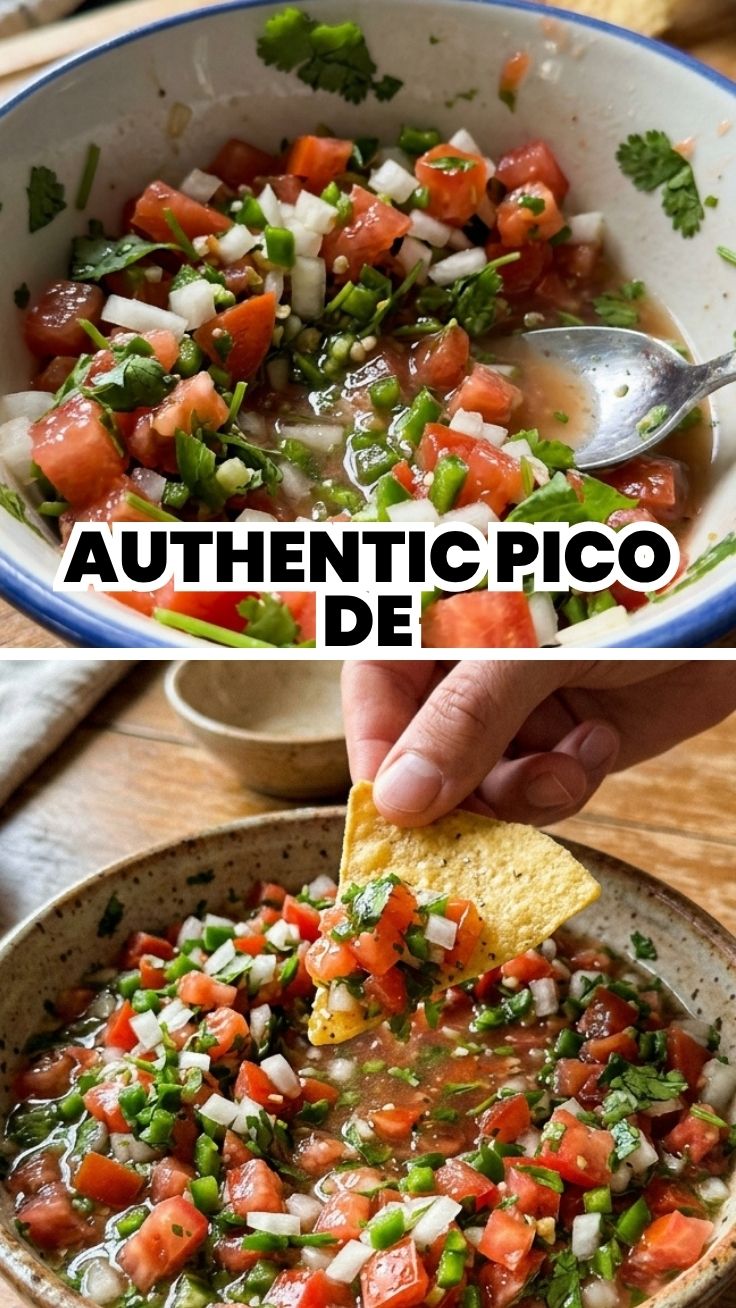
One of the best aspects of Pico de Gallo is its simplicity and speed.
- Prep Time: 15 minutes
- Resting Time: 15-30 minutes (optional, but highly recommended for flavors to meld beautifully)
- Cook Time: 0 minutes
This vibrant salsa is a fresh, uncooked condiment. The resting time allows the flavors to truly marry, resulting in a more harmonious and delicious final product. Plan to prepare it just before serving or a short while beforehand to allow for this flavor development.
Step-by-Step Instructions
Follow these steps to create your own vibrant and flavorful Authentic Pico de Gallo. Precision in dicing is key for the best texture and flavor distribution in this fresh salsa.
1. Prepare the Tomatoes: Wash and core the Roma tomatoes. Dice them into small, even 1/4-inch pieces. Place the diced tomatoes directly into your mixing bowl.
2. Dice the Onion: Peel and finely dice the white onion into similar 1/4-inch pieces. Add them to the bowl with the tomatoes. For a mellower onion flavor, you can rinse the diced onion under cold water after chopping and then pat dry with a paper towel.
3. Mince the Jalapeño: Wash the jalapeño. For mild heat, slice it in half lengthwise, remove the seeds and white membranes, then finely mince. For more heat, leave some seeds in. Add the minced jalapeño to the bowl.
4. Chop Cilantro: Wash the fresh cilantro thoroughly and pat dry. Chop it finely, including some of the tender stems, which carry a lot of flavor. Add to the bowl.
5. Combine and Season: Squeeze the fresh lime juice over all the ingredients in the bowl. Sprinkle with salt.
6. Mix Thoroughly: Gently stir all the ingredients together with a spoon until well combined.
7. Rest (Optional but Recommended): For the best flavor, cover the bowl and let the Pico de Gallo recipe rest in the refrigerator for at least 15-30 minutes. This allows the lime juice and salt to permeate the vegetables and meld the flavors. Give it one final stir before serving.
Nutritional Benefits & Advantages
Pico de Gallo isn’t just delicious; it’s also packed with nutritional goodness. Tomatoes are an excellent source of Vitamin C and antioxidants like lycopene, which promotes heart health. Onions and jalapeños contribute beneficial compounds and dietary fiber. Cilantro, a powerful herb, offers anti-inflammatory properties. Because it’s fresh and uncooked, this salsa retains maximum nutrient content, making it a healthy, low-calorie, and low-fat addition to almost any meal. It’s naturally gluten-free and vegan, catering to various dietary needs.
Tips, Variations & Cooking Advice
- Spice Level: Adjust the jalapeño quantity or include some of the seeds for more heat. For an extra fiery kick, try a serrano pepper.
- Flavor Boost: A tiny pinch of cumin or oregano can add an interesting depth to your Pico de Gallo.
- Fruity Twist: For a refreshing variation, add finely diced mango, pineapple, or corn for a sweeter, more complex salsa.
- Avocado Inclusion: Gently fold in diced ripe avocado just before serving for a creamier texture, transforming it closer to a chunky guacamole.
- Even Dicing: The key to a great Pico de Gallo is uniform dicing. This ensures every bite delivers a balanced proportion of all ingredients.
- Salt to Taste: Always start with less salt and add more as needed after the resting period. The lime juice also enhances salty flavors.
Common Mistakes to Avoid
- Using Overripe/Mushy Tomatoes: These will result in a watery and unappetizing salsa. Always choose firm, ripe tomatoes.
- Uneven Dicing: Large chunks of onion or small specks of tomato will throw off the texture balance. Consistency is key.
- Too Much Lime Juice: While lime is essential, an excessive amount can make the salsa overly tart and override the fresh vegetable flavors. Add gradually.
- Skipping the Rest Time: Although optional, allowing the salsa to rest is crucial for the flavors to meld properly. Don’t rush this step if time permits.
- Not Deseeding Jalapeños (if aiming for mild): The seeds and white membranes carry the most capsaicin (heat).
Storage & Meal Prep Tips
Store your homemade Pico de Gallo in an airtight container in the refrigerator. It is best enjoyed fresh within 2-3 days. Beyond that, the tomatoes can become watery, and the texture may degrade. This salsa is not suitable for freezing as the fresh ingredients will become mushy upon thawing. For meal prep, dice all the dry ingredients (tomatoes, onion, jalapeño, cilantro) and store them separately. Mix them with lime juice and salt just before serving to maintain maximum freshness and texture.
Conclusion
Crafting your own Authentic Pico de Gallo is a rewarding culinary experience that brings a burst of freshness and flavor to any meal. This simple yet profound Pico de Gallo recipe allows you to customize and enjoy a staple of Mexican cuisine with confidence and ease. We encourage you to try this recipe and experience the vibrant difference fresh, homemade salsa can make. Share your creations and feedback—we love to hear how your culinary adventures turn out!
FAQs
Q1: Can I use different types of tomatoes for Pico de Gallo?
A1: While Roma tomatoes are preferred for their firm texture and low water content, you can use other firm, ripe tomatoes like beefsteak, but you might need to scoop out more of the watery pulp to prevent a soupy salsa.
Q2: How can I make my Pico de Gallo less watery?
A2: Ensure you’re using firm Roma tomatoes and carefully dice them, avoiding excessive pressure that releases juices. Some cooks even gently squeeze diced tomatoes in a colander to remove excess moisture.
Q3: Is it okay to prepare Pico de Gallo in advance?
A3: Pico de Gallo is best enjoyed fresh. While it benefits from a 15-30 minute rest, preparing it more than 2-3 hours in advance can lead to a loss of texture and a more watery consistency from the tomatoes.
Q4: What are some creative ways to serve Pico de Gallo?
A4: Beyond tacos and nachos, it’s fantastic with grilled chicken or fish, as a fresh topping for scrambled eggs, mixed into avocado for a quick guacamole, or simply enjoyed with tortilla chips.
Q5: What if I don’t like cilantro?
A5: While cilantro is traditional, if you’re not a fan, you can omit it entirely. Some people substitute fresh parsley, but be aware that the flavor profile will change significantly.