Unlocking Authentic Flavor: Your Guide to Homemade Salsa Perfection
Are you tired of bland, store-bought Salsa that lacks that vibrant, homemade kick? Imagine a world where every chip dip is a burst of fresh, zesty flavor, a culinary rhythm that moves you as much as Salsa dancing. Preparing your own Salsa at home isn’t just about saving money; it’s about unlocking a symphony of fresh ingredients, customizing to your exact taste, and creating a truly memorable experience. This comprehensive guide will empower you to craft the perfect homemade Salsa, elevating your culinary game and impressing everyone lucky enough to try it.
Ingredients & Kitchen Tools
To embark on your Salsa journey, gather these fresh ingredients and essential kitchen tools:
- Ripe Tomatoes (4-5 medium): Roma or vine-ripened work best for their firm flesh and balanced sweetness.
- Red Onion (1 small): Adds a sharp, pungent bite.
- Jalapeño Pepper (1-2, to taste): For a moderate kick; remove seeds and membranes for less heat.
- Fresh Cilantro (1/2 cup, packed): Essential for that signature fresh, herbaceous flavor.
- Lime (1 large): Provides crucial acidity and brightness.
- Garlic (2 cloves): Minced for aromatic depth.
- Salt (1/2 tsp, or to taste): Enhances all the other flavors.
- Cumin (1/4 tsp): A warm, earthy spice that adds complexity.
- Sugar (pinch, optional): Balances acidity if tomatoes are tart.
Kitchen Tools & Utensils:
- Food Processor or Blender: For a smoother Salsa; a cutting board and sharp knife for a chunkier texture.
- Large Mixing Bowl: To combine all your delicious ingredients.
- Measuring Spoons & Cups: For accurate ingredient amounts.
- Citrus Juicer: To get the most out of your lime.
Prep Time & Cooking Schedule
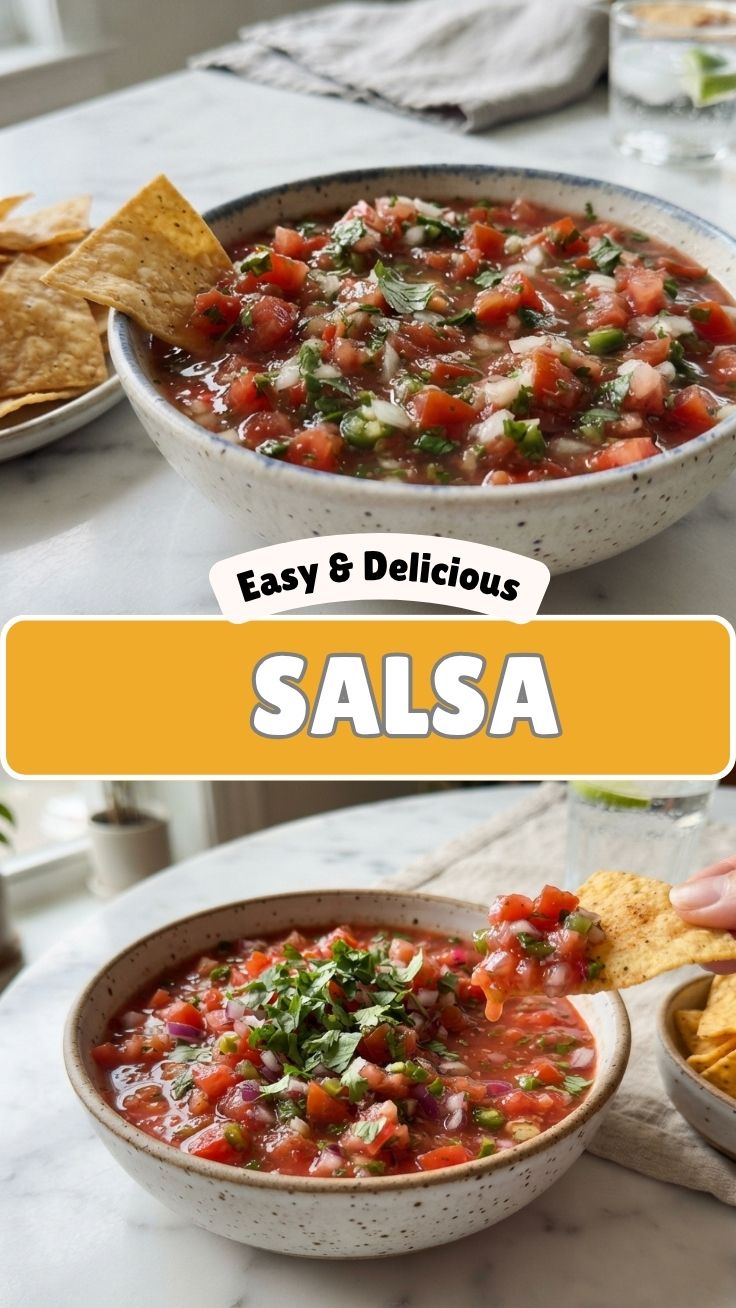
Crafting the perfect homemade Salsa is a quick and rewarding process.
- Prep Time: 15-20 minutes (depending on desired chop size)
- Resting Time: 30 minutes (minimum, for flavors to meld)
- Cook Time: 0 minutes (no cooking required for this fresh Salsa recipe!)
Allowing the Salsa to rest is crucial. Just like a good wine needs to breathe, Salsa flavors develop and deepen, creating a more harmonious and satisfying taste experience. Plan to make your Salsa at least 30 minutes before serving.
Step-by-Step Instructions
1. Prepare the Tomatoes: Wash and core the tomatoes. For a chunkier Salsa, finely dice them by hand. For a smoother consistency, roughly chop and add to your food processor.
2. Dice Aromatics: Finely dice the red onion and jalapeño. Mince the garlic cloves. If using a food processor, add these to the processor after the tomatoes.
3. Process or Combine: If using a food processor, pulse the ingredients a few times until your desired texture is reached. Be careful not to over-process, as you want some texture. If dicing by hand, combine all the diced ingredients in a large mixing bowl.
4. Add Fresh Herbs and Citrus: Roughly chop the fresh cilantro and add it to the mixture. Squeeze the juice from the lime directly into the Salsa. This vital step is where the brightness comes alive, adding a zest that’s almost as invigorating as watching a captivating Salsa dancing performance.
5. Season and Taste: Add salt, cumin, and a pinch of sugar (if using). Stir well to combine all ingredients thoroughly. Taste and adjust seasoning as needed – you might want more salt, lime, or even a touch more jalapeño.
6. Rest and Serve: Cover the bowl and refrigerate for at least 30 minutes to allow the flavors to meld. Serve chilled with your favorite tortilla chips, tacos, or grilled meats.
Nutritional Benefits & Advantages
Homemade Salsa is a powerhouse of nutrition. Tomatoes are rich in lycopene, a powerful antioxidant, and Vitamin C. Onions offer prebiotics for gut health, while jalapeños contain capsaicin, known for its anti-inflammatory properties. Fresh cilantro provides vitamins K and A, and lime juice boosts immunity with its high Vitamin C content. This fresh Salsa is naturally low in calories and fat, making it a healthy and delicious condiment for almost any meal.
Tips Variations & Cooking Advice
- Roast for Depth: For a smoky flavor, roast your tomatoes, onions, and jalapeños under a broiler or on a grill before dicing.
- Spice it Up: Add a serrano pepper for more heat, or a pinch of cayenne pepper.
- Fruity Twist: Incorporate diced mango, pineapple, or peaches for a sweet and savory fruit Salsa.
- Black Bean Salsa: Add canned, rinsed black beans and corn for a heartier version.
- Chipotle Kick: A dash of adobo sauce from canned chipotle peppers can add a wonderful smoky heat.
- Texture Control: Experiment with different levels of chopping – from a fine mince for a smoother Salsa to a rough chop for a more rustic, chunky style.
Common Mistakes to Avoid
- Over-processing: If using a food processor, be careful not to turn your Salsa into a watery puree. Pulse in short bursts.
- Skipping the Rest: Flavors need time to mingle and develop. Don’t rush this crucial step.
- Too Much Liquid: If your tomatoes are very juicy, you might want to drain some of the excess liquid before adding them to the bowl or processor.
- Not Tasting: Always taste and adjust seasoning throughout the process. Every batch of tomatoes is different!
Storage & Meal Prep Tips
Homemade Salsa is best enjoyed fresh, but it can be stored.
- Refrigeration: Store in an airtight container in the refrigerator for up to 3-4 days. The flavors may intensify over time, which can be a good thing!
- Freezing: Freezing is generally not recommended for fresh Salsa as the texture of the tomatoes can become mushy upon thawing.
- Meal Prep: Prepare a large batch of chopped vegetables (excluding cilantro and lime) at the beginning of the week, and then mix in the fresh cilantro and lime just before serving to maintain optimal freshness and vibrant flavor.
Conclusion
Crafting your own fresh, vibrant Salsa is a culinary delight that far surpasses anything you’ll find in a jar. By following these steps, you’ve not only created a delicious condiment but also a celebration of fresh ingredients, a true masterpiece of flavor. The process is as enjoyable and rhythmic as a lively Salsa dancing session. We encourage you to try this recipe, experiment with variations, and share your homemade Salsa creations with friends and family. Your taste buds (and your guests) will thank you!
FAQs
Q1: Can I use canned tomatoes for this recipe?
A1: While fresh tomatoes are highly recommended for the best flavor and texture, you can use canned diced tomatoes (drained) in a pinch. The flavor profile will be slightly different.
Q2: How can I make my Salsa less watery?
A2: Ensure your tomatoes are ripe but firm. You can also scoop out some of the seedy, watery pulp from the tomatoes before dicing or processing. If using a food processor, pulse fewer times to avoid releasing too much liquid.
Q3: What if I don’t have fresh cilantro?
A3: While fresh cilantro is key, you can omit it if you dislike the flavor or don’t have any. The Salsa will still be delicious, just with a different aromatic profile.
Q4: How can I adjust the spice level?
A4: To increase heat, add more jalapeño, or include the seeds and membranes. For less heat, remove all seeds and membranes from the jalapeño, or use a milder pepper like a bell pepper (green or red) for flavor without the spice.
Q5: What’s the best way to serve homemade Salsa?
A5: It’s fantastic with tortilla chips, as a topping for tacos, burritos, grilled chicken or fish, eggs, or even as a vibrant side dish!