From Garden to Table: Crafting the Perfect Homemade Salad Experience
Tired of uninspired, pre-packaged salads that lack zest and personality? What if I told you that creating a vibrant, flavorful, and incredibly healthy salad at home is not only achievable but also immensely satisfying? This isn’t just about throwing some greens together; it’s about a culinary journey that elevates simple ingredients into a masterpiece of freshness. Today, we’re diving deep into the art of making a truly exceptional Garden Salad that will revolutionize your mealtime. We’ll explore how to transform even the most basic components, like crisp Lettuce, into a delightful experience. Preparing this dish at home offers unparalleled control over ingredients, allowing you to tailor it perfectly to your taste and dietary needs, while also unlocking a world of fresh, wholesome flavors.
Ingredients & Kitchen Tools
Crafting the perfect salad starts with selecting the best components and having the right equipment.
Ingredients:
- Mixed Greens (6 cups): A diverse blend of tender leaves like romaine, butter lettuce, and arugula provides a variety of textures and peppery notes. Also great for a base in your Garden Salad.
- Cherry Tomatoes (1 cup): Halved or quartered for bursts of sweetness.
- Cucumber (1 large): Peeled, deseeded, and diced for a refreshing crunch. Try English or Persian cucumbers for fewer seeds.
- Bell Pepper (1 medium): Any color (red, yellow, orange) cored and thinly sliced for sweetness and color.
- Red Onion (1/4 cup): Thinly sliced or finely diced for a pungent kick. Soak in ice water for 10 minutes to mellow its flavor.
- Carrots (2 medium): Grated or julienned for sweetness and a vibrant hue.
- Avocado (1 ripe): Diced just before serving to prevent browning; adds creamy richness.
- Feta Cheese (1/2 cup): Crumbled for a tangy, salty punch. (Optional substitution: goat cheese for a milder tang, or nutritional yeast for a vegan alternative).
- Toasted Walnuts or Pecans (1/4 cup): Roughly chopped for a satisfying crunch and healthy fats. (Optional substitution: sunflower or pumpkin seeds for a nut-free option).
- Homemade Vinaigrette: (Ingredients below)
* Extra Virgin Olive Oil (1/2 cup): The foundation of a good vinaigrette.
* Apple Cider Vinegar (2 tbsp): Or red wine vinegar; adds tang.
* Dijon Mustard (1 tsp): Emulsifies the dressing and adds a subtle sharpness.
* Honey or Maple Syrup (1 tsp): Balances the acidity. (Optional substitution: agave nectar for a vegan option).
* Garlic (1 clove): Minced finely for aromatic depth.
* Salt & Freshly Ground Black Pepper (to taste): Essential for seasoning.
Kitchen Tools:
- Large Salad Bowl: For mixing and serving your beautiful salad.
- Sharp Chef’s Knife: For precise chopping and slicing.
- Cutting Board: A sturdy surface for all your prep work.
- Measuring Cups & Spoons: For accurate ingredient portions.
- Whisk: To emulsify the vinaigrette.
- Small Jar or Container with Lid: For shaking and storing the vinaigrette.
- Salad Spinner: (Highly recommended) To thoroughly dry the Lettuce and other greens, preventing a watery salad.
Prep Time & Cooking Schedule
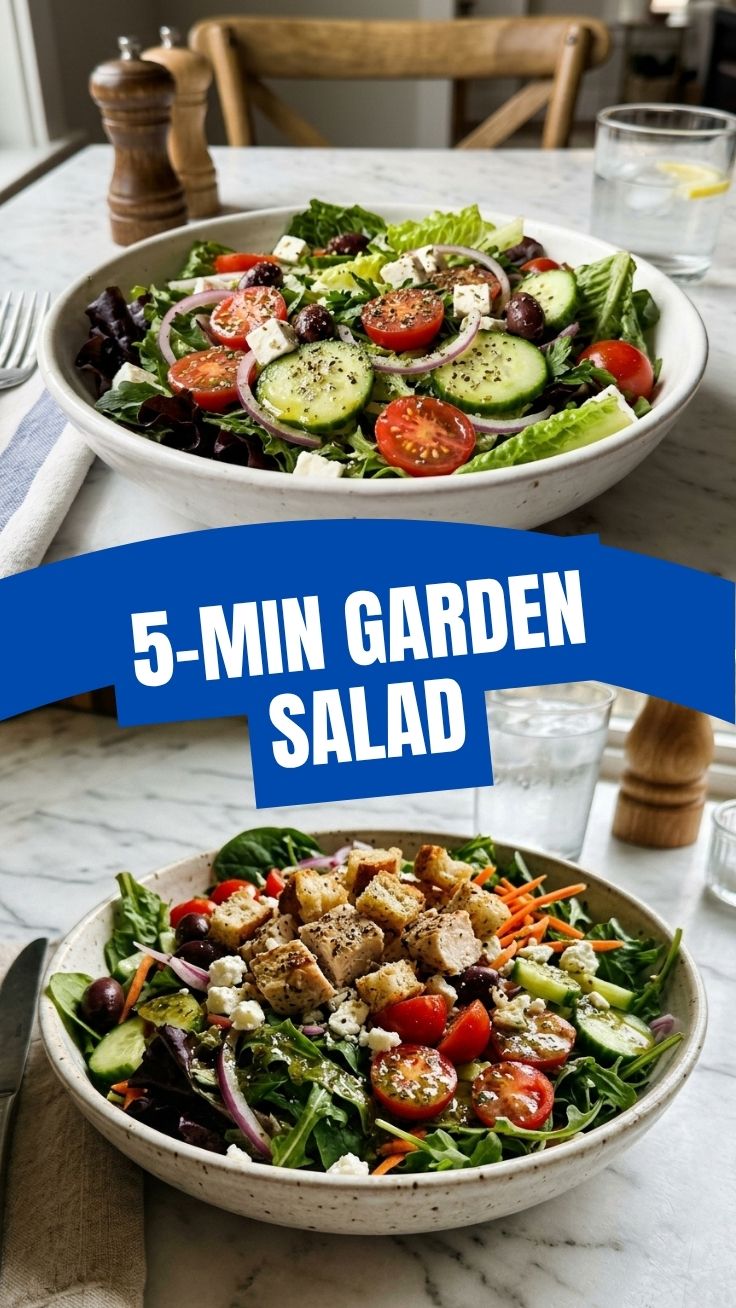
This delightful salad is a breeze to prepare, making it perfect for a quick weeknight meal or a refreshing addition to a weekend spread.
- Prep Time: 20 minutes
- Resting Time (for vinaigrette flavors to meld): 10 minutes (optional, but recommended)
Plan to assemble the salad just before serving to ensure maximum freshness and crispness. If preparing for a later meal, chop all ingredients and store them separately. Dress the salad immediately before eating to prevent sogginess, especially for delicate greens like Lettuce.
Step-by-Step Instructions
Follow these simple steps from garden to table to create your perfect Garden Salad:
1. Prepare the Vinaigrette: In a small jar, combine extra virgin olive oil, apple cider vinegar, Dijon mustard, honey/maple syrup, minced garlic, salt, and pepper. Secure the lid and shake vigorously until well combined and emulsified. Taste and adjust seasoning as needed. Set aside.
2. Wash and Dry Greens: Wash your mixed greens thoroughly under cold water. Use a salad spinner to remove excess water. This is crucial for crisp Lettuce and for the dressing to adhere properly.
3. Chop Vegetables: Prepare all your vegetables: halve cherry tomatoes, dice cucumber, slice or dice bell pepper and red onion, grate or julienne carrots.
4. Assemble the Salad Base: In your large salad bowl, gently combine the washed and dried mixed greens, cherry tomatoes, cucumber, bell pepper, red onion, and carrots.
5. Add Richness and Crunch: Dice the avocado and delicately add it to the bowl. Sprinkle the crumbled feta cheese and toasted nuts over the vegetables.
6. Dress and Serve: Just before serving, drizzle the homemade vinaigrette over the salad. Start with half the dressing and add more as desired, tossing gently to coat all ingredients evenly. Serve immediately and enjoy!
Nutritional Benefits & Advantages
This homemade Garden Salad is a powerhouse of nutrition. Mixed greens, particularly dark leafy varieties like romaine and spinach, are rich in vitamins K, A, and C, as well as folate. Cucumbers and tomatoes contribute significant hydration and antioxidants. Carrots are packed with beta-carotene, essential for vision and skin health. Bell peppers are an excellent source of vitamin C. Avocado provides healthy monounsaturated fats, crucial for heart health and nutrient absorption. The nuts add plant-based protein, fiber, and omega-3 fatty acids, while the homemade vinaigrette allows you to control the quality of oils and reduce unhealthy additives often found in store-bought options. This vibrant dish promotes good digestion, supports immune function, and provides sustained energy.
Tips, Variations & Cooking Advice
- Protein Boost: For a more substantial meal, add grilled chicken, salmon, shrimp, chickpeas, or hard-boiled eggs.
- Grain Power: Incorporate cooked quinoa, farro, or couscous for added fiber and satiety.
- Cheese Alternatives: Beyond feta, try crumbled goat cheese, shaved Parmesan, or dairy-free alternatives.
- Fruitful Additions: Sliced apples, pear, or berries can add a delightful sweetness and complexity.
- Spice it Up: A pinch of red pepper flakes in the vinaigrette or a dash of chili powder on the avocado can add a subtle kick.
- Herbaceous Notes: Fresh herbs like parsley, dill, or mint can elevate the flavor profile.
- Roast Your Veggies: For a warmer salad, roast some of the vegetables like bell peppers or sweet potatoes before adding them.
Common Mistakes to Avoid
- Wet Greens: This is the cardinal sin of salad making! Wet greens dilute the dressing and lead to a limp, unappetizing result. Always use a salad spinner or thoroughly pat dry your Lettuce.
- Over-dressing: Starting with too much dressing can overwhelm the natural flavors of your fresh ingredients. Always add dressing gradually and toss gently. You can always add more, but you can’t take it away.
- Dressing Too Early: Dressing the salad too far in advance will make your greens soggy and sad. Always dress just before serving.
- Lack of Variety: Using only one type of green or vegetable can make the salad bland. Aim for a mix of textures, colors, and flavors.
- Uneven Chops: Inconsistently chopped vegetables can lead to an unbalanced texture in each bite. Strive for uniform pieces.
Storage & Meal Prep Tips
For optimal freshness, it’s best to assemble and dress this salad just before eating. However, you can certainly prep ingredients in advance for quick assembly:
- Washed Greens: Wash and dry your mixed greens thoroughly. Store them in an airtight container lined with a paper towel in the refrigerator for up to 3-4 days.
- Chopped Vegetables: Store chopped hardy vegetables (cucumbers, bell peppers, carrots, red onion) in separate airtight containers in the refrigerator for up to 3-4 days.
- Vinaigrette: The homemade vinaigrette can be stored in an airtight jar in the refrigerator for up to a week. Shake well before each use.
- Avocado: To prevent browning, dice avocado just before serving. If you must pre-cut, toss it with a bit of lemon or lime juice and store in an airtight container.
Conclusion
Creating a delicious, fresh, and nutritious Garden Salad at home is a skill that pays dividends in flavor and health. By focusing on fresh ingredients, proper preparation, and thoughtful assembly, you can transform a simple bowl of Lettuce and vegetables into a highlight of any meal. We encourage you to experiment with different vegetables, proteins, and dressings to truly make this recipe your own. Share your creations in the comments below, and let us know your favorite salad variations!
FAQs
Q1: How can I keep my salad greens crisp for longer?
A1: Thoroughly wash and dry your greens with a salad spinner. Store them in an airtight container lined with a paper towel in the refrigerator; the paper towel absorbs excess moisture.
Q2: Can I substitute the apple cider vinegar in the dressing?
A2: Yes, red wine vinegar or fresh lemon juice are excellent substitutes for apple cider vinegar, offering a similar tang.
Q3: What are some good protein additions for this salad?
A3: Grilled chicken breast, pan-seared salmon, hard-boiled eggs, chickpeas, black beans, or lentils all make fantastic and nutritious protein boosters.
Q4: My homemade vinaigrette separates; is that normal?
A4: Yes, it’s perfectly normal for oil and vinegar to separate. Just give the jar a good shake before you drizzle it over your salad to re-emulsify it.
Q5: How can I make this salad a full meal?
A5: To make it a complete meal, increase the portion size, add a substantial protein source (like grilled chicken or a hearty mix of legumes), and consider incorporating a complex carbohydrate like cooked quinoa or a slice of whole-grain bread on the side.