Master the Iconic Caprese Salad: Your Guide to Homemade Perfection
Ever wondered how to capture the vibrant essence of summer on a single plate? Look no further than the Caprese Salad! This seemingly simple dish, often found gracing menus in high-end Italian restaurants, is surprisingly easy and incredibly rewarding to prepare right in your own kitchen. There’s an unparalleled satisfaction in assembling this classic Italian masterpiece, allowing you to control the quality of every ingredient, from the juicy, ripe tomatoes to the exquisitely creamy Italian Mozzarella. Beyond its undeniable deliciousness, preparing Caprese Salad at home enables you to savor fresh, seasonal flavors at their peak, often at a fraction of the cost of dining out. It’s a culinary journey that celebrates simplicity and freshness, making it a perfect addition to any meal or a delightful appetizer on its own.
Ingredients & Kitchen Tools
To embark on your Caprese journey, gather these high-quality ingredients and essential tools:
- Ripe Tomatoes (2-3 large or 1 pint cherry/grape tomatoes): Opt for heirloom, beefsteak, or vine-ripened varieties for best flavor. Cherry or grape tomatoes offer a delightful bite-sized alternative.
- Fresh Italian Mozzarella (8 oz ball, preferably fresh mozzarella di bufala or fior di latte): The heart of the Caprese. Seek out fresh, soft mozzarella in brine for superior texture and taste.
- Fresh Basil Leaves (1/2 cup, packed): Aromatic and essential. Pick leaves that are vibrant green and free of blemishes.
- Extra Virgin Olive Oil (2-3 tablespoons): Choose a high-quality, fruity extra virgin olive oil for a rich finish.
- Balsamic Glaze (optional, 1-2 tablespoons): A sweet-tart reduction that beautifully complements the other flavors. You can buy pre-made or make your own.
- Sea Salt (to taste): Enhances the natural flavors of the tomatoes and cheese.
- Freshly Ground Black Pepper (to taste): Adds a subtle kick.
- Sharp Knife: For precise slicing of tomatoes and mozzarella.
- Cutting Board: A stable surface for safe and efficient preparation.
- Serving Platter: To beautifully arrange your salad.
Prep Time & Cooking Schedule
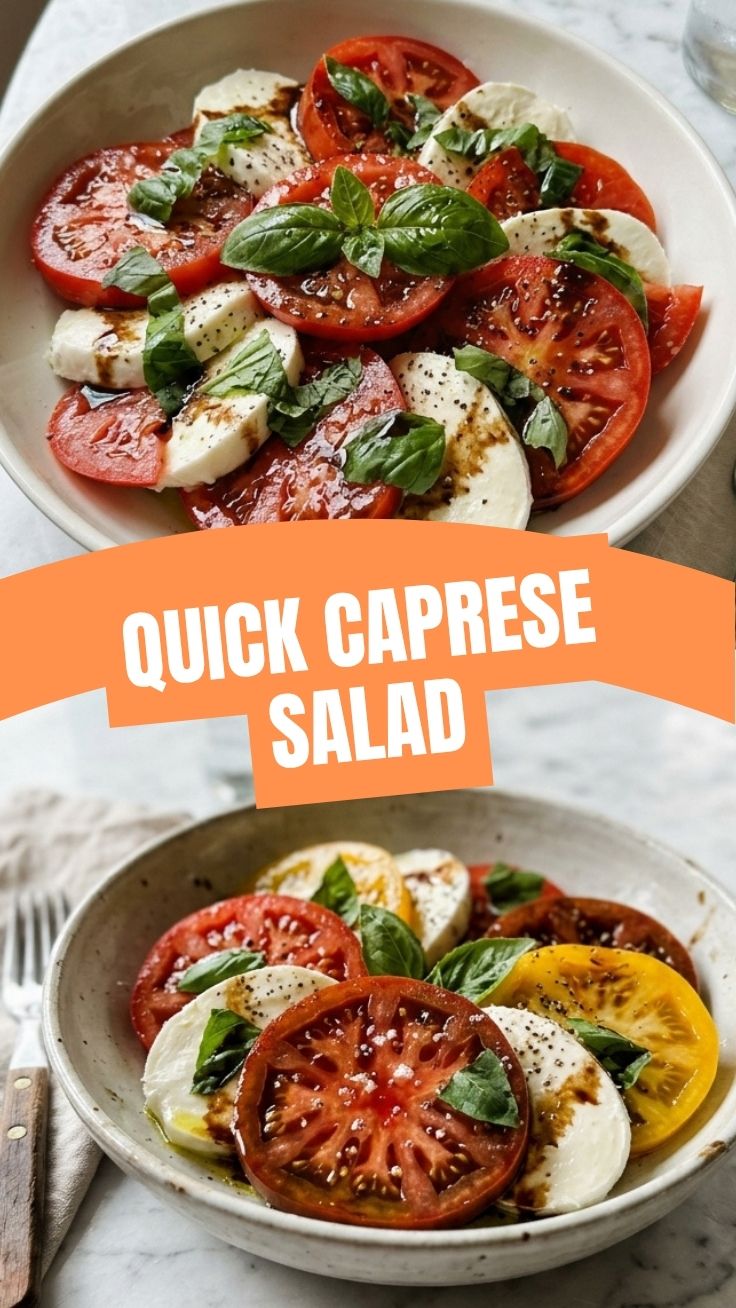
This exquisite dish boasts a remarkably short preparation time, making it ideal for impromptu gatherings or quick weeknight meals.
- Prep Time: 10-15 minutes
- Cook Time: 0 minutes (no cooking required!)
- Resting Time: 5-10 minutes (optional, allows flavors to meld)
To plan effectively, aim to prepare the Caprese Salad just before serving to ensure the freshest flavors and textures. Allowing it to sit for a short period, however, can enhance the melding of the olive oil and balsamic with the tomatoes and mozzarella.
Step-by-Step Instructions
Creating the perfect Caprese Salad is more about careful assembly than complex cooking. Follow these steps for a stunning and delicious result:
1. Prepare the Tomatoes: If using large tomatoes, slice them into ¼-inch thick rounds. For cherry or grape tomatoes, simply halve them. Arrange the sliced tomatoes on your serving platter, slightly overlapping or in an alternating pattern.
2. Slice the Mozzarella: Carefully slice the fresh Italian Mozzarella into ¼-inch thick rounds, similar in size to your tomato slices. If using smaller tomatoes, you can tear or cube the mozzarella into bite-sized pieces.
3. Arrange the Salad: Artfully place the mozzarella slices amongst the tomato slices on your platter. If using smaller tomatoes and mozzarella, scatter them evenly across the plate.
4. Add Fresh Basil: Tuck fresh basil leaves in between the tomato and mozzarella slices. You can leave them whole or tear larger leaves for better distribution.
5. Season Generously: Drizzle the entire salad generously with a high-quality extra virgin olive oil. Season with sea salt and freshly ground black pepper to taste. Don’t be shy with the seasoning, as it truly elevates the flavors.
6. Garnish and Serve: For an optional touch of sweetness and tang, drizzle with balsamic glaze. Serve immediately, allowing guests to appreciate the vibrant colors and fresh aromas.
Nutritional Benefits & Advantages
Beyond its delightful taste, Caprese Salad offers a bounty of nutritional advantages. Tomatoes are a fantastic source of lycopene, a powerful antioxidant linked to heart health and protection against certain cancers. Fresh mozzarella provides a good source of protein and calcium, essential for bone health. Basil is rich in vitamins K and A, known for their anti-inflammatory properties. The extra virgin olive oil, a staple of the Mediterranean diet, contributes healthy monounsaturated fats, which can help lower bad cholesterol levels. This vibrant salad is naturally gluten-free and can be easily adapted to be lower in sodium by adjusting salt levels.
Tips, Variations & Cooking Advice
- Tomato Quality is Key: Always use the freshest, ripest tomatoes you can find. This is non-negotiable for an outstanding Caprese.
- Basil Handling: Handle basil gently to prevent bruising. Store fresh basil at room temperature, stems in a glass of water, much like a bouquet.
- Balsamic Glaze: To make your own, simmer balsamic vinegar over low heat until it reduces by about half and thickens to a syrup consistency.
- Flavor Variations:
* Pesto Caprese: Drizzle with homemade basil pesto instead of olive oil.
* Roasted Pepper Caprese: Add strips of roasted red bell peppers for a smoky sweetness.
* Peach & Caprese: For a summer twist, add slices of ripe peaches alongside the tomatoes.
- Dietary Adaptations: For a dairy-free version, consider using a good quality vegan mozzarella alternative, or omit it entirely and focus on a tomato-basil-avocado salad.
Common Mistakes to Avoid
- Using Cold Tomatoes: Storing tomatoes in the refrigerator dulls their flavor and can make them mealy. Always store them at room temperature.
- Low-Quality Ingredients: The simplicity of Caprese means every ingredient shines. Don’t compromise on the quality of your tomatoes, mozzarella, or olive oil.
- Over-Dressing: A light drizzle of olive oil and balsamic glaze (if using) is all you need. Drowning the salad will make it soggy and overpower the fresh flavors.
- Pre-Making Too Early: While a short rest is fine, assembling the salad hours in advance can make the tomatoes lose their firmness and the basil wilt.
Storage & Meal Prep Tips
Caprese Salad is best enjoyed fresh. If you do have leftovers, separate the tomatoes and mozzarella from the basil and dressing. Store each component in airtight containers in the refrigerator. The tomatoes and mozzarella will keep for 1-2 days. Basil is best added right before serving. Do not freeze Caprese Salad, as the fresh ingredients will not hold their texture well upon thawing. When reheating, there’s no “reheating” per se, rather you’d reassemble the fresh components.
Conclusion
Crafting a homemade Caprese Salad is a testament to the power of fresh, quality ingredients in creating an unforgettable culinary experience. From the vibrant acidity of ripe tomatoes to the creamy richness of fresh Italian Mozzarella and the aromatic whisper of basil, this dish is a symphony of simple, yet profound, flavors. We encourage you to try this recipe and discover the pure joy of preparing this Italian classic at home. Share your creations in the comments below, or explore our other fresh, seasonal recipes for more inspiration!
FAQs
Q1: Can I make Caprese Salad ahead of time?
A1: It’s best to assemble Caprese Salad just before serving for optimal freshness. However, you can slice the tomatoes and mozzarella up to an hour in advance and store them separately in the refrigerator, adding basil and dressing right before serving.
Q2: What’s the best type of mozzarella to use?
A2: Fresh mozzarella, either mozzarella di bufala (buffalo mozzarella) or fior di latte (cow’s milk mozzarella) packed in brine, offers the best flavor and texture. Avoid the low-moisture, block mozzarella commonly used for shredding.
Q3: My basil leaves are turning brown after assembling. What went wrong?
A3: This often happens if the basil is bruised or left out for too long. For best results, add the basil just before serving. You can also lightly tear larger leaves instead of cutting them to minimize bruising.
Q4: Can I use dried basil instead of fresh?
A4: While technically possible, dried basil is not a substitute for fresh in Caprese Salad. The fresh, aromatic quality of basil leaves is crucial to the dish’s character.
Q5: How can I make my Caprese Salad more visually appealing?
A5: Alternate the tomato and mozzarella slices in an attractive pattern on your platter. Use vibrant, contrasting colors by choosing different tomato varieties. A final drizzle of balsamic glaze adds a beautiful sheen and depth of color.