Craft Your Own Culinary Oasis: The Ultimate Homemade Falafel Bowl
Are you tired of bland, uninspired lunch options that leave you feeling sluggish? Imagine a vibrant, flavour-packed meal that’s both nourishing and incredibly satisfying. We’re talking about a homemade Falafel Bowl – a culinary masterpiece that brings the exotic tastes of Mediterranean Food right to your kitchen. Preparing this dish from scratch isn’t just about saving money; it’s about controlling the quality of your ingredients, customizing flavors to your exact preference, and basking in the satisfaction of creating something truly delicious. This blog post will guide you through every step of crafting your own perfect falafel bowl, ensuring a wholesome and delightful experience.
Ingredients & Kitchen Tools
Gathering your provisions is the first step to culinary success!
- For the Falafel:
* 1 can (15 oz) chickpeas, drained and rinsed: The foundation of our falafel.
* ½ cup fresh parsley, chopped: Adds vibrant color and herbaceous flavor.
* ½ cup fresh cilantro, chopped: Another aromatic herb for traditional taste.
* ½ small onion, roughly chopped: Provides a pungent aromatic base.
* 2 cloves garlic, minced: Essential for that characteristic falafel zing.
* 1 tsp ground cumin: Earthy and warm spice.
* 1 tsp ground coriander: Citrusy and sweet notes, complements cumin.
* ½ tsp cayenne pepper (optional): For a subtle kick.
* ¼ tsp baking soda: Ensures light and fluffy falafel.
* 2-3 tbsp all-purpose flour (or gluten-free blend): Binds the mixture.
* Salt and black pepper to taste: Seasoning essentials.
- For the Lemon Tahini Dressing:
* ¼ cup tahini: Creamy sesame paste, central to the dressing.
* 2 tbsp fresh lemon juice: Adds zest and cuts through richness.
* 1 clove garlic, minced: Enhances flavor.
* 2-4 tbsp cold water: To achieve desired consistency.
* Salt to taste: Balances the dressing.
- For the Bowl Assembly:
* Your favorite grain (quinoa, couscous, or brown rice), cooked: Provides a hearty base.
* Mixed greens or spinach: Fresh, crisp element.
* Cherry tomatoes, halved: Juicy sweetness.
* Cucumber, diced: Cooling crunch.
* Red onion, thinly sliced (optional): A pungent contrast.
* Olives, pitted and halved (optional): Briny addition.
* Pita bread or warm flatbread: For scooping and soaking up flavors.
- Kitchen Tools:
* Food processor: Essential for blending falafel mixture.
* Large mixing bowl: For combining ingredients.
* Baking sheet with parchment paper: For baking falafel.
* Small bowl and whisk: For preparing the dressing.
* Measuring cups and spoons: For accurate ingredient quantities.
* Skillet or shallow pan (if frying): For traditional falafel cooking.
Prep Time & Cooking Schedule
- Falafel Prep Time: 20 minutes (does not include soaking chickpeas if using dried)
- Falafel Cook Time: 25-30 minutes (baking) or 10-15 minutes (frying)
- Dressing Prep Time: 5 minutes
- Bowl Assembly Time: 10 minutes
- Total Active Time: Approximately 35-45 minutes
Plan to start your falafel preparation first, as it requires the most hands-on time. While the falafel bakes, you can prepare your grain, chop your vegetables, and whisk together the dressing. This efficient scheduling ensures a fresh, hot meal ready in under an hour.
Step-by-Step Instructions
1. Prepare the Falafel Mixture: In a food processor, combine the drained chickpeas, parsley, cilantro, onion, garlic, cumin, coriander, cayenne pepper (if using), and baking soda. Pulse until a coarse, crumbly mixture forms, but don’t over-process into a paste. Transfer to a large mixing bowl.
2. Bind and Season: Add the flour to the falafel mixture and mix well. Season generously with salt and black pepper. Use your hands to gently knead the mixture; it should hold together when pressed. If it’s too wet, add a little more flour; if too dry, add a teaspoon of water.
3. Form the Falafel: Roll the mixture into small, golf-ball-sized spheres or patties. You can moisten your hands slightly to prevent sticking. Arrange them on a baking sheet lined with parchment paper.
4. Cook the Falafel:
* Baking Method: Preheat oven to 400°F (200°C). Lightly spray the falafel balls with cooking oil. Bake for 25-30 minutes, flipping halfway through, until golden brown and cooked through.
* Frying Method (Traditional): Heat about 1 inch of vegetable oil in a skillet over medium-high heat. Carefully fry the falafel in batches for 2-3 minutes per side, until deeply golden and crispy. Drain on a paper towel-lined plate.
5. Make the Lemon Tahini Dressing: In a small bowl, whisk together the tahini, lemon juice, minced garlic, and salt. Gradually add cold water, one tablespoon at a time, whisking constantly until you reach a smooth, pourable consistency.
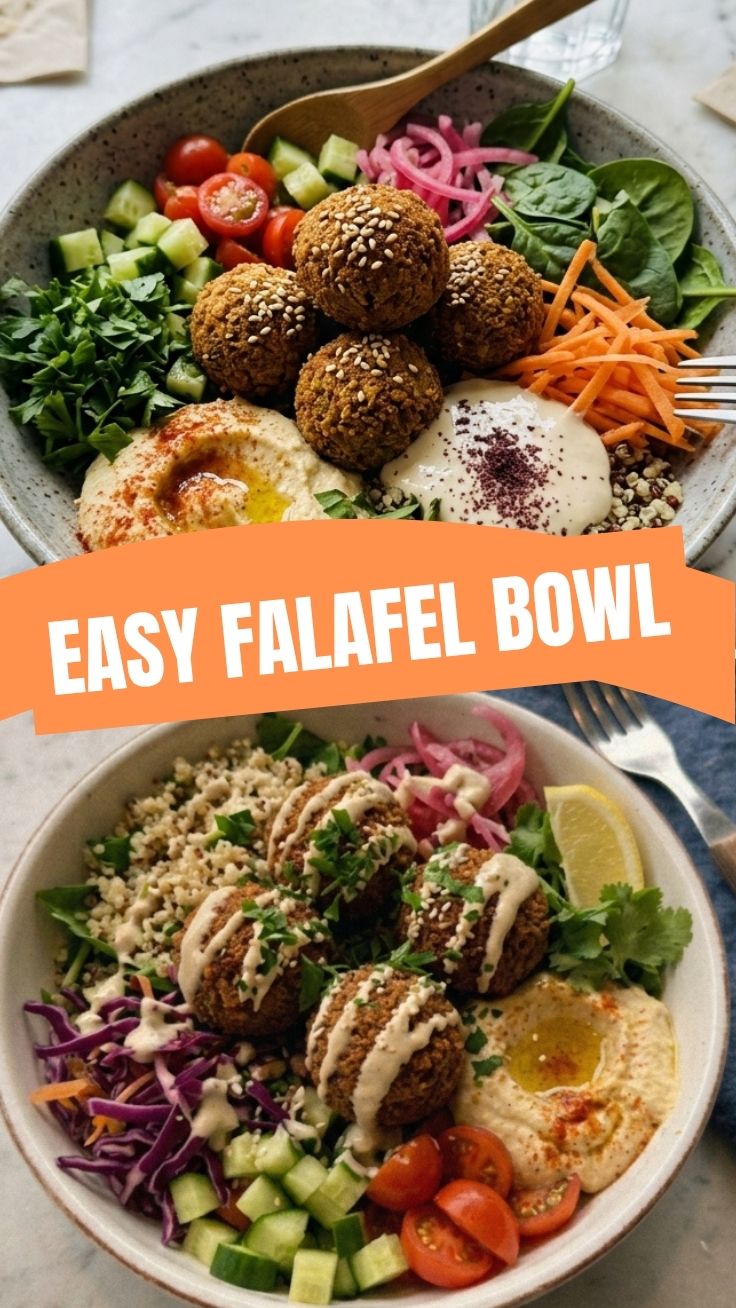
6. Assemble Your Falafel Bowl: Start with a base of cooked grain. Top with mixed greens, cherry tomatoes, cucumber, red onion (if using), and olives. Arrange the warm falafel on top. Drizzle generously with the lemon tahini dressing. Serve immediately with warm pita bread or flatbread, enjoying the delightful textures and robust flavours of this fresh Mediterranean Food offering.
Nutritional Benefits & Advantages
This homemade Falafel Bowl is a powerhouse of nutrition. Chickpeas are an excellent source of plant-based protein and dietary fiber, promoting satiety and digestive health. The abundance of fresh herbs like parsley and cilantro contributes essential vitamins (like K and C) and antioxidants. Tahini provides healthy fats and minerals such as calcium and magnesium. Combined with fresh vegetables and a whole grain base, this meal is naturally gluten-free (if using GF flour and grain), dairy-free, and vegan, making it suitable for a wide range of dietary needs while delivering sustained energy.
Tips, Variations & Cooking Advice
- Flavor Boost: Add a pinch of sumac to the falafel mixture for a tangy note, or a touch of smoked paprika for depth.
- Herb Variations: Experiment with dill or mint in the falafel mixture for a slightly different flavour profile.
- Extra Creaminess: For an ultra-creamy falafel filling, soak dried chickpeas overnight and then boil them until slightly tender before proceeding with the recipe.
- Spicy Kick: Include finely diced jalapeño or a sprinkle of chili flakes in the falafel or dressing for additional heat.
- Bowl Customization: Add pickled turnips, roasted bell peppers, or artichoke hearts for more variety in your bowl.
- Dietary Adaptations: Ensure all ingredients, especially flour, are certified gluten-free for a strict gluten-free diet. The recipe is already naturally dairy-free and vegan.
Common Mistakes to Avoid
- Over-processing the Falafel Mixture: Pulsing too long will result in a paste-like texture, making your falafel dense rather than light and crumbly.
- Not Enough Binder: If your falafel falls apart, you haven’t added enough flour or the mixture is too wet. Add another tablespoon of flour until it holds shape.
- Crowding the Pan (if Frying): Frying too many falafel at once will lower the oil temperature, leading to greasy, less crispy results. Fry in batches.
- Skipping the Baking Soda: This ingredient is crucial for that desirable light and airy interior often found in restaurant-quality falafel.
- Overcooking/Undercooking: Overcooked falafel can be dry; undercooked will be mushy internally. Adjust cooking times based on size and method.
Storage & Meal Prep Tips
Leftover falafel can be stored in an airtight container in the refrigerator for up to 3-4 days. Reheat in a dry skillet or oven at 350°F (175°C) for 10-15 minutes to re-crisp. Falafel also freezes well; arrange uncooked falafel on a baking sheet to freeze solid, then transfer to a freezer bag for up to 3 months. Bake or fry from frozen, adding an extra 5-10 minutes to cooking time. The lemon tahini dressing can be stored separately in the fridge for up to 5 days; whisk with a little water if it thickens. For meal prep, cook grains, chop vegetables, and prepare falafel and dressing ahead of time, then assemble bowls fresh for lunch or dinner.
Conclusion
Embracing the art of crafting a homemade Falafel Bowl is more than just cooking; it’s an invitation to a world of fresh, vibrant flavors and wholesome goodness. This recipe delivers a satisfying experience that rivals any restaurant-quality Mediterranean Food. With its incredible nutritional profile and customizable nature, it’s the perfect dish to add to your culinary repertoire. Don’t hesitate – give this recipe a try and transform your perception of humble chickpeas into a celebrated meal. Share your creations and tag us with your amazing falafel bowl masterpieces!
FAQs
Q1: Can I make falafel without a food processor?
A1: Yes, you can finely mash the chickpeas with a fork or potato masher, then very finely chop the herbs and onion. The texture will be a bit coarser, but still delicious.
Q2: What can I substitute for tahini in the dressing?
A2: If you don’t have tahini, you can try using a plain Greek yogurt base for a creamy dressing (though it won’t be dairy-free/vegan) or blend cashews with water for a similar nutty creaminess.
Q3: My falafel mixture is too sticky to form balls. What should I do?
A3: Try chilling the mixture in the refrigerator for 20-30 minutes. This helps firm it up. You can also add another tablespoon or two of flour if it’s still too wet after chilling.
Q4: How can I make my baked falafel extra crispy?
A4: Ensure your oven is fully preheated, don’t overcrowd the baking sheet, and spray the falafel generously with cooking oil or brush with olive oil before baking. Flipping them halfway through is also crucial.
Q5: What other toppings go well with a falafel bowl?
A5: Pickled vegetables (like turnip or cucumber), a dollop of hummus, crumbled feta cheese (if not vegan), hot sauce, or a sprinkle of fresh mint or dill can elevate your falafel bowl even further.