Unlock the Flavor: Your Ultimate Guide to a Delectable Homemade Korean Beef Bowl
Are you ready to elevate your weeknight meals from mundane to magnificent? Imagine a dish that’s bursting with savory, sweet, and umami flavors, all coming together in a symphony that dances on your palate. That’s precisely what you’ll find when you master the Korean Beef Bowl. Preparing this incredible dish at home not only ensures freshness and quality but also gives you complete control over the ingredients, making it a healthier and more personalized option than takeout. This comprehensive guide will walk you through every step of creating a perfect balance of tender beef and vibrant accompaniments, reminiscent of the beloved bulgogi, right in your own kitchen. Let’s dive into a culinary adventure that will transform your dinner routine!
Ingredients & Kitchen Tools
Crafting the perfect Korean Beef Bowl requires a thoughtful selection of ingredients and the right tools. Here’s what you’ll need:
For the Beef:
- 1 lb Ground Beef (80/20 lean): Provides rich flavor and excellent texture. You can substitute with ground turkey or plant-based mince for a lighter option.
- 2 tbsp Soy Sauce (low sodium preferred): The cornerstone of savory Korean marinades.
- 1 tbsp Brown Sugar (packed): Adds a touch of sweetness to balance the savouriness. Coconut sugar is a good alternative.
- 1 tbsp Sesame Oil: Essential for that distinct, nutty Korean flavor.
- 1 tbsp Gochujang (Korean chili paste, optional): For a spicy kick. Adjust to your heat preference or omit for a milder dish.
- 2 cloves Garlic (minced): Fresh garlic is crucial for aromatic depth.
- 1 inch Ginger (grated): Adds a zesty, warming element.
- 1/4 cup Beef Broth: Helps to tenderize the beef and create a luscious sauce.
- 1 tbsp Cornstarch (mixed with 1 tbsp water): For thickening the sauce.
For Serving & Garnish:
- Cooked Rice (steamed white or brown): The perfect canvas for the flavorful beef.
- Kimchi: Fermented cabbage, offers a tangy, spicy, and probiotic rich counterpoint.
- Shredded Carrots: Adds crunch and vibrant color.
- Sliced Cucumber: Refreshing and crisp.
- Fried Egg: Optional, but a runny yolk adds a delightful richness.
- Sesame Seeds: For garnish and added texture.
- Sliced Green Onions: Fresh, mild onion crunch and color.
Kitchen Tools:
- Large Skillet or Wok: For browning the beef and simmering the sauce.
- Mixing Bowls: For preparing the sauce and any marinades.
- Whisk: To combine sauce ingredients smoothly.
- Garlic Press/Grater: For easy preparation of garlic and ginger.
- Spatula: For stirring and scraping.
- Measuring Cups and Spoons: For precise ingredient measurements.
Prep Time & Cooking Schedule
This recipe is designed for efficiency, making it perfect for busy weeknights!
- Prep Time: 15 minutes (this includes chopping vegetables and preparing the sauce).
- Cook Time: 15 minutes (active cooking of the beef).
- Total Time: 30 minutes.
Schedule Insight: Start by getting your rice cooking, as it often has the longest cooking time. While the rice is simmering, you can prepare the beef sauce and chop your garnishes. This overlapping workflow ensures everything is ready at around the same time, allowing for a fresh, hot meal.
Step-by-Step Instructions
Let’s get cooking! Follow these clear steps to create your delicious Korean Beef Bowl. The process is straightforward, ensuring a flavorful outcome similar to great bulgogi without the extensive marinating.
1. Prepare the Sauce: In a small bowl, whisk together the soy sauce, brown sugar, sesame oil, gochujang (if using), minced garlic, grated ginger, and beef broth. Set aside.
2. Brown the Beef: Heat a large skillet or wok over medium-high heat. Add the ground beef and break it apart with a spatula. Cook until browned and no longer pink, then drain any excess fat.
3. Simmer the Sauce: Pour the prepared sauce over the browned beef in the skillet. Bring the mixture to a gentle simmer, stirring occasionally.
4. Thicken the Sauce: In a tiny bowl, whisk the cornstarch with 1 tablespoon of cold water until smooth. Pour this slurry into the simmering beef mixture, stirring constantly. Continue to cook for another 1-2 minutes, or until the sauce has thickened to your desired consistency. Taste and adjust seasoning if necessary – add more soy sauce for saltiness, or a pinch of sugar for sweetness.
5. Assemble the Bowls: Divide the cooked rice among serving bowls. Top each with a generous portion of the Korean beef.
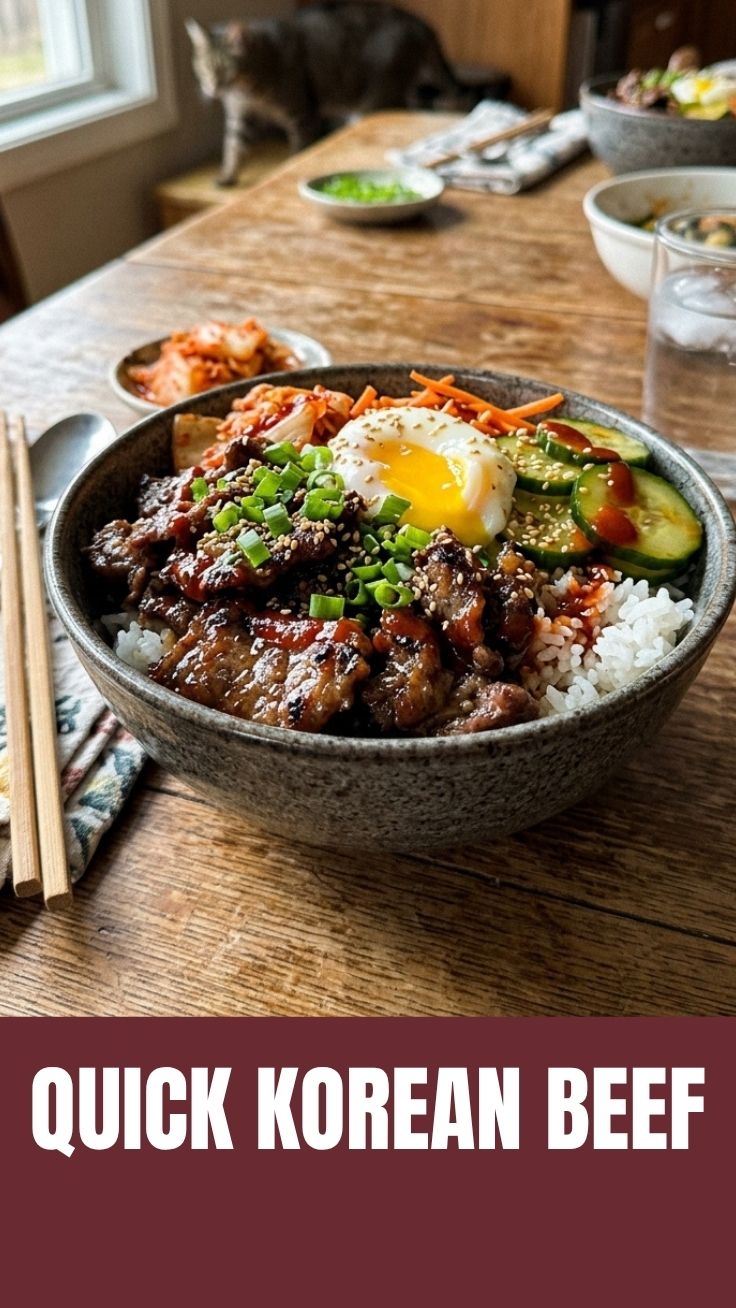
6. Garnish and Serve: Arrange the kimchi, shredded carrots, sliced cucumber, and a fried egg (if using) around the beef. Sprinkle with sesame seeds and sliced green onions. Serve hot and enjoy immediately!
Nutritional Benefits & Advantages
This Korean Beef Bowl isn’t just delicious; it’s packed with nutritional advantages. Ground beef provides a substantial source of protein, essential for muscle repair and growth, as well as iron and B vitamins necessary for energy production. The inclusion of fresh vegetables like carrots and cucumbers adds fiber, vitamins (like Vitamin A and K), and antioxidants. Kimchi, a fermented food, introduces beneficial probiotics for gut health. Sesame oil contributes healthy fats, while fresh ginger and garlic are known for their anti-inflammatory properties and immune-boosting compounds. By making it at home, you control sodium and sugar levels, making it a healthier choice than many restaurant versions.
Tips, Variations & Cooking Advice
- Spice Level: For a spicier kick, increase the amount of gochujang. For a milder version, omit it entirely or use a dash of sriracha instead.
- Vegetable Boost: Feel free to add other quick-cooking vegetables like spinach (wilt into the beef at the end), bell peppers, or broccoli florets.
- Protein Alternatives: As mentioned, ground turkey or even firm tofu (crumbled and browned) can be used as a substitute for ground beef. Seasoning might need slight adjustments.
- Grain Options: Serve over quinoa, cauliflower rice (for a low-carb option), or even zoodles instead of traditional rice.
- Flavor Deepener: For an extra layer of flavor, incorporate a teaspoon of Korean fermented soybean paste (doenjang) into the sauce while whisking.
Common Mistakes to Avoid
- Overcooking the Beef: Ground beef cooks quickly. Overcooking can make it dry and tough. Cook until just browned, then drain fat before adding sauce.
- Not Draining Fat: Excess fat can make the dish greasy. Always drain off the accumulated fat after browning the ground beef.
- Uneven Seasoning: Ensure all sauce ingredients are well combined before adding to the beef to avoid pockets of unmixed flavors.
- Skipping the Thickener: The cornstarch slurry is crucial for creating a luscious, coherent sauce that coats the beef beautifully. Don’t skip it!
- Over-thickening the Sauce: Add the cornstarch slurry gradually, and observe the sauce’s consistency. You can always add more, but it’s hard to thin it down once it’s too thick.
Storage & Meal Prep Tips
This Korean Beef Bowl is fantastic for meal prepping!
- Storage: Store the cooked beef and sauce in an airtight container in the refrigerator for up to 3-4 days. Store cooked rice separately. Fresh garnishes are best added just before serving.
- Freezing: The cooked beef mixture freezes well. Allow it to cool completely, then transfer to a freezer-safe bag or container. It can be frozen for up to 2-3 months. Thaw overnight in the refrigerator before reheating.
- Reheating: Reheat the beef mixture gently in a skillet over medium heat, adding a splash of water or broth if it seems dry. Reheat rice in the microwave or a steamer.
Conclusion
You’ve now journeyed through the creation of a truly exceptional dish. This homemade Korean Beef Bowl offers a delightful blend of savory and subtly sweet notes, embodying the rich culinary heritage that makes dishes like bulgogi so universally loved. It’s a testament to how simple ingredients, when combined with care, can transform into a profoundly satisfying meal that’s both quick to prepare and incredibly flavorful. We encourage you to try this recipe and experience the joy of making authentic, delicious Korean-inspired food right in your home. Share your culinary creations with us, or explore our other recipes for more exciting tastes!
FAQs
Q1: Can I make this a vegetarian dish?
A1: Absolutely! Replace the ground beef with crumbled firm tofu, tempeh, or a plant-based mince. Ensure to press the tofu to remove excess water before cooking for best texture.
Q2: How can I reduce the sodium in this dish?
A2: Use low-sodium soy sauce and opt for a low-sodium beef broth. You can also reduce the overall amount of soy sauce and compensate with a squeeze of fresh lime juice for brightness.
Q3: What if I don’t have fresh ginger or garlic?
A3: While fresh is best, you can use 1 teaspoon of garlic powder and 1 teaspoon of ground ginger as substitutes. The flavor won’t be as potent, but it will still be delicious.
Q4: Can I marinate the ground beef in the sauce beforehand?
A4: While not strictly necessary for ground beef due to its quick cooking time, you can mix the raw ground beef with the sauce ingredients (excluding cornstarch slurry) and let it sit for 15-20 minutes in the refrigerator for deeper flavor.
Q5: What are some other good toppings for a Korean Beef Bowl?
A5: Beyond the suggested toppings, consider adding a sprinkle of toasted sesame seeds, pickled radishes, a drizzle of gochujang mayo (gochujang mixed with mayonnaise), or even a handful of fresh cilantro for a different aromatic touch.