Summer’s Secret Weapon: Crafting the Perfect Gazpacho (Classic) at Home
Imagine a sweltering summer day. The sun beats down, and the thought of firing up the stove feels like a punishment. What if there was a vibrant, refreshing, and incredibly satisfying meal that required no cooking at all? Enter Gazpacho (Classic), the chilled tomato soup that has captivated palates worldwide. This iconic Spanish recipe isn’t just a dish; it’s a culinary experience, a liquid ode to sun-kissed vegetables, and a testament to the simple brilliance of Mediterranean cuisine. Learning to prepare this Spanish recipe at home isn’t just about saving money or avoiding restaurant queues; it’s about unlocking a level of freshness and flavor that store-bought versions simply can’t match. You have complete control over the quality of your ingredients, ensuring your gazpacho is bursting with natural sweetness and tang. This blog post will guide you through the art of crafting an authentic Gazpacho (Classic), transforming fresh produce into a culinary masterpiece.
Ingredients & Kitchen Tools
For a truly authentic and delicious Gazpacho (Classic), quality ingredients are paramount.
- Ripe Tomatoes (2 lbs): Romas, beefsteaks, or a mix. The riper, the sweeter and more flavorful your gazpacho will be.
- Cucumber (1 large): English or regular. Adds a crisp, refreshing note.
- Green Bell Pepper (1 medium): For a subtle herbaceous bite.
- Red Onion (1/2 small): Adds a touch of sharp, sweet onion flavor.
- Garlic Cloves (2-3): Essential for that classic Spanish aroma. Adjust to your preference.
- Stale Bread (1 slice, crusts removed): White bread is ideal. Helps thicken the gazpacho and gives it body.
- Extra Virgin Olive Oil (1/4 cup + more for drizzling): High-quality oil is crucial for a rich, fruity flavor.
- Red Wine Vinegar (2-3 tablespoons): Provides essential acidity and brightness.
- Cold Water (1/2 cup to 1 cup): Adjust consistency.
- Salt (to taste): Fine sea salt is recommended.
- Black Pepper (to taste): Freshly ground is best.
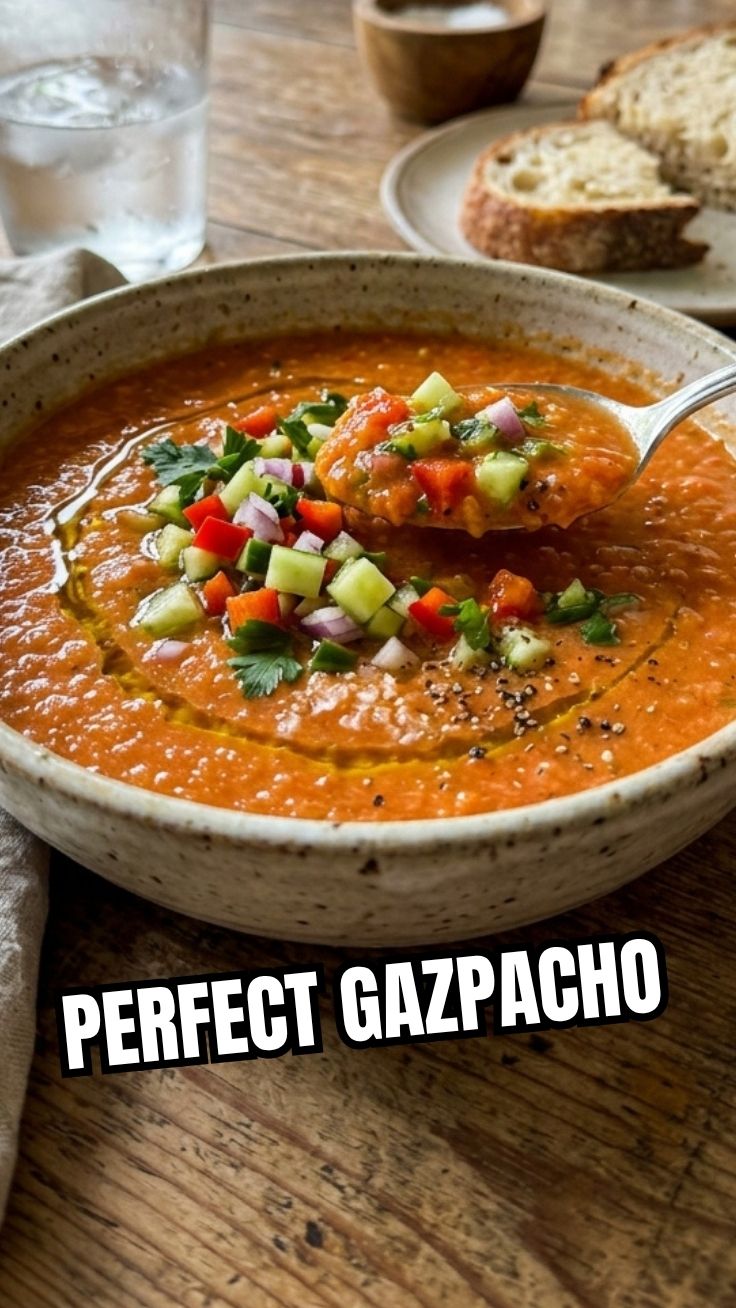
Optional Garnishes: Diced cucumber, bell pepper, red onion, croutons, hard-boiled egg, chopped fresh parsley or basil.
Kitchen Tools:
- Large Bowl: For soaking bread and mixing ingredients.
- Blender or Food Processor: Essential for achieving a smooth consistency. A high-speed blender is ideal.
- Fine-Mesh Sieve (Optional, but recommended): For an extra smooth, restaurant-quality gazpacho.
- Sharp Knife & Cutting Board: For prepping vegetables.
- Measuring Cups & Spoons: For accurate ingredient amounts.
Prep Time & Cooking Schedule
- Prep Time: 20-25 minutes
- Cook Time: 0 minutes (no cooking required!)
- Chilling Time (Essential): Minimum 2 hours, ideally 4 hours or overnight. This allows the flavors to meld and deepen.
This makes Gazpacho (Classic) an excellent make-ahead dish, perfect for entertaining or busy weeknights. Prepare it in the morning, and it’s ready to enjoy by lunch or dinner. The longer it chills, the better it tastes!
Step-by-Step Instructions
1. Prepare the Bread: Tear the stale bread into small pieces and place them in a small bowl. Drizzle with 1-2 tablespoons of cold water to soften. This will help create a creamy texture.
2. Roughly Chop Vegetables: Wash and roughly chop the tomatoes, cucumber, green bell pepper, and red onion. Peel and roughly chop the garlic cloves. Don’t worry about precision here; the blender will do the heavy lifting.
3. Combine Ingredients in Blender: Transfer all the chopped vegetables, the softened bread, extra virgin olive oil, red wine vinegar, salt, and pepper to a high-speed blender or food processor.
4. Blend Until Smooth: Start blending on low, gradually increasing to high, until the mixture is completely smooth. You might need to add a little cold water (1/2 to 1 cup) to reach your desired consistency. For an authentic Spanish recipe like gazpacho, you’re aiming for a liquid that’s pourable but still has some body.
5. Strain (Optional, but recommended): For an extra silky-smooth Gazpacho (Classic), pour the blended mixture through a fine-mesh sieve into a large bowl, pressing the solids with a spatula to extract all the liquid. Discard the pulp (or save for compost!). This step removes any remaining skin or seeds.
6. Adjust Seasoning: Taste the gazpacho and adjust salt, pepper, or vinegar as needed. Remember, flavors will intensify as it chills.
7. Chill Thoroughly: Cover the bowl and refrigerate for at least 2 hours, or preferably overnight. Chilling is crucial for the flavors to fully develop and for the soup to reach its refreshing temperature.
8. Serve: Ladle the chilled gazpacho into bowls. Drizzle with a final swirl of high-quality extra virgin olive oil and garnish with your preferred toppings.
Nutritional Benefits & Advantages
Gazpacho (Classic) is a nutritional powerhouse! Packed with fresh vegetables, it’s an excellent source of vitamins (C, A, K), minerals (potassium, folate), and antioxidants like lycopene from tomatoes. The high water content from the vegetables makes it incredibly hydrating, perfect for warm weather. It’s naturally low in calories, fat (when made with judicious amounts of oil), and cholesterol. The fiber content supports digestive health, and the raw nature of the ingredients preserves more of their delicate nutrients.
Tips, Variations & Cooking Advice
- Tomato Quality is Key: Use the ripest, freshest tomatoes you can find. Farmers’ market tomatoes are ideal.
- Spice It Up: Add a small piece of jalapeño or a pinch of cayenne pepper for a subtle kick.
- Herbal Infusion: Experiment with fresh herbs like basil, oregano, or mint blended directly into the gazpacho.
- Green Gazpacho: Omit tomatoes and use a base of cucumber, green bell pepper, spinach, and avocado for a different twist.
- Watermelon Gazpacho: For a sweet and savory variation, swap some tomatoes for ripe watermelon.
- Thicker Gazpacho: If you prefer a thicker consistency, add another slice of bread or reduce the amount of water.
- Serving Temperature: Always serve gazpacho very cold. This is non-negotiable for the best experience.
Common Mistakes to Avoid
- Using Under-Ripe Tomatoes: This will result in a bland, watery gazpacho. Always choose ripe, red tomatoes.
- Not Chilling Long Enough: The flavors need time to meld and the soup needs to be genuinely cold. Don’t skip the chilling step!
- Skimping on Good Olive Oil: High-quality extra virgin olive oil contributes significantly to the flavor profile.
- Over-Blending (for chunky versions): If you prefer a chunkier gazpacho, blend only partially or reserve some finely diced vegetables to stir in at the end. For classic, smooth gazpacho, blend thoroughly.
- Lack of Seasoning: Taste and adjust! Gazpacho needs good seasoning to shine. Don’t be afraid of salt and a bit of acidity from the vinegar.
Storage & Meal Prep Tips
Gazpacho (Classic) stores beautifully.
- Refrigeration: Store in an airtight container in the refrigerator for up to 3-4 days. The flavors often improve on the second day.
- Freezing: While possible, the texture can change slightly upon thawing, becoming a bit grainier. If you choose to freeze, store in freezer-safe containers for up to 2-3 months. Thaw overnight in the refrigerator.
- Meal Prep: This is an ideal meal prep item. Make a large batch at the beginning of the week for quick and healthy lunches or appetizers. Reheating is not necessary; simply serve chilled.
Conclusion
Crafting your own Gazpacho (Classic) is a delightful venture, yielding a dish that’s far more vibrant and flavorful than any store-bought alternative. This quintessential Spanish recipe is a testament to the power of fresh, simple ingredients, transformed into a refreshing and nutritious meal without a single flame. We encourage you to embrace the simplicity and elegance of this Spanish recipe, inviting the authentic taste of the Mediterranean into your home. Don’t just make soup; create an experience. Dive in, experiment with your personal touch, and savor the incredible goodness of homemade Gazpacho (Classic). Share your creations and favorite garnishes in the comments below!
FAQs
Q1: Can I make gazpacho without bread?
A1: Yes, you can. The bread helps thicken the gazpacho and gives it body, but you can omit it for a gluten-free version. The texture will be slightly thinner.
Q2: What if my tomatoes aren’t very ripe?
A2: If your tomatoes lack flavor, a pinch of sugar can sometimes enhance their natural sweetness. You can also roast them briefly (after deseeding) to concentrate their flavors before blending, though this deviates from the traditional no-cook approach.
Q3: How can I make my gazpacho spicier?
A3: To add heat, blend in a small piece of de-seeded jalapeño or a sprinkle of red pepper flakes. Start with a small amount and add more to taste.
Q4: Can I use different types of vinegar?
A4: Red wine vinegar is traditional, but you can experiment with sherry vinegar for a richer, nuttier flavor, or apple cider vinegar for a slightly fruitier note. Avoid white distilled vinegar as it can be too harsh.
Q5: What are the best garnishes for gazpacho?
A5: Classic garnishes include finely diced cucumber, bell pepper, and red onion. Other popular additions are croutons, chopped hard-boiled egg, fresh herbs (parsley, basil), and a final drizzle of high-quality extra virgin olive oil.