Unlock Creamy Perfection: Your Ultimate Guide to Homemade Scalloped Potatoes
Ever wondered how to achieve that irresistibly rich, creamy, and tender side dish that graces so many holiday tables and comforting family meals? Look no further! This comprehensive guide will equip you with all the knowledge and techniques to master the art of homemade Scalloped Potatoes. Forget bland, watery versions – we’re diving deep into creating a culinary masterpiece that will have everyone asking for seconds. Crafting this classic at home not only allows you to control the quality of your ingredients but also to personalize the flavors to your exact preference. Whether you call it Scalloped Potatoes or Potato Gratin, the joy of a perfectly baked, bubbling dish of thinly sliced potatoes enveloped in a savory cream sauce is unparalleled. This recipe ensures a delightful experience from prep to plate.
Ingredients & Kitchen Tools
To embark on this delicious journey, gather the following:
- Potatoes (Yukon Gold or Russet preferred): 3 lbs, peeled and thinly sliced (about 1/8 inch thick). These varieties hold their shape well and offer a creamy texture.
- Heavy Cream: 3 cups. The backbone of our rich sauce.
- Whole Milk: 1 cup. Adds a touch of lightness to the cream while maintaining richness.
- Garlic: 3-4 cloves, minced. Infuses a subtle, aromatic depth.
- Unsalted Butter: 4 tablespoons, divided. For sautéing and greasing the dish.
- All-Purpose Flour: 4 tablespoons. Thickens the sauce to perfection.
- Nutmeg: 1/2 teaspoon, freshly grated. A secret ingredient that elevates the flavor profile.
- Thyme (fresh or dried): 1 teaspoon fresh, or 1/2 teaspoon dried. Adds an earthy, herbaceous note.
- Gruyère Cheese (or sharp cheddar): 1.5 cups, shredded. Optional, but highly recommended for a golden, bubbly topping.
- Salt: To taste. Essential for seasoning every layer.
- Black Pepper: To taste, freshly ground. Adds a subtle kick.
Kitchen Tools:
- Mandoline slicer or sharp knife: For uniformly thin potato slices (a mandoline is highly recommended for consistency).
- Large saucepan or Dutch oven: For preparing the cream sauce.
- 9×13 inch baking dish: The ideal size for a generous serving.
- Whisk: For smooth sauce.
- Measuring cups and spoons: For accurate ingredient quantities.
- Grater: For cheese (if using a block).
Prep Time & Cooking Schedule
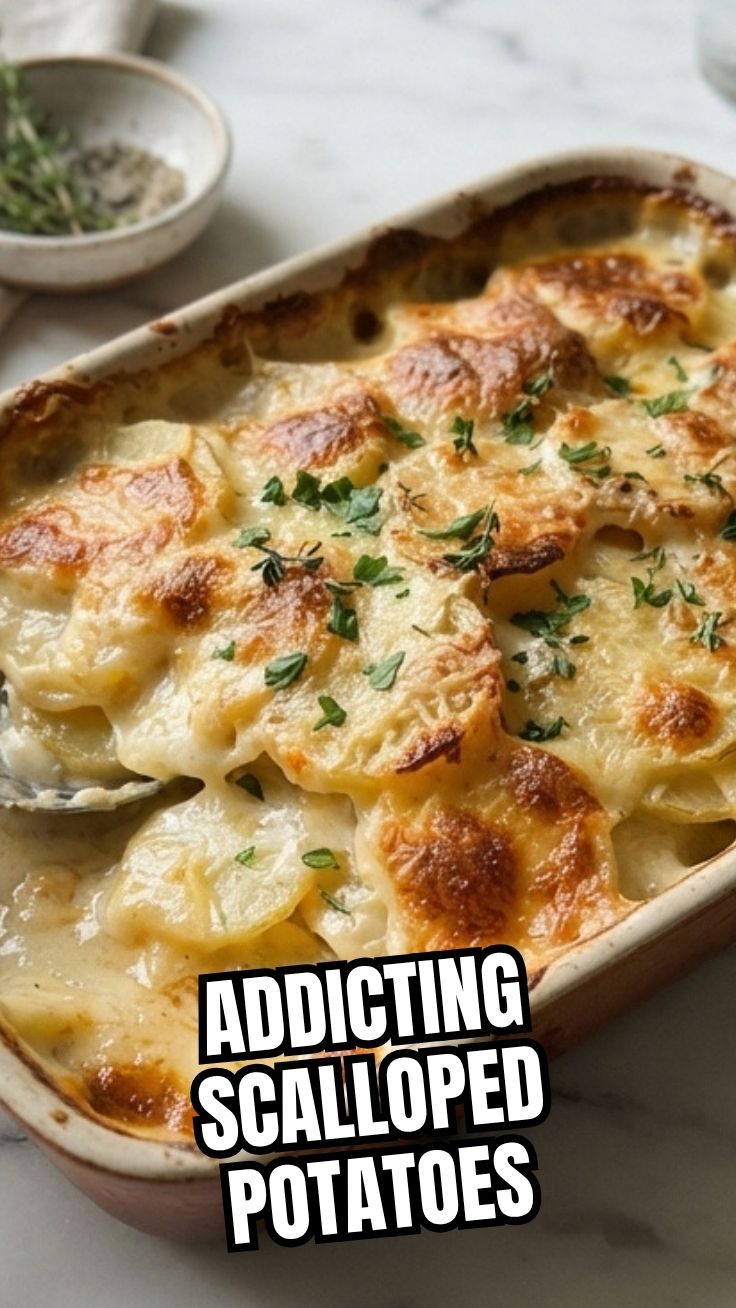
- Prep Time: 30 minutes (mostly slicing potatoes).
- Cook Time: 60-75 minutes.
- Resting Time: 10-15 minutes (crucial for setting the sauce and easy serving).
This dish is perfect for making ahead! You can assemble it a day in advance, refrigerate, and then bake before serving. Just add an extra 15-20 minutes to the cooking time if baking from cold.
Step-by-Step Instructions
1. Prepare the Potatoes: Peel and thinly slice your potatoes. Aim for 1/8 inch thick. For an authentic Scalloped Potatoes, consistency is key, so a mandoline is your best friend here. Rinse the slices in cold water to remove excess starch, then pat them thoroughly dry with a clean kitchen towel. This prevents a gummy texture.
2. Make the Cream Sauce: In a large saucepan, melt 2 tablespoons of butter over medium heat. Add the minced garlic and sauté for 1 minute until fragrant (don’t let it brown). Whisk in the flour and cook for another minute, creating a roux. Slowly whisk in the heavy cream and milk until smooth. Bring the mixture to a gentle simmer, stirring constantly, until it thickens slightly (about 5-7 minutes). Remove from heat and stir in the nutmeg, thyme, salt, and pepper to taste.
3. Assemble the Dish: Preheat your oven to 375°F (190°C). Grease your 9×13 inch baking dish with the remaining 2 tablespoons of butter. Arrange a single layer of potato slices at the bottom of the dish, overlapping slightly. Season lightly with salt and pepper. Pour about one-third of the cream sauce evenly over the potatoes. If using, sprinkle with a layer of Gruyère cheese. Repeat this layering process two more times, ending with a generous pour of cream sauce and a final layer of cheese on top for your perfect Potato Gratin.
4. Bake to Perfection: Cover the baking dish tightly with aluminum foil and bake for 45 minutes. This steaming process ensures the potatoes cook through evenly.
5. Brown and Bubble: Remove the foil and continue baking for another 15-30 minutes, or until the top is golden brown and bubbly, and the potatoes are tender when pierced with a fork.
6. Rest and Serve: Allow the Scalloped Potatoes to rest for 10-15 minutes before serving. This crucial step allows the sauce to set, preventing it from being too runny.
Nutritional Benefits & Advantages
Potatoes, often unfairly maligned, are a surprisingly nutrient-dense food. They are an excellent source of Vitamin C, Vitamin B6, potassium, and dietary fiber. While this recipe is admittedly rich, it offers a satisfying and comforting meal. Using whole, fresh ingredients allows for control over sodium and fat content compared to store-bought versions. The dairy provides calcium and protein, making this a hearty side that can even serve as a main course for lighter appetites.
Tips, Variations & Cooking Advice
- Cheese Please: Experiment with other cheeses like white cheddar, Parmesan, or a blend for different flavor profiles.
- Herbaceous Delights: Incorporate fresh rosemary, sage, or chives for an aromatic twist.
- Spicy Kick: A pinch of cayenne pepper or a dash of hot sauce in the cream sauce can add a subtle heat.
- Bacon Bliss: Rendered bacon bits sprinkled between layers or on top provide a smoky, savory crunch.
- Dairy-Free Option: Substitute heavy cream with full-fat coconut milk (ensure it’s the canned variety, not the beverage) and use a dairy-free butter alternative. Nutritional yeast can add a cheesy flavor.
- Gluten-Free: This recipe is naturally gluten-free if you use a gluten-free flour blend as a thickener, or cornstarch (use half the amount of flour).
- Even Slices: A mandoline is truly invaluable for achieving consistent slices, which ensures even cooking.
Common Mistakes to Avoid
- Thick Slices: Potatoes that are too thick will take much longer to cook and might result in an uneven texture.
- Not Drying Potatoes: Wet potatoes can make your dish watery and prevent the sauce from adhering properly.
- Over-Seasoning: Remember to season each layer lightly, as the sauce itself is seasoned. Taste as you go.
- Not Resting: Skipping the resting time leads to a runny dish. Be patient!
- Overbaking: While a golden top is desirable, overbaking can dry out the potatoes. Keep an eye on them after removing the foil.
Storage & Meal Prep Tips
Leftover Scalloped Potatoes can be stored in an airtight container in the refrigerator for up to 3-4 days. While they can be frozen, the texture of the potatoes may become slightly mealy upon thawing. To reheat, cover with foil and warm in a 325°F (160°C) oven until heated through, or microwave individual portions. Add a splash of milk or cream if it seems a bit dry during reheating. This dish makes an excellent meal prep component for a week’s worth of comforting lunches.
Conclusion
Mastering homemade Scalloped Potatoes is a rewarding culinary achievement that brings warmth and flavor to any table. By following these detailed steps and embracing the tips, you’re well on your way to creating a perfectly creamy, tender, and utterly delicious Potato Gratin every time. Don’t be intimidated by this classic; with a little care and attention, you’ll be serving up a dish that’s both impressive and incredibly satisfying. We encourage you to try this recipe, experiment with the variations, and share your delightful creations!
FAQs
Q1: Can I use different types of potatoes?
A1: While Yukon Gold or Russet are ideal for their starch content and ability to hold shape, waxy potatoes like red or new potatoes can also be used, though they might yield a slightly firmer texture.
Q2: My sauce is too thin/thick. How can I fix it?
A2: If too thin, simmer gently for a few more minutes to reduce. If too thick, whisk in a tablespoon of milk or cream at a time until desired consistency is reached.
Q3: Can I assemble this dish ahead of time?
A3: Yes! Assemble the dish, cover tightly with foil, and refrigerate for up to 24 hours. Add 15-20 minutes to the baking time when cooking from cold.
Q4: How do I prevent the potatoes from turning brown when slicing ahead?
A4: If slicing potatoes in advance, store them submerged in cold water in the refrigerator. Drain and pat very dry just before assembling the dish.
Q5: What if my potatoes are still hard after baking?
A5: This usually means they weren’t sliced thin enough or the oven temperature was too low. Cover the dish with foil and continue baking at a slightly lower temperature (350°F/175°C) until tender.