Beyond the Bakery: Unlocking Homemade Perfection with This Incredible Banana Bread
Ever wondered why that commercially baked banana bread never quite hits the spot like the one grandma used to make? The secret, as always, lies in the heart of your own kitchen. There’s an unparalleled satisfaction in transforming simple ingredients into a warm, fragrant loaf of Banana Bread, a culinary masterpiece that fills your home with an irresistible aroma. This isn’t just about baking; it’s about crafting an experience. In this comprehensive guide, we’ll unlock the secrets to a truly unforgettable Recipe, ensuring every slice is a testament to homemade goodness and a personal touch. Forget bland, dry imitations; prepare to bake a loaf that will become your new go-to.
Ingredients & Kitchen Tools
Crafting the perfect loaf requires quality ingredients and the right equipment. Here’s what you’ll need:
- Ripe Bananas (3-4 large): Overripe bananas with plenty of brown spots are crucial for peak sweetness and moisture. They’re the star of our Banana Bread.
- All-Purpose Flour (1 ½ cups): Provides the structural base.
- Granulated Sugar (¾ cup): For sweetness. You can reduce to ½ cup for a less sweet loaf.
- Brown Sugar (¼ cup, packed): Adds depth of flavor and moisture.
- Unsalted Butter (½ cup/1 stick, melted): Binds ingredients and adds richness. Unsalted allows you to control the salt content.
- Eggs (2 large): Act as a binder and add richness to the Recipe.
- Baking Soda (1 teaspoon): A leavening agent that helps the bread rise.
- Salt (½ teaspoon): Balances the sweetness and enhances other flavors.
- Vanilla Extract (1 teaspoon): A flavor enhancer that complements the banana.
- Optional Add-ins: Chocolate chips (½ cup), chopped nuts (½ cup, walnuts or pecans), or a blend of spices like cinnamon (½ tsp) and nutmeg (¼ tsp) for extra flavor dimensions.
Kitchen Tools:
- Large Mixing Bowl: For combining wet and dry ingredients.
- Whisk: To aerate dry ingredients and combine wet.
- Fork or Potato Masher: For mashing the bananas.
- Rubber Spatula: For folding and scraping the bowl.
- Loaf Pan (9×5 inch): The essential mold for your bread.
- Parchment Paper or Non-Stick Spray: For easy removal.
- Oven: Preheat to the specified temperature.
Prep Time & Cooking Schedule
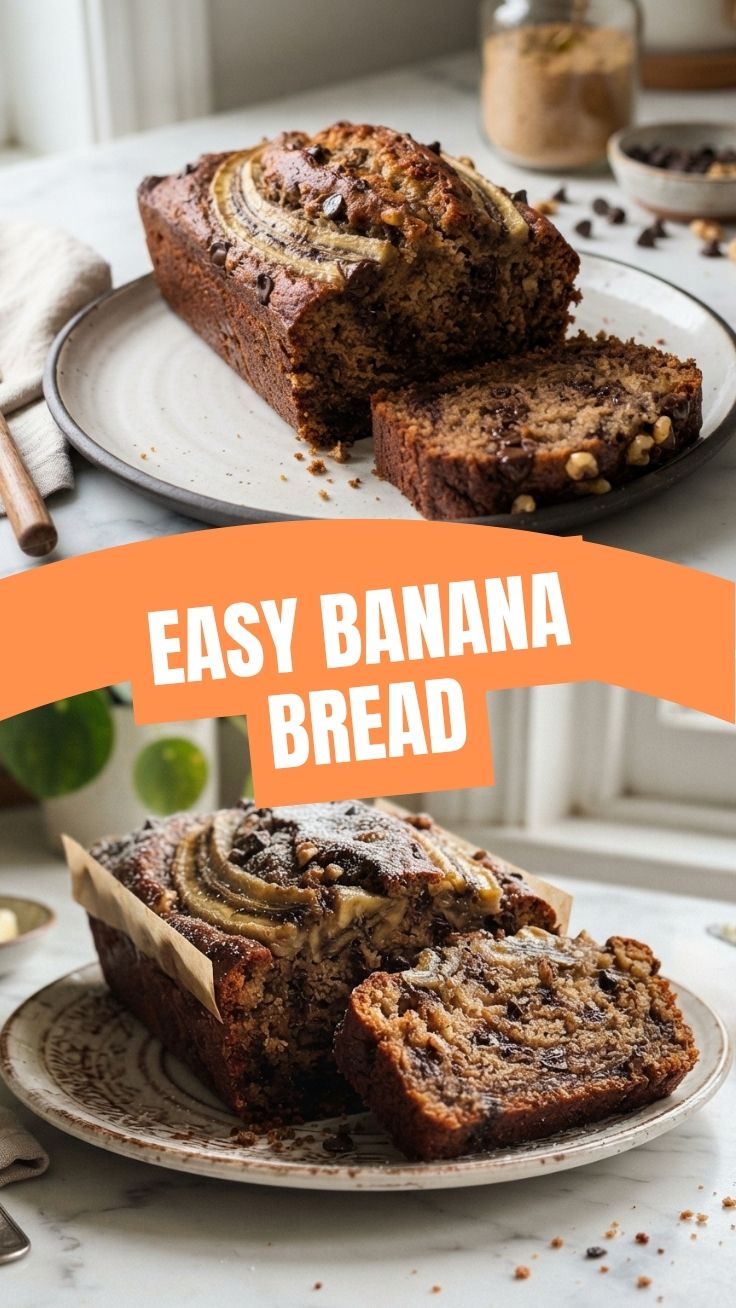
Good things take time, especially when it comes to the complex flavors of homemade Banana Bread.
- Prep Time: 15 minutes. This includes mashing bananas, measuring ingredients, and mixing.
- Cook Time: 55-65 minutes. Baking until golden brown and a toothpick inserted comes out clean.
- Cooling Time: 15 minutes in the pan, then fully on a wire rack. This is crucial for the bread to set and develop its full flavor and texture. Don’t rush this step! Allow at least 2 hours for optimal slicing and enjoyment of this delicious Recipe.
Step-by-Step Instructions
Follow these instructions for a perfectly moist and flavorful loaf:
1. Preheat & Prep: Preheat your oven to 350°F (175°C). Grease and flour a 9×5 inch loaf pan, or line with parchment paper for easy removal.
2. Mash Bananas: In a large bowl, mash the ripe bananas with a fork or potato masher until mostly smooth with a few small lumps remaining.
3. Combine Wet Ingredients: Add the melted butter, granulated sugar, brown sugar, eggs, and vanilla extract to the mashed bananas. Whisk until well combined. The consistency of this mixture is key to a tender Banana Bread.
4. Combine Dry Ingredients: In a separate medium bowl, whisk together the flour, baking soda, and salt.
5. Combine Wet and Dry: Gradually add the dry ingredients to the wet ingredients, mixing until just combined. Be careful not to overmix, as this can lead to a tough loaf. Gently fold in any optional add-ins like chocolate chips or nuts. This careful integration is what makes this Recipe so superior.
6. Bake: Pour the batter into the prepared loaf pan and bake for 55-65 minutes, or until a wooden skewer inserted into the center comes out clean. If the top starts to brown too quickly, you can loosely tent it with aluminum foil.
7. Cool: Let the Banana Bread cool in the pan on a wire rack for 15 minutes before carefully removing it from the pan. Allow it to cool completely on the wire rack before slicing and serving. This resting period allows the internal structure to set, resulting in a more uniform texture.
Nutritional Benefits & Advantages
This homemade Banana Bread isn’t just a treat; it offers several nutritional advantages. Bananas are an excellent source of potassium, which is vital for heart health and maintaining fluid balance. They also provide dietary fiber, aiding in digestion and promoting a feeling of fullness. The whole eggs contribute protein and essential vitamins. By making your own loaf, you control the amount of sugar and fat, making it a healthier alternative to store-bought versions that often contain excessive amounts of both. Moreover, the lack of artificial preservatives and unknown additives guarantees a wholesome and pure indulgence.
Tips, Variations & Cooking Advice
- Super Moist Loaf: For extra moisture, swap half of the butter for applesauce or plain yogurt.
- Gourmet Touch: Add a streusel topping (oats, brown sugar, butter, and cinnamon) before baking for a delightful crunchy crust.
- Gluten-Free: Substitute the all-purpose flour with a 1:1 gluten-free baking blend.
- Vegan: Replace eggs with flax eggs (1 tbsp ground flaxseed + 3 tbsp water per egg) and butter with a plant-based alternative.
- Spiced Perfection: Enhance the flavor profile with a touch of cinnamon, nutmeg, or even a hint of cardamom.
- Don’t Overmix: Overmixing develops gluten, leading to a tough and dry loaf. Mix until just combined.
- Don’t Undermix: Ensure there are no pockets of dry flour, as this will result in an uneven crumb.
Common Mistakes to Avoid
- Using Underripe Bananas: This is the most common mistake. Green or yellow bananas won’t yield the same robust flavor or moist texture. Wait for those dark spots!
- Overmixing the Batter: As mentioned, this develops gluten, making the bread tough. Mix until just incorporated.
- Opening the Oven Door Too Early: Resist the temptation! This can cause the bread to collapse in the middle. Wait until at least ¾ of its cooking time has passed.
- Not Cooling Completely: Slicing a warm loaf can lead to a gummy texture and a less defined structure. Patience is a virtue here.
- Incorrect Pan Size: A pan that’s too small will result in overflow, while one too large will lead to a dry, flat loaf. Stick to the recommended 9×5 inch.
Storage & Meal Prep Tips
Your freshly baked Banana Bread is a versatile treat.
- Room Temperature: Store leftover slices in an airtight container at room temperature for up to 2-3 days.
- Refrigeration: For longer storage (up to a week), wrap the loaf tightly in plastic wrap and store in the refrigerator. Bring to room temperature before serving for optimal flavor.
- Freezing: This Recipe freezes beautifully! Wrap individual slices or the whole loaf tightly in plastic wrap, then an additional layer of aluminum foil. Freeze for up to 3 months. Thaw at room temperature or gently warm in the microwave or oven.
- Meal Prep: Bake a few loaves and freeze them. They make a perfect grab-and-go breakfast or snack for busy mornings.
Conclusion
Mastering this Banana Bread Recipe is more than just following instructions; it’s about embracing the joy of creating something truly delicious from scratch. The combination of ripe bananas, warming spices, and a tender crumb will elevate your baking game and leave your family asking for more. Don’t be afraid to experiment with variations and make this classic your own. So, preheat your oven, gather your ingredients, and embark on a rewarding journey of baking excellence. We’d love to hear about your experience! Share your results and any creative twists you add in the comments below.
FAQs
1. My bananas aren’t very ripe. Can I still use them?
While overripe bananas are ideal for peak flavor and moisture, you can ripen them quickly by baking them unpeeled on a baking sheet at 300°F (150°C) for 15-20 minutes until their skins are black.
2. Can I reduce the sugar in this recipe?
Yes, you can reduce the granulated sugar to ½ cup without significantly impacting the texture, though the bread will be less sweet.
3. Why did my banana bread sink in the middle?
This is typically due to opening the oven door too early, overmixing the batter, or the oven temperature being too low. Ensure your oven is accurately calibrated.
4. How can I keep my banana bread moist for longer?
Adding an extra mashed banana or a spoonful of sour cream or yogurt to the batter can help retain moisture. Proper storage in an airtight container is also key.
5. Can I make this into muffins instead of a loaf?
Absolutely! Pour the batter into a greased muffin tin, filling each cup about two-thirds full. Bake for 20-25 minutes, or until a toothpick inserted comes out clean.