Master the Art of the Perfect Roast Turkey: Your Ultimate Guide
Are you ready to transform your holiday table with a show-stopping centerpiece that’s both succulent and easy to achieve? Ditch the dry, bland birds of yesteryear and embrace a new era of home-cooked perfection. Preparing a Roast Turkey at home isn’t just about food; it’s about creating memories, filling your kitchen with irresistible aromas, and impressing your loved ones with a meal made with care. This comprehensive guide will walk you through every step, ensuring your Roast Turkey is moist, flavorful, and unforgettable, making all your Thanksgiving Turkey Recipes dreams a delicious reality.
Ingredients & Kitchen Tools
- Whole Turkey (12-15 lbs): Fresh or thawed. This size typically feeds 8-10 people generously with leftovers.
- Unsalted Butter (1/2 cup, softened): Essential for crispy skin and rich flavor. Can substitute with olive oil for a dairy-free option.
- Fresh Herbs (Rosemary, Thyme, Sage; 2-3 sprigs each): Aromatic backbone, enhancing the turkey’s natural taste.
- Onion (1 large, quartered): Adds depth and moisture to the cavity.
- Celery Stalks (2, chopped): Flavor enhancer for the cavity.
- Carrots (2, chopped): Sweetness and moisture for the cavity.
- Lemons (2, halved): Brightens the flavor profile and tenderizes the meat.
- Garlic (1 head, halved horizontally): Adds a robust, savory note.
- Chicken or Vegetable Broth (4 cups): For basting and ensuring a moist bird.
- Salt (Kosher or Sea; 2-3 tbsp): Crucial for seasoning. Adjust to your preference.
- Black Pepper (1-2 tbsp, freshly ground): Adds a subtle kick.
- Roasting Pan with Rack: Essential for even cooking and proper air circulation.
- Meat Thermometer: Non-negotiable for accurate doneness. An instant-read is best.
- Basting Brush: For applying butter and drippings.
- Kitchen Twine: To truss the turkey, ensuring even cooking.
- Sharp Carving Knife: For effortless slicing.
Prep Time & Cooking Schedule
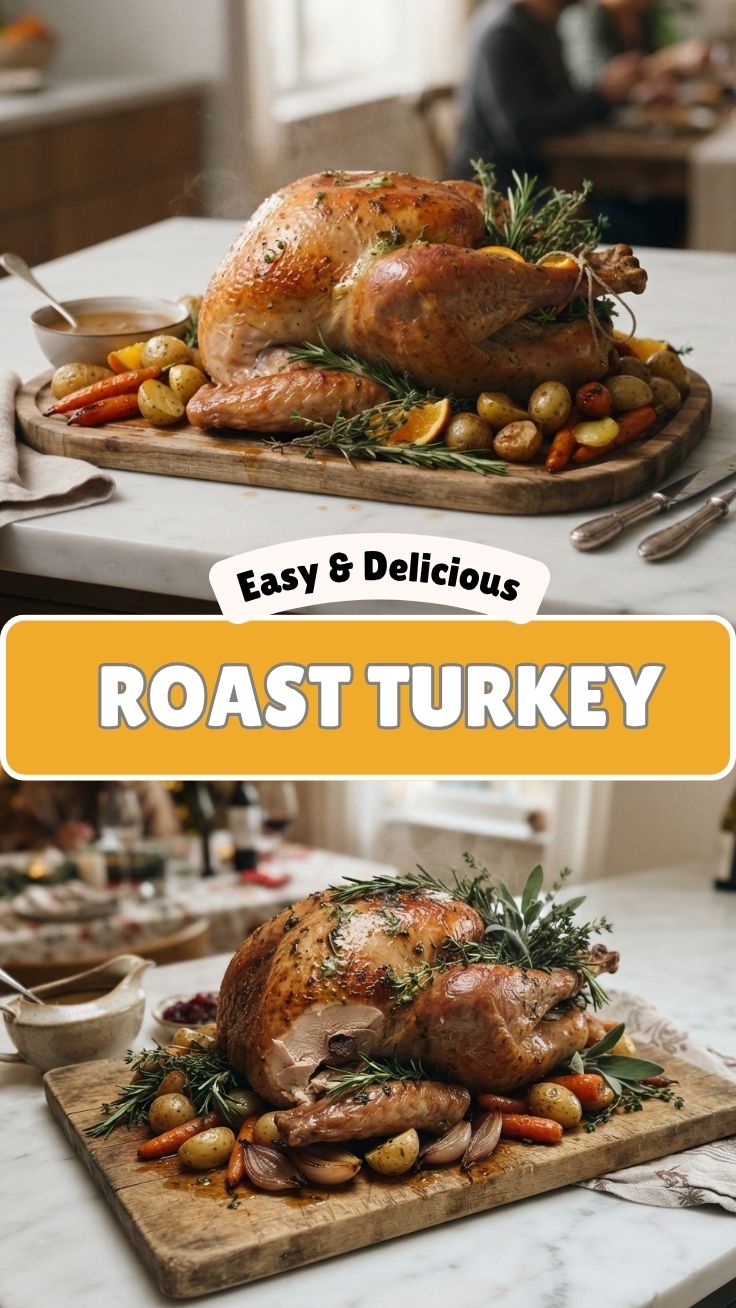
- Thawing Time: 1-3 days (depending on turkey size, allow 24 hours per 4-5 lbs in the refrigerator).
- Prep Time: 30-45 minutes (unwrapping, rinsing, seasoning, stuffing cavity).
- Roasting Time: 2.5 – 3.5 hours for a 12-15 lb turkey (approx. 13-15 minutes per pound at 325°F/160°C).
- Resting Time: 20-30 minutes minimum. This is non-negotiable for juicy meat!
To plan your holiday meal, remember to start thawing your turkey several days in advance. Factor in ample prep time for seasoning and getting it into the oven. The most critical part of the cooking schedule is the resting period; do not skip this, as it allows the juices to redistribute, ensuring a tender and flavorful bird.
Step-by-Step Instructions
1. Thaw Your Turkey: If frozen, ensure your turkey is fully thawed in the refrigerator. This is paramount for even cooking and safety.
2. Prepare the Turkey: Remove the turkey from its packaging. Discard the neck and giblets (or save them for gravy). Pat the turkey dry thoroughly, inside and out, with paper towels. This helps achieve crispier skin.
3. Season: In a small bowl, combine softened butter with 1 tbsp salt, 1 tbsp pepper, and finely chopped herbs (rosemary, thyme, sage). Gently separate the skin from the breast meat with your fingers and rub about half of the butter mixture directly onto the breast meat. Rub the remaining butter all over the outside of the turkey. Season the cavity generously with salt and pepper.
4. Stuff the Cavity: Place the quartered onion, chopped celery, carrots, halved lemons, halved garlic head, and remaining fresh herb sprigs into the turkey’s cavity. Do not overstuff, as this can hinder even cooking.
5. Truss and Place: Tie the turkey legs together with kitchen twine. Tuck the wing tips under the body to prevent them from burning. Place the turkey breast-side up on a rack in a shallow roasting pan.
6. Preheat Oven & Initial Roast: Preheat your oven to 425°F (220°C). Pour 2 cups of broth into the bottom of the roasting pan. Roast the turkey for 30 minutes at this higher temperature to crisp the skin.
7. Reduce Temperature & Continue Roasting: Reduce the oven temperature to 325°F (160°C). Continue to roast, basting every 45-60 minutes with pan juices or remaining broth, until a meat thermometer inserted into the thickest part of the thigh (without touching bone) reads 165°F (74°C). If the skin browns too quickly, loosely tent with foil. This approach ensures a perfectly cooked Roast Turkey.
8. Rest the Turkey: Once cooked, remove the turkey from the oven, transfer it to a carving board, and tent it loosely with foil. Let it rest for at least 20-30 minutes. This resting period is critical for juicy meat, making all your Thanksgiving Turkey Recipes endeavors a success.
9. Carve and Serve: Carve the turkey and serve immediately with your favorite sides!
Nutritional Benefits & Advantages
Turkey is an excellent source of lean protein, essential for muscle repair and growth. It’s also rich in B vitamins (especially B6 and B12), which are vital for energy metabolism and nervous system function. Furthermore, turkey provides minerals like selenium, zinc, and phosphorus, all contributing to overall health. Choosing a Roast Turkey means you’re opting for a healthier centerpiece compared to some red meats, especially when prepared without excessive butter or rich gravies. The herbs and vegetables in the cavity also infuse natural flavors without adding extra calories.
Tips, Variations & Cooking Advice
- Brining: For an exceptionally moist turkey, consider brining it overnight. A simple saltwater brine (1 cup salt per gallon of water) can dramatically improve moisture content.
- Herb Butter Variations: Experiment with different herb combinations (e.g., marjoram, tarragon) or add a pinch of smoked paprika for a subtle smokiness.
- Aromatics: Beyond the standard, consider adding apple slices, orange wedges, or sprigs of fresh rosemary to the cavity for different aromatic profiles.
- Roasting Bags: For ultimate moisture retention and quicker cooking, a turkey roasting bag can be used, though it may result in less crispy skin.
- Smoked Turkey: If you have a smoker, smoking a turkey can lead to an incredibly flavorful and unique bird.
- Gluten-Free Gravy: Ensure your gravy is gluten-free by using cornstarch or a gluten-free flour blend as a thickener.
Common Mistakes to Avoid
- Not Thawing Fully: Leads to uneven cooking, with some parts raw and others overcooked. Always thaw completely.
- Overcooking: The most common mistake! Use a meat thermometer. Overcooked turkey is dry and stringy.
- Not Resting the Turkey: Skipping the rest time means all the precious juices run out when carved, resulting in dry meat.
- Over-stuffing the Cavity: A densely packed cavity slows down cooking from the inside, increasing overall cooking time and potentially leading to unsafe temperatures for the stuffing.
- Neglecting Seasoning: A large bird needs generous seasoning. Don’t be shy with salt and pepper!
Storage & Meal Prep Tips
Store leftover Roast Turkey in airtight containers in the refrigerator for up to 3-4 days. For longer storage, carve the meat off the bones, separate into portions, and freeze in freezer-safe bags or containers for up to 2-3 months. To reheat, gently warm in the oven at a low temperature (around 275°F/135°C) covered with foil, or microwave with a splash of broth to prevent drying out. Leftover turkey is fantastic for sandwiches, salads, stir-fries, or even a hearty soup.
Conclusion
Mastering the perfect Roast Turkey is a culinary triumph that’s more accessible than you might think. By following these detailed steps and embracing smart cooking techniques, you’ll create a moist, flavorful, and unforgettable centerpiece that will undoubtedly become a staple in your Thanksgiving Turkey Recipes repertoire. Don’t be intimidated; instead, embrace the joy of creating something truly special in your kitchen. Try this recipe, share your magnificent results, and elevate your holiday feasting to a whole new level!
FAQs
Q1: How do I know when my turkey is perfectly cooked?
A1: The most accurate way is a meat thermometer. Insert it into the thickest part of the thigh, avoiding the bone. It should read 165°F (74°C). The juices should also run clear when poked.
Q2: Can I prepare the turkey ahead of time for roasting?
A2: Yes! You can season the turkey a day in advance and store it, uncovered, in the refrigerator. This allows the seasoning to penetrate deeper, often resulting in more flavorful meat and crispier skin.
Q3: What if my turkey skin isn’t getting crispy?
A3: Ensure the turkey is patted thoroughly dry before seasoning. Roasting at a higher initial temperature (like 425°F/220°C for 30 minutes) helps. Also, avoid basting too frequently in the last hour of cooking, as this can prevent crisping.
Q4: How do I make gravy from the pan drippings?
A4: After removing the turkey, skim excess fat from the pan drippings. Deglaze the pan with a bit of wine or broth, then whisk in a roux (equal parts butter and flour cooked together) to thicken, stirring until smooth. Season to taste.
Q5: Is it safe to stuff the turkey cavity with bread stuffing?
A5: While traditional, it’s generally recommended to cook stuffing separately. Stuffing inside the turkey needs to reach 165°F (74°C) to be safe, which often means the turkey itself becomes overcooked and dry. If you do stuff it, pack it loosely and monitor its internal temperature closely.