Unlock the Secret to the Perfect Hearty Beef Stew at Home
Ever wondered how to create that incredibly rich, deeply flavorful Beef Stew that warms you from the inside out and leaves everyone asking for seconds? In a world of instant gratification, there’s an undeniable magic in crafting culinary masterpieces from scratch, especially when it comes to comforting classics. Mastering the art of making a truly exceptional hearty beef stew is not just about following a recipe; it’s about understanding the nuances of how ingredients interact and transforming simple components into a symphony of taste and texture. Forget bland, watery imitations – we’re diving deep into the secrets behind a stew that boasts tender beef, vibrant vegetables, and a luscious, savory broth that will make your kitchen the envy of the neighborhood. Preparing this at home guarantees freshness, quality, and the ability to tailor every aspect to your preference, far exceeding any store-bought alternative.
Ingredients & Kitchen Tools
Crafting a magnificent Beef Stew requires a thoughtful selection of ingredients and the right tools to bring it all together.
- 2 lbs Boneless Beef Chuck Roast: Cut into 1.5-inch cubes. Chuck roast is ideal for slow cooking, breaking down into tender, succulent pieces.
- 2 tbsp Olive Oil: For searing the beef, building a foundational flavor.
- 1 large Yellow Onion: Chopped. Adds sweetness and aromatic depth.
- 3 Carrots: Peeled and chopped into large chunks. Essential for sweetness and color.
- 3 Celery Stalks: Chopped. Contributes an earthy, savory note.
- 3 cloves Garlic: Minced. Pungent and aromatic, crucial for flavor.
- 2 tbsp Tomato Paste: Adds umami and thickens the broth slightly.
- 4 cups Beef Broth: Low sodium is preferred, allowing you to control salt levels.
- 1 cup Dry Red Wine (e.g., Cabernet Sauvignon): Optional, but highly recommended for a deep, complex flavor profile.
- 1 tbsp Worcestershire Sauce: Enhances savory notes.
- 2 Bay Leaves: Infuse a subtle, herbaceous aroma.
- 1 tsp Dried Thyme: Classic pairing with beef and vegetables.
- Salt and Freshly Ground Black Pepper: To taste, essential for seasoning.
- 1.5 lbs Yukon Gold Potatoes: Peeled and cut into 1.5-inch cubes. Hold their shape well and provide a creamy texture.
- 2 tbsp All-Purpose Flour: For thickening the stew.
- Fresh Parsley: Chopped, for garnish and a touch of freshness.
Kitchen Tools:
- Large Dutch Oven or a Heavy-Bottomed Pot (ideal for even heat distribution)
- Cutting Board
- Sharp Knife
- Measuring Cups and Spoons
- Wooden Spoon or Spatula
- Ladle
Prep Time & Cooking Schedule
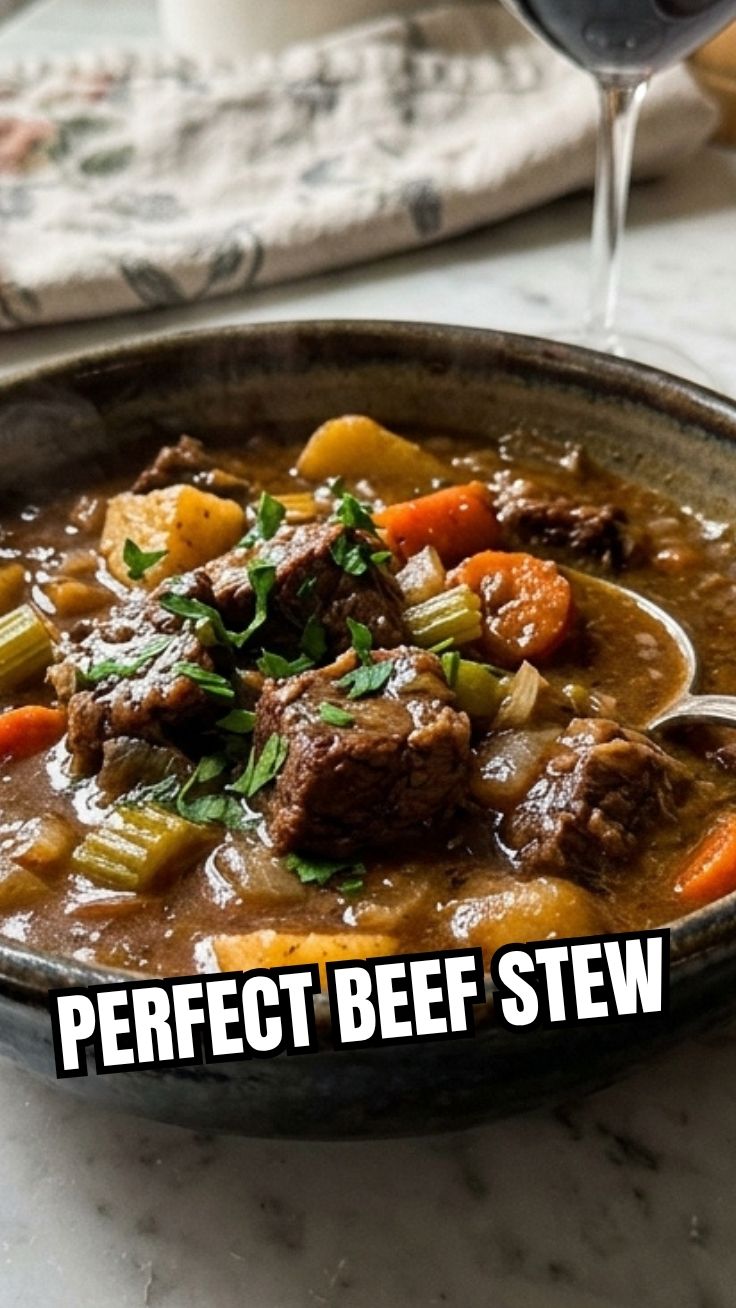
Planning is key to a stress-free cooking experience.
- Prep Time: 25 minutes
- Cook Time: 2.5 – 3 hours (simmering on stovetop or in oven)
- Resting Time: 15 minutes (allows flavors to meld and beef to reabsorb juices)
This recipe is perfect for a weekend project or a cozy meal planning session. The longer cook time allows the beef to become incredibly tender and the flavors to deepen beautifully.
Step-by-Step Instructions
Follow these steps for a rich and flavorful Beef Stew that will impress. Getting that perfect hearty beef stew isn’t complicated when you follow these easy instructions.
1. Sear the Beef: Pat beef cubes dry with paper towels. Season generously with salt and pepper. Heat olive oil in a large Dutch oven over medium-high heat. Brown beef in batches until a rich, dark crust forms on all sides. This créates essential flavor depth (Maillard reaction). Remove beef and set aside.
2. Sauté Aromatics: Reduce heat to medium. Add chopped onion, carrots, and celery to the pot. Sauté for 8-10 minutes, scraping up any browned bits from the bottom (deglazing) until vegetables soften. Add minced garlic and tomato paste, cooking for another 2 minutes until fragrant.
3. Deglaze and Build Broth: Pour in red wine (if using), scraping the bottom of the pot to release all the flavorful bits. Let it simmer for 2-3 minutes until slightly reduced. Stir in beef broth, Worcestershire sauce, bay leaves, and dried thyme.
4. Simmer the Stew (Initial Phase): Return seared beef to the pot. Bring the mixture to a gentle boil, then reduce heat to low, cover, and simmer for 1.5 hours, or until beef is fork-tender. Alternatively, you can transfer to a preheated oven at 325°F (160°C) for the same duration.
5. Add Potatoes and Thicken: Stir in the cubed potatoes. In a small bowl, whisk together 2 tablespoons of flour with 1/4 cup of cold water until smooth to create a slurry. Stir this slurry into the simmering stew.
6. Continue Simmering: Cover and continue to simmer for another 45-60 minutes, or until potatoes are tender and the stew has thickened to your desired consistency.
7. Final Touches: Remove bay leaves. Taste and adjust seasoning with salt and pepper as needed. Let the stew rest for 15 minutes before serving. Garnish with fresh parsley.
Nutritional Benefits & Advantages
This Beef Stew is more than just comfort food; it’s a nutritional powerhouse. Beef chuck roast is an excellent source of protein, iron, and B vitamins, crucial for energy production and muscle health. The generous amount of vegetables — carrots, celery, and potatoes — provides essential vitamins (A, C, K), minerals, and dietary fiber, supporting digestion and overall well-being. This hearty meal is also a great way to load up on antioxidants from garlic and herbs.
Tips Variations & Cooking Advice
- Spice it Up: Add a pinch of red pepper flakes for a subtle kick.
- Herb Power: Experiment with fresh rosemary or marjoram for different aromatic notes.
- Vegetable Swap: Feel free to add other root vegetables like parsnips or rutabaga, or even some frozen peas at the very end for a pop of color and sweetness.
- Thicker Stew: For an even thicker stew, you can mash a few of the cooked potatoes against the side of the pot or add an extra tablespoon of flour slurry.
- Slow Cooker Method: After searing the beef and sautéing the aromatics, transfer everything to a slow cooker. Cook on low for 6-8 hours or on high for 3-4 hours, adding potatoes during the last 2 hours.
Common Mistakes to Avoid
- Overcrowding the Pot: When searing beef, cook in batches to ensure a good crust forms. Overcrowding steams the meat instead of browning it.
- Not Searing the Beef: Skipping this step means missing out on a crucial layer of flavor. Don’t underestimate the power of a good sear!
- Undercooking the Beef: Chuck roast needs time to break down and become tender. Don’t rush the simmering process.
- Adding Potatoes Too Early: This can result in mushy potatoes. Add them later to ensure they are cooked through but still hold their shape.
- Too Much Salt Too Soon: It’s easier to add salt than to remove it. Season gradually and taste throughout the cooking process.
Storage & Meal Prep Tips
Leftover Beef Stew often tastes even better the next day as the flavors continue to meld.
- Refrigeration: Store cooled stew in an airtight container in the refrigerator for up to 3-4 days.
- Freezing: This stew freezes exceptionally well. Portion into freezer-safe containers or bags and freeze for up to 3 months. Thaw overnight in the refrigerator before reheating.
- Reheating: Gently reheat on the stovetop over medium-low heat, stirring occasionally, until heated through. Add a splash of broth or water if it seems too thick. Avoid high heat, which can cause the beef to toughen.
Conclusion
Creating a flavorful and comforting Beef Stew at home is a deeply rewarding culinary experience. By following these detailed steps, you can achieve a truly exceptional hearty beef stew that delivers on all fronts: rich flavor, tender beef, and perfectly cooked vegetables. We hope this guide inspires you to take on this classic dish and taste the difference that homemade quality makes. Share your cooking triumphs with us in the comments below, or explore our other comforting recipes designed to bring warmth to your table.
FAQs
Q1: Can I make this stew in a slow cooker?
A1: Yes, after searing the beef and sautéing aromatics, transfer everything to a slow cooker. Cook on low for 6-8 hours or on high for 3-4 hours, adding potatoes during the last 2 hours of cooking.
Q2: What’s the best way to thicken the stew without flour?
A2: You can use cornstarch (mixed with cold water to form a slurry) instead of flour, or mash a portion of the cooked potatoes against the side of the pot to naturally thicken the broth.
Q3: Can I add other vegetables?
A3: Absolutely! Green beans, mushrooms, parsnips, or even sweet potatoes can be delicious additions. Add softer vegetables like mushrooms or green beans towards the end of the cooking process to prevent them from becoming mushy.
Q4: My beef isn’t tender even after prolonged cooking. What went wrong?
A4: This usually happens if the heat is too high, causing the beef to toughen, or if the meat wasn’t simmered long enough. Ensure a gentle simmer and give it adequate time. Tough cuts like chuck roast benefit from low and slow cooking.