The Ultimate Guide to Crafting the Perfect Holiday Stuffing
Are you ready to transform your holiday table with a side dish that’s more than just a filler—it’s a star? Forget bland, uninspired supermarket versions. Imagine a golden-brown, aromatic Stuffing, brimming with savory herbs, tender bread, and a symphony of flavors that will have everyone asking for seconds. Crafting your own homemade Stuffing allows for unparalleled customization, ensuring every bite is tailored to perfection. And for those with dietary considerations, mastering your own preparation means you can easily create a delicious and satisfying keyword that everyone can enjoy. This guide will walk you through every step, from selecting the finest ingredients to achieving that coveted crispy-on-top, moist-on-the-inside texture.
Ingredients & Kitchen Tools
Crafting the perfect Stuffing requires a balance of fresh ingredients and basic kitchen tools.
- 1 loaf (1 pound) day-old artisan bread: Such as sourdough, challah, or French bread, cut into 1-inch cubes. Day-old bread is crucial for absorbing moisture without becoming mushy.
- 1 cup (2 sticks) unsalted butter: Essential for sautéing and adding rich flavor.
- 2 large yellow onions, finely chopped: Provides a foundational sweet and savory base.
- 4 stalks celery, finely chopped: Adds a delightful crunch and aromatic depth.
- 8 ounces cremini mushrooms, sliced: Optional but highly recommended for an earthy, umami boost.
- 1 pound sausage (bulk sweet Italian or sage sausage), cooked and crumbled: Adds a hearty, savory element. (For a vegetarian option, omit sausage and add another cup of mushrooms or plant-based sausage.)
- 4 large eggs, lightly beaten: Binds the ingredients together and adds richness.
- 4 cups chicken or vegetable broth, warm: The liquid that moistens and flavors the bread.
- 1/2 cup fresh parsley, chopped: For a burst of freshness and color.
- 2 tablespoons fresh sage, chopped: The quintessential herb for holiday stuffing, offering an earthy, aromatic note.
- 1 tablespoon fresh thyme, chopped: Complements sage beautifully.
- 1 teaspoon salt: Enhances all flavors.
- 1/2 teaspoon black pepper: Adds a subtle warmth.
- Optional add-ins: 1/2 cup dried cranberries, 1/2 cup chopped pecans or walnuts, zest of one orange.
Kitchen Tools:
- Large mixing bowl
- Large sauté pan
- 9×13 inch baking dish
- Cutting board and sharp knife
- Measuring cups and spoons
- Spatula or wooden spoon
Prep Time & Cooking Schedule
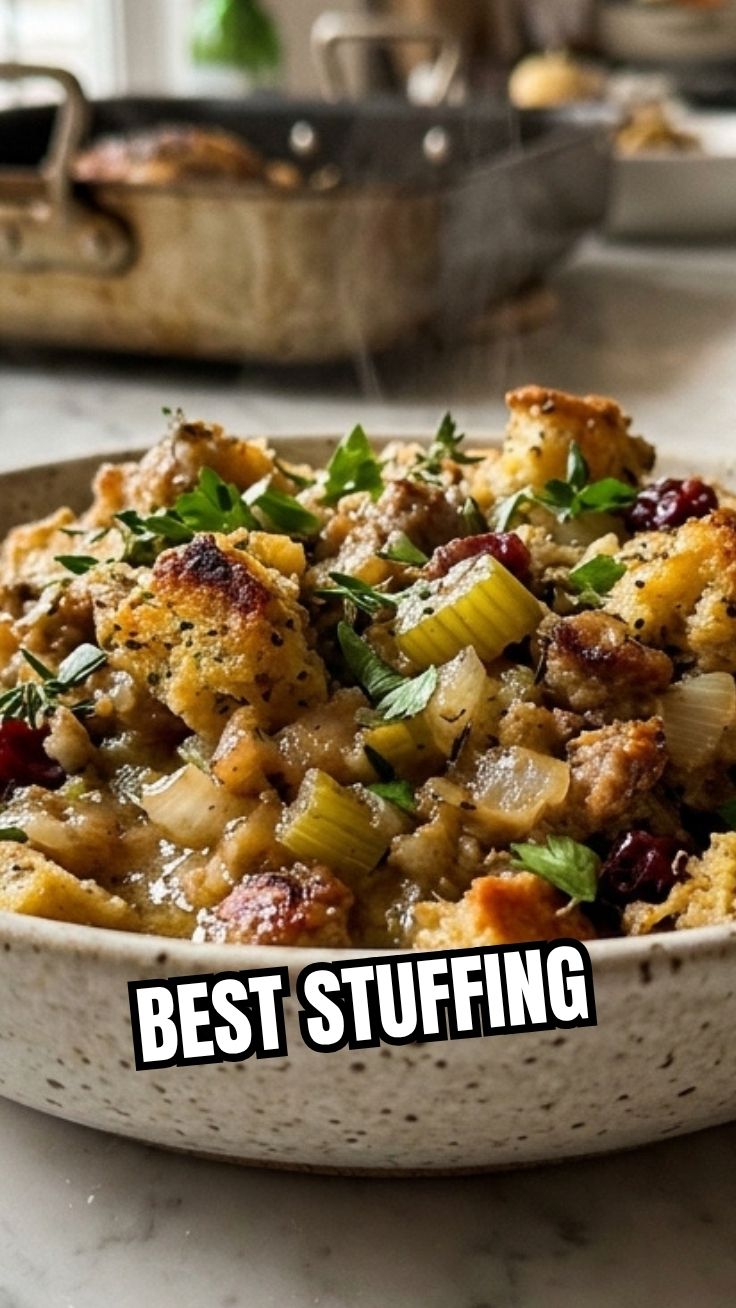
Planning is key for a stress-free holiday meal! This recipe is designed to be largely prepped ahead.
- Prep Time: 30 minutes (This includes chopping vegetables and cubing bread.)
- Cook Time: 40-50 minutes
- Resting Time: 10 minutes (After baking, before serving.)
- Advance Prep: You can chop vegetables and cube bread a day or two ahead. The savory mixture (onions, celery, mushrooms, sausage) can also be cooked and refrigerated for up to 2 days. This makes assembly on the day of cooking incredibly fast.
Step-by-Step Instructions
Follow these clear directions to achieve a perfectly balanced and flavorful Stuffing.
1. Prepare the Bread: Preheat oven to 300°F (150°C). Spread bread cubes on a large baking sheet and toast for 15-20 minutes, or until lightly golden and dry. This crucial step prevents soggy Stuffing. Let cool completely. For a truly inclusive meal, particularly when making a keyword, ensure your chosen bread is certified gluten-free and toast it thoroughly.
2. Sauté Aromatics: In a large sauté pan, melt butter over medium heat. Add chopped onions and celery. Cook, stirring occasionally, until softened, about 8-10 minutes. Add sliced mushrooms (if using) and cook until they release their liquid and brown, about 5-7 minutes more.
3. Cook Sausage (if using): If not using pre-cooked sausage, add bulk sausage to the pan with the aromatics. Cook, breaking it up with a spoon, until completely browned. Drain any excess grease.
4. Combine Ingredients: In a very large mixing bowl, combine the toasted bread cubes, cooked aromatic and sausage mixture, fresh parsley, fresh sage, fresh thyme, salt, and pepper. Add any optional add-ins like cranberries or nuts.
5. Moisten the Mixture: In a separate bowl, whisk together the warm chicken or vegetable broth and lightly beaten eggs. Pour this liquid mixture over the bread and vegetable mixture. Toss gently but thoroughly until all the bread cubes are evenly moistened. Be careful not to overmix, as this can break down the bread too much.
6. Bake: Transfer the Stuffing mixture to the greased 9×13 inch baking dish. Cover with foil and bake for 30 minutes.
7. Brown and Serve: Remove the foil and continue baking for another 10-20 minutes, or until the top is golden brown and crispy and the internal temperature reaches 165°F (74°C).
8. Rest: Let the Stuffing rest for 10 minutes before serving. This allows the flavors to meld and the Stuffing to set slightly.
Nutritional Benefits & Advantages
Homemade Stuffing offers more than just incredible flavor. By preparing it yourself, you control the ingredients, leading to a dish potentially lower in sodium and unhealthy fats compared to pre-made options. Whole-grain bread, when used, contributes dietary fiber, beneficial for digestive health. The abundance of vegetables like onions, celery, and mushrooms provides vitamins, minerals, and antioxidants. Sage, a key herb, is known for its anti-inflammatory and antioxidant properties. Choosing a keyword option further expands its health benefits for those with gluten sensitivities or celiac disease, making a beloved dish accessible to more diners.
Tips, Variations & Cooking Advice
- Crispy Top, Moist Inside: For an extra crispy top, broil the Stuffing for the last few minutes, watching carefully to prevent burning. If the Stuffing seems too dry during baking, you can drizzle in a bit more warm broth.
- Flavor Variations:
* Apple and Cranberry: Add 1 cup diced apple and 1/2 cup dried cranberries for a sweet and tart counterpoint.
* Mushroom and Leek: Replace some onion with sautéed leeks and use a variety of mushrooms (shiitake, oyster) for deeper earthy notes.
* Cornbread Stuffing: Substitute the artisan bread with day-old cornbread for a sweeter, more crumbly texture.
- Dietary Adaptations:
* Gluten-Free: Use high-quality gluten-free bread. Ensure all other ingredients (broth, sausage) are also gluten-free.
* Vegetarian/Vegan: Omit sausage. Use vegetable broth and a flax egg (1 tbsp ground flaxseed + 3 tbsp water per egg) or a commercial egg replacer for the eggs. Increase mushrooms or add cooked lentils for texture.
* Dairy-Free: Use a dairy-free butter substitute.
- Cooking in the Bird: If stuffing a turkey, ensure the Stuffing reaches an internal temperature of 165°F (74°C) to be safe. It’s generally recommended to bake Stuffing separately for food safety and better texture.
Common Mistakes to Avoid
- Soggy Stuffing: This is the most common pitfall! Ensure bread is thoroughly dried out (day-old or toasted) and avoid over-moistening with broth.
- Bland Flavor: Don’t skimp on fresh herbs, salt, and pepper. Taste the mixture before baking and adjust seasoning.
- Over-mixing: Once the liquid is added, mix just enough to combine. Overworking the bread can lead to a gummy texture.
- Forgetting to Cover Initially: Covering during the first part of baking helps retain moisture, preventing the Stuffing from drying out before it has a chance to bake through.
- Not Resting: A brief rest allows the Stuffing to firm up slightly and makes it easier to serve.
Storage & Meal Prep Tips
- Refrigeration: Leftover Stuffing should be stored in an airtight container in the refrigerator for up to 3-4 days.
- Freezing: For longer storage, freeze cooled Stuffing in an airtight, freezer-safe container for up to 3 months. Thaw overnight in the refrigerator before reheating.
- Reheating: To reheat, place Stuffing in an oven-safe dish, cover with foil (to prevent drying), and bake at 325°F (160°C) until heated through, about 20-30 minutes. Uncover for the last few minutes if you want to crisp up the top. Alternatively, smaller portions can be reheated in the microwave, though the texture won’t be as crispy.
Conclusion
Creating your own homemade Stuffing elevates any meal, transforming a simple side dish into a memorable culinary experience. By following this comprehensive guide, you’re not just baking; you’re crafting a dish that embodies warmth, tradition, and incredible flavor. Whether you’re adhering to dietary needs with a delicious keyword or indulging in a classic rendition, the satisfaction of a perfectly golden, aromatic Stuffing is unparalleled. Don’t be afraid to experiment with your favorite herbs and additions. Give this recipe a try and share your results in the comments below! What are your favorite Stuffing traditions?
FAQs
Q1: Can I make the Stuffing ahead of time?
A1: Yes, absolutely! You can prepare the entire mixture (bread, cooked aromatics, eggs, broth) and refrigerate it in the baking dish for up to 1 day before baking. This makes holiday meal prep much smoother.
Q2: What’s the best bread for Stuffing?
A2: Day-old artisan breads like sourdough, challah, or French bread work best. Their sturdy texture holds up well to moisture without becoming mushy. Avoid very soft sandwich breads.
Q3: My Stuffing turned out too dry. What went wrong?
A3: This often happens if the bread wasn’t adequately moistened or if it was baked uncovered for too long. Ensure you add enough broth and cover during the initial baking phase. If it’s still dry, drizzle a little warm broth over it before serving.
Q4: How can I make my Stuffing vegetarian?
A4: Simply omit the sausage. You can add extra mushrooms, toasted nuts, or cooked lentils for added texture and savory depth. Use vegetable broth instead of chicken broth.
Q5: Can I bake this Stuffing inside the turkey?
A5: While traditional, it’s generally recommended to bake Stuffing separately for food safety reasons. Stuffing baked inside a turkey must reach an internal temperature of 165°F (74°C) to be safe, which can overcook the turkey. If you do stuff your turkey, ensure you use a meat thermometer to check the Stuffing‘s temperature.