Whisk Up Wellness: Crafting the Perfect Greek Salad at Home
Tired of uninspired lunches and bland side dishes? Imagine a vibrant, flavour-packed meal that’s as refreshing as a Mediterranean breeze and bursting with healthful goodness. That’s exactly what you get when you master the art of making a homemade Greek Salad. This isn’t just about combining a few ingredients; it’s about curating a symphony of fresh flavours and textures that transport you straight to the sun-drenched shores of Greece. Beyond its incredible taste, preparing this traditional Greek Salad yourself ensures you control the quality of every component, avoiding unnecessary additives and focusing on the freshest produce available. It’s a simple yet sophisticated dish that perfectly embodies the spirit of healthy eating, offering a delicious, nutritious, and incredibly satisfying option for any meal. Forget those lacklustre pre-made versions; your kitchen is about to become a hub of Mediterranean magic!
Ingredients & Kitchen Tools
Here’s what you’ll need to assemble your authentic Greek Salad and a vibrant Mediterranean Salad:
1 large English cucumber (or 2 regular cucumbers): Crisp and refreshing, removes easily with a vegetable peeler if desired.*
2-3 ripe large tomatoes (Roma or heirloom work best): Sweet and juicy, a cornerstone of any good Greek salad.*
1 red onion, thinly sliced: Adds a sharp, piquant bite. Soak in ice water for 10 minutes to reduce harshness if preferred.*
1 green bell pepper, deseeded and chopped: Provides a subtle sweetness and crunch.*
1 cup Kalamata olives, pitted: Briny and rich, essential for authentic flavour.*
4-6 ounces block of Feta cheese, quality is key: Creamy, salty, and tangy. Avoid pre-crumbled for best results; traditionally served in a block.*
Fresh oregano, a few sprigs (or 1 tsp dried): Earthy and aromatic, truly elevates the dish.*
Extra Virgin Olive Oil (good quality): The dressing’s foundation, look for cold-pressed.*
Red Wine Vinegar: Adds a crucial tang to the dressing.*
Salt and freshly ground black pepper: To taste, enhances all other flavours.*
- Optional: Capers, thinly sliced radishes, a pinch of sumac for extra depth in a Mediterranean Salad.
Kitchen Tools:
Large mixing bowl: For tossing all ingredients.*
Sharp knife: For precise chopping of vegetables.*
Cutting board: A stable surface for all your prep.*
Whisk or fork: For emulsifying the dressing.*
Serving tongs: For easy serving.*
Prep Time & Cooking Schedule
This Greek Salad is a quick and effortless dish, making it perfect for last-minute meals or entertaining.
- Prep Time: 15-20 minutes
- Cook Time: 0 minutes (no cooking required!)
- Resting Time: 10-15 minutes (optional, but recommended for flavours to meld)
You can easily prepare all the vegetables ahead of time and store them separately in airtight containers in the refrigerator. Assemble the salad just before serving to maintain optimal crispness. The dressing can also be made in advance and stored in a sealed jar.
Step-by-Step Instructions
1. Prepare the Vegetables: Wash all your produce thoroughly. Dice the cucumber and tomatoes into bite-sized pieces. Thinly slice the red onion and chop the green bell pepper. Place all these prepared vegetables into a large mixing bowl.
2. Add Olives and Herbs: Toss in the pitted Kalamata olives. If using fresh oregano, gently strip the leaves from the stem and either chop roughly or leave whole, adding them to the bowl. If using dried oregano, sprinkle it in.
3. Make the Dressing: In a small bowl or jar, whisk together 3-4 tablespoons of good quality extra virgin olive oil and 1-2 tablespoons of red wine vinegar. Season generously with salt and fresh black pepper. Adjust the oil and vinegar ratio to your preference for a perfect balance of richness and tang.
4. Assemble and Season: Pour the dressing over the vegetables and toss everything gently to ensure an even coating. The goal is to lightly dress, not drench. Now it’s time to incorporate the star of the show!
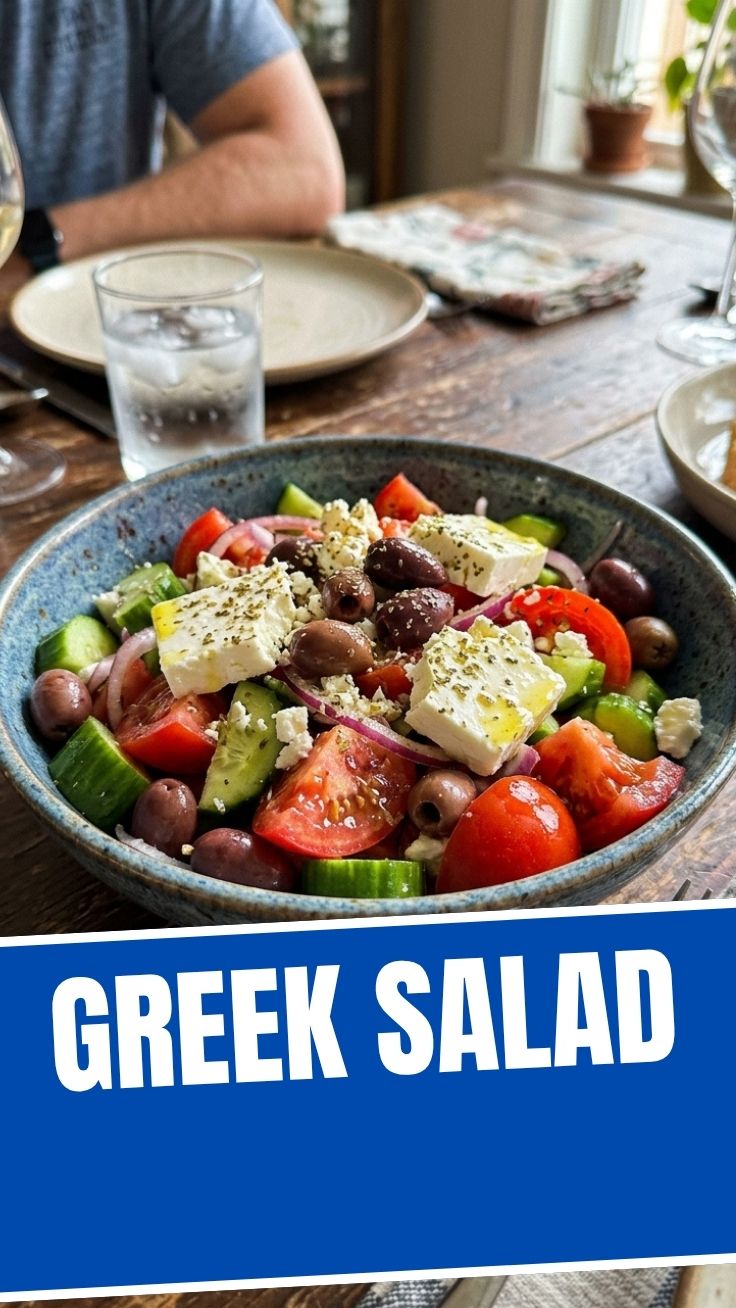
5. Add Feta: Traditionally, a block of feta is placed on top of the salad and then drizzled with a little extra olive oil and a sprinkle of oregano. You can also crumble the feta directly into the salad if you prefer a more integrated flavour.
6. Serve: For the best flavour, let the Greek Salad sit for 10-15 minutes before serving to allow the flavours to meld beautifully. This simple Greek Salad is now ready to enjoy. For an equally delightful experience and a slight variation on ingredients, try making a Mediterranean Salad by adding chickpeas or sun-dried tomatoes.
Nutritional Benefits & Advantages
The Greek Salad is a powerhouse of nutrition, embodying the wholesome principles of the Mediterranean diet. It’s rich in vitamins, minerals, and antioxidants from the array of fresh vegetables. Tomatoes provide lycopene, a potent antioxidant, while cucumbers offer hydration and essential electrolytes. Red onions and bell peppers contribute Vitamin C and other beneficial plant compounds. Kalamata olives are a source of healthy monounsaturated fats and antioxidants, and high-quality feta cheese delivers calcium, protein, and probiotics. The extra virgin olive oil used in the dressing is renowned for its heart-healthy fats and anti-inflammatory properties. This salad is naturally low in calories but high in fibre, promoting satiety and digestive health, making it an excellent choice for a balanced lifestyle.
Tips, Variations & Cooking Advice
- For Extra Crunch: Add a handful of toasted pine nuts or croutons just before serving.
- Protein Boost: Grill some chicken, shrimp, or halloumi cheese and serve on top for a heartier meal.
- Herb Variations: While oregano is classic, fresh mint or dill can offer an interesting twist for a Mediterranean Salad.
- Dietary Adaptations:
* Dairy-Free: Omit the feta or use a plant-based feta alternative.
* Gluten-Free: This recipe is naturally gluten-free!
- Temperature Control: Serve the salad slightly chilled for maximum refreshment. Avoid dressing too far in advance, as vegetables can become soggy.
- Flavor Intensity: For a deeper onion flavour, don’t soak the red onion. For a milder taste, soak it in ice water for 10-15 minutes, then drain thoroughly before adding.
Common Mistakes to Avoid
- Over-dressing: Resist the urge to drench your salad. A light coating of dressing is all you need to enhance the natural flavours without making the vegetables soggy.
- Using pre-crumbled Feta: Pre-crumbled feta often contains anti-caking agents and lacks the rich, creamy texture of a block of quality feta. Always opt for a block and crumble it yourself or serve it whole.
- Soggy Vegetables: Ensure your vegetables are thoroughly dried after washing, especially the cucumber, to prevent a watery salad.
- Ignoring Quality Ingredients: The simplicity of Greek Salad means every ingredient shines. Invest in good quality tomatoes, olives, feta, and extra virgin olive oil for the best results.
- Serving Immediately After Dressing: While it’s not a disaster, allowing the salad to rest for 10-15 minutes after dressing truly lets the flavours meld and develop.
Storage & Meal Prep Tips
For optimal freshness and texture, it’s best to assemble and dress the Greek Salad just before serving. However, you can prep components ahead of time:
- Pre-cut Vegetables: Chop cucumbers, tomatoes, bell peppers, and slice red onion. Store each vegetable separately in airtight containers in the refrigerator for up to 2-3 days.
- Dressing: Prepare the olive oil and red wine vinegar dressing and store it in a sealed jar in the refrigerator for up to a week. Shake well before use.
- Feta: Keep the block of feta in its brine until ready to use.
- Leftovers: If you have dressed salad leftovers, they will keep for about 1 day in an airtight container in the refrigerator, but the vegetables may become softer. It’s not ideal for freezing.
Conclusion
Creating your own Greek Salad at home is more than just making a meal; it’s an embrace of fresh, wholesome ingredients and a journey to the heart of Mediterranean cuisine. The satisfaction of combining crisp vegetables, salty feta, and pungent olives, all brightened by a simple yet elegant dressing, is truly unmatched. Whether you’re seeking a light lunch, a vibrant side dish, or a healthy dinner, this classic delivers on all fronts. Don’t be afraid to experiment with slight variations to make it your own, perhaps adding capers for a tangier Mediterranean Salad. We encourage you to try this recipe and experience the delightful simplicity and incredible flavours for yourself. Share your creations and let us know your favourite Mediterranean-inspired additions in the comments below!
FAQs
1. Can I use other types of olives?
While Kalamata olives are traditional and highly recommended for authentic flavour in a Greek Salad, you can certainly experiment with other briny olives like Castelvetrano or even black olives for a different taste profile in a Mediterranean Salad.
2. How can I make the salad less watery?
To prevent a watery salad, ensure your cucumbers and tomatoes are fully drained after washing. You can also lightly salt the chopped cucumbers and let them sit for 10 minutes to draw out excess water, then pat them dry before adding to the salad.
3. What’s the best way to cut the Feta cheese?
For traditional serving, place a block of feta directly on top of the dressed salad. For a more integrated flavour, crumble it by hand over the salad just before serving. Avoid dicing it too small, as it can get lost in the other ingredients.
4. Can I add other vegetables?
Absolutely! While the classic Greek Salad has specific ingredients, a Mediterranean Salad is very flexible. Feel free to add ingredients like chickpeas, artichoke hearts, roasted red peppers, or even a handful of fresh spinach for added nutrients and variety.
5. How long does the dressing last?
A homemade dressing made with olive oil, red wine vinegar, and seasonings can last in an airtight container in the refrigerator for up to a week. Give it a good shake or whisk before each use, as the oil and vinegar may separate.