Unlock the Secret to the Perfect Roast Chicken: A Culinary Journey
Are you ready to transform your regular dinner into an extraordinary culinary experience? Imagine the aroma of herbs and citrus filling your home, the golden-brown skin crackling enticingly, and the succulent meat practically melting in your mouth. Preparing a Roast Chicken at home isn’t just about cooking; it’s an act of love, a mindful practice that yields incredible satisfaction and a dish that truly nourishes. This guide will walk you through crafting a magnificent Roast Chicken, elevating your weeknight meals or special occasions with minimal effort. Plus, we’ll explore the versatility of Chicken Recipes, showcasing how this staple can become a masterpiece.
Ingredients & Kitchen Tools
Crafting the perfect Roast Chicken requires a few essential ingredients and tools. Here’s what you’ll need:
- Whole Chicken (4-5 lbs): Choose a fresh, high-quality bird for the best results.
- Lemons (2 large): Zest and juice of one, the other quartered for stuffing. Adds bright acidity and a fresh aroma.
- Fresh Rosemary (3-4 sprigs): Robust, piney notes that beautifully complement poultry. Dried rosemary can be substituted, but use half the amount.
- Fresh Thyme (4-5 sprigs): Earthy and slightly minty, pairs well with rosemary. Dried thyme works too, again, use half.
- Garlic (1 whole head): Halved horizontally. Contributes a sweet, mellow flavor when roasted.
- Unsalted Butter (4 tbsp, softened): Helps crisp the skin and adds richness. Olive oil can be a dairy-free alternative.
- Olive Oil (2 tbsp): For rubbing the exterior, promoting even browning.
- Salt (2 tsp, kosher or sea salt): Essential for seasoning throughout, drawing out moisture for crisp skin.
- Black Pepper (1 tsp, freshly ground): Adds a pungent kick.
- Onion (1 medium, quartered): Aromatic base for the roasting pan, adding flavor to drippings.
- Carrots (2-3, roughly chopped): Sweetens the drippings and can be roasted alongside.
- Celery Stalks (2-3, roughly chopped): Adds a subtle, savory note to the pan drippings.
Kitchen Tools:
- Roasting Pan with Rack: Crucial for allowing air circulation, ensuring crispy skin all around.
- Meat Thermometer: Non-negotiable for guaranteeing the chicken is cooked to a safe internal temperature (165°F/74°C).
- Basting Brush: For applying butter or pan drippings.
- Twine (optional): For trussing the chicken, promoting even cooking and a more compact shape.
- Sharp Knife: For prepping ingredients and carving.
- Cutting Board: A stable surface for all your chopping.
Prep Time & Cooking Schedule
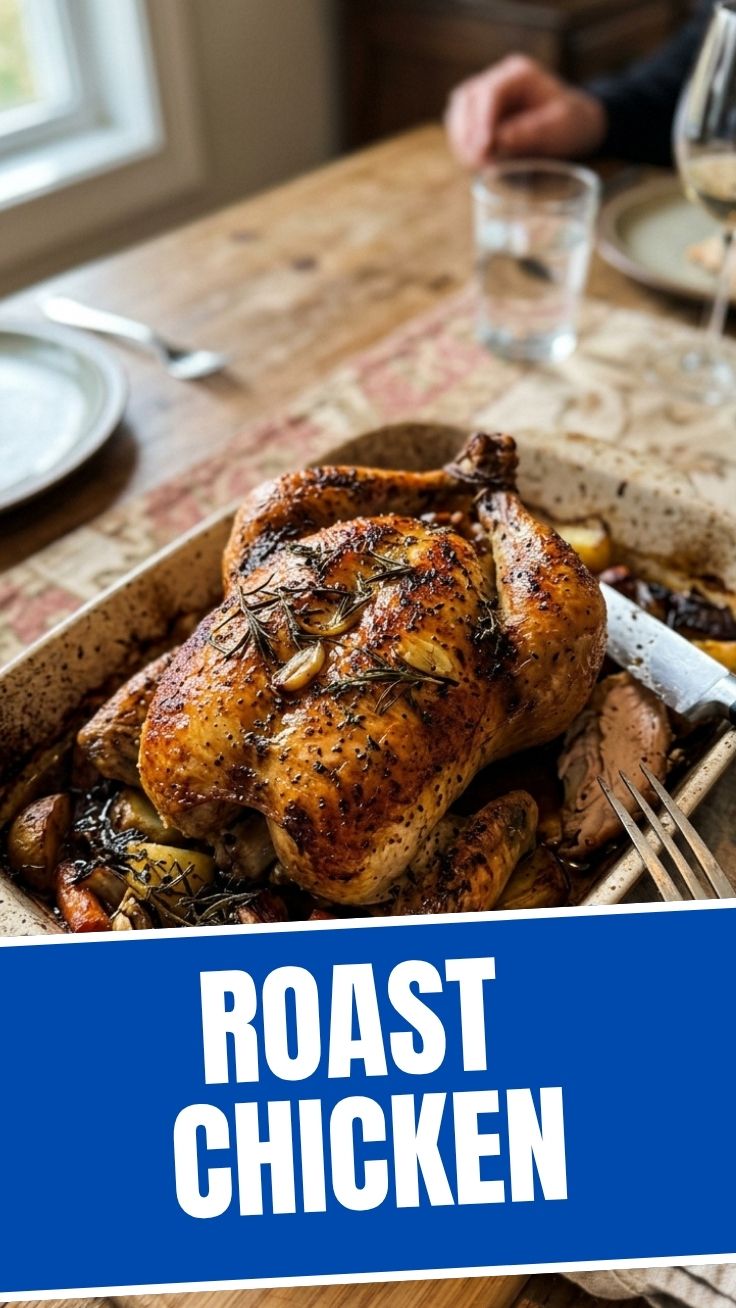
Planning is key for a stress-free cooking experience. This Roast Chicken recipe requires a bit of foresight but is incredibly rewarding.
- Prep Time: 20-25 minutes (includes seasoning and stuffing)
- Cook Time: 60-90 minutes (depending on chicken size and oven)
- Resting Time: 15-20 minutes (absolutely crucial for juicy meat)
Planning Ahead: For optimal flavor and crispy skin, consider salting the chicken 12-24 hours in advance and keeping it uncovered in the refrigerator. This dry brining method draws out moisture from the skin and allows it to air-dry, leading to superior crispness. If you don’t have time, salting it just before roasting is still perfectly fine.
Step-by-Step Instructions
Follow these steps for a beautifully roasted and incredibly flavorful Roast Chicken. These techniques are applicable across many Chicken Recipes.
1. Preparation: Preheat your oven to 425°F (220°C). Pat the chicken dry thoroughly with paper towels – this is vital for crispy skin.
2. Flavor Infusion: In a small bowl, combine softened butter, lemon zest, 1 tsp salt, and 1/2 tsp black pepper. Gently loosen the skin over the chicken breasts and thighs with your fingers, being careful not to tear it. Smear about half of the herbed butter mixture directly onto the meat under the skin.
3. Stuffing & Seasoning: Stuff the chicken cavity with lemon quarters, garlic halves, rosemary, and thyme sprigs. If desired, truss the legs together with kitchen twine. Rub the remaining herbed butter over the entire exterior of the chicken. Drizzle with olive oil, then season generously with the remaining 1 tsp salt and 1/2 tsp black pepper.
4. Pan Arrangement: Place the chopped onion, carrots, and celery in the bottom of your roasting pan. This aromatic bed will elevate the flavor of your pan drippings. Place the chicken on the rack in the roasting pan, breast-side up.
5. Roasting: Roast for 15 minutes at 425°F (220°C). This initial high heat helps crisp the skin.
6. Lower Heat & Continue Cooking: Reduce the oven temperature to 375°F (190°C) and continue roasting for another 45-75 minutes, or until a meat thermometer inserted into the thickest part of the thigh (without touching bone) reads 165°F (74°C). Basting every 20-30 minutes with pan drippings is optional but adds moisture and flavor.
7. Resting: Once cooked, remove the chicken from the oven and transfer it to a cutting board. Tent loosely with foil and let it rest for a crucial 15-20 minutes. This allows the juices to redistribute, resulting in incredibly moist meat.
8. Carving & Serving: Carve the chicken and serve immediately with the roasted vegetables from the pan and pan drippings or a homemade gravy.
Nutritional Benefits & Advantages
Beyond its delicious taste, Roast Chicken offers significant nutritional benefits. Chicken is an excellent source of lean protein, essential for muscle repair and growth. It also provides important vitamins and minerals, including B vitamins (niacin, B6, B12) for energy metabolism, and selenium, an antioxidant. The herbs and lemon contribute additional micronutrients and antioxidants, while the roasting method allows for flavorful cooking with minimal added fats, primarily healthy monounsaturated fats from olive oil. Opting for a whole chicken often means you have a great base for homemade chicken stock from the carcass, further enhancing its value.
Tips, Variations & Cooking Advice
- Flavor Variations: Experiment with different herbs like oregano, marjoram, or sage. Add a spicy kick with a pinch of cayenne pepper or smoked paprika. For an Asian-inspired twist, try a glaze of soy sauce, ginger, and garlic.
- Ingredient Swaps: No fresh herbs? Use 1 teaspoon of dried herbs for every tablespoon of fresh. Out of lemons? Oranges or limes can offer a similar acidic brightness.
- Alternative Cooking Methods: While roasting is classic, you can adapt this flavor profile for spatchcocked chicken (butterflied for faster, more even cooking) or even individual chicken pieces.
- Dietary Adaptations:
* Gluten-Free: This recipe is naturally gluten-free.
* Dairy-Free: Substitute olive oil for butter, or use a dairy-free butter alternative.
* Low-Sodium: Reduce the added salt and rely more on herbs and spices for flavor.
- Temperature Control: Using an oven thermometer to verify your oven’s actual temperature can make a huge difference in cooking times and results.
Common Mistakes to Avoid
- Not Patting Dry: The biggest culprit of soggy skin. Always pat the chicken thoroughly dry.
- Under-Seasoning: Don’t be shy with salt and pepper! They are crucial for flavor.
- Overcooking: Leads to dry, tough meat. Use a meat thermometer and cook only until 165°F (74°C).
- Not Resting: Skipping the resting period means all those beautiful juices will run out when you carve, leaving you with dry meat.
- Ignoring Pan Drippings: These are liquid gold! They make an amazing gravy or simply a delicious sauce to spoon over the carved chicken.
Storage & Meal Prep Tips
Leftover Roast Chicken is a gift that keeps on giving.
- Refrigeration: Store carved chicken in an airtight container in the refrigerator for up to 3-4 days. The carcass can be used to make chicken stock immediately or frozen for later use.
- Freezing: Deboned, shredded chicken freezes well for up to 3 months. Portion it into freezer-safe bags or containers.
- Reheating: Reheat gently in the oven at 300°F (150°C) with a splash of broth or water to prevent drying out, or in the microwave on a lower power setting. Leftover chicken is also fantastic cold in salads, sandwiches, or wraps. For meal prep, roast an extra chicken specifically for shredding and adding to various dishes throughout the week.
Conclusion
Mastering the art of Roast Chicken is a cornerstone of home cooking, offering immense satisfaction and a deeply flavorful meal that rivals any restaurant counterpart. This recipe, with its simple yet powerful techniques, ensures a juicy interior, crispy skin, and an unforgettable aroma. Whether you’re a novice or an experienced cook, these detailed instructions and tips will guide you to success, proving that delicious Chicken Recipes are accessible to everyone. Don’t hesitate to try this recipe, share your culinary triumphs in the comments below, and explore the endless possibilities of flavorful poultry!
FAQs
Q1: How do I know when my chicken is perfectly cooked?
A1: The most reliable way is to use a meat thermometer. Insert it into the thickest part of the thigh, away from the bone. It should read 165°F (74°C). The juices should also run clear when you pierce the thigh.
Q2: Can I use boneless, skinless chicken breasts or thighs instead?
A2: While this recipe is for a whole chicken, the flavor profile can be adapted. Cooking times will be significantly shorter. For specific Chicken Recipes for breasts or thighs, you’d adjust oven temperature and cooking duration.
Q3: My chicken skin isn’t getting crispy. What can I do?
A3: Ensure the chicken is thoroughly patted dry before seasoning. Roasting at an initial high temperature helps. You can also try patting it dry and refrigerating it uncovered for a few hours or overnight to air-dry the skin.
Q4: Can I make gravy from the pan drippings?
A4: Absolutely! Skim off excess fat from the drippings, then deglaze the pan with chicken broth or white wine, scraping up any browned bits. Thicken with a cornstarch or flour slurry for a delicious gravy.
Q5: What side dishes pair well with Roast Chicken?
A5: Classic pairings include roasted potatoes, mashed potatoes, green beans, asparagus, a simple garden salad, or a grain pilaf. The roasted vegetables from the pan are also delicious!