Revolutionize Your Lunch: The Ultimate Guide to Crafting a Healthy Weight Loss Salad in a Jar
Tired of lackluster lunches that leave you feeling sluggish? Imagine a vibrant, flavour-packed meal that not only tantalizes your taste buds but also supports your weight loss goals, all while being incredibly convenient. Preparing a healthy weight loss salad in a jar at home offers an unparalleled advantage: complete control over ingredients, ensuring freshness, nutritional integrity, and avoiding hidden calories often found in store-bought options. This ingenious method transforms mundane midday meals into exciting, wholesome experiences, making healthy eating effortlessly delicious. Beyond just weight management, these individual portions are perfect for busy schedules, offering a smart, satisfying solution.
Ingredients & Kitchen Tools
Crafting your perfect jarred salad is straightforward with the right components.
- Mason Jars (Quart-sized with wide mouth): Essential for layering ingredients and portion control. Wide mouths make filling and eating easier.
- Vinaigrette or Light Dressing (½ cup): Your preferred healthy dressing. Opt for oil-and-vinegar based, or a light yogurt dressing.
- Hard Vegetables (1 cup): Carrots (shredded or julienned), cucumbers (diced), bell peppers (sliced), cherry tomatoes (halved). These form the base and don’t get soggy.
- Protein (1 cup): Grilled chicken (diced), chickpeas, black beans, edamame, hard-boiled eggs (sliced). Choose lean, satisfying options.
- Grains/Starches (½ cup): Quinoa, couscous, whole-wheat pasta, brown rice. Adds substance and complex carbohydrates.
- Soft Vegetables/Fruits (1 cup): Avocado (diced, add right before eating to prevent browning), berries, corn, peas.
- Leafy Greens (2 cups, packed): Mixed greens, spinach, romaine, kale. The “salad” part, added last.
- Nuts/Seeds/Crunchy Toppings (¼ cup): Almonds, walnuts, sunflower seeds, crumbled feta, croutons. Adds texture and healthy fats.
- Measuring Cups & Spoons: For accurate portioning.
- Cutting Board & Knife: For prepping ingredients.
Prep Time & Cooking Schedule
- Prep Time: 20-30 minutes (if all ingredients are pre-cooked/pre-chopped)
- Assembly Time per Jar: 5 minutes
- No Cooking Time: This recipe is all about assembly.
This entire process can be done on a Sunday evening, yielding 3-5 days worth of healthy, ready-to-eat lunches. Having pre-cooked protein (like grilled chicken) and pre-chopped veggies significantly reduces the prep time, allowing for a seamless weekly meal prep.
Step-by-Step Instructions
Layering is key to preventing sogginess and maintaining freshness in your jarred salad.
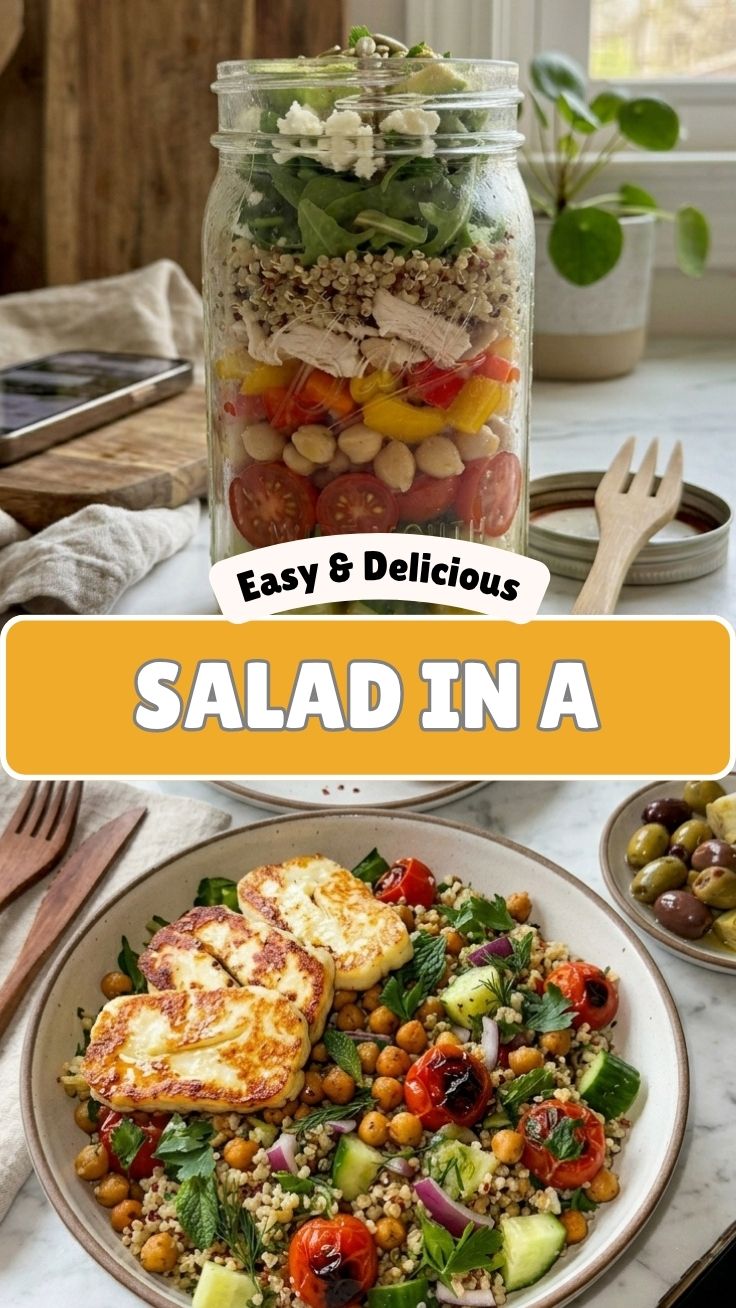
1. Dressing First: Pour your chosen dressing into the very bottom of the clean mason jar. This ensures the greens don’t get soggy.
2. Hard Vegetables: Next, add your hard, non-absorbent vegetables like carrots, bell peppers, and cucumbers. These act as a barrier to the dressing.
3. Protein Power: Layer in your cooked protein or legumes. This adds bulk and keeps you feeling full.
4. Grains/Starches: Carefully add your cooked grains or pasta. These will soak up some dressing but are sturdy enough not to become mushy.
5. Soft Veggies/Fruits: Now, gently add your softer ingredients like corn, peas, or berries. If using avocado, it’s best to add this just before serving.
6. Leafy Greens (Packed Tight): Fill the remainder of the jar with your leafy greens, packing them down snugly. This creates a protective seal and keeps them fresh.
7. Toppings (Optional): If adding nuts or seeds, you can place them on top of the greens, or keep them in a separate small container to add just before eating for maximum crunch.
8. Seal and Store: Securely close the lid and refrigerate your healthy weight loss salad in a jar. When ready to eat, simply shake it vigorously to distribute the dressing and ingredients, then pour into a bowl. This method not only simplifies meal prep but also makes these portable salad recipes an absolute game-changer for on-the-go nutrition.
Nutritional Benefits & Advantages
This layered salad is a powerhouse of nutrition designed for optimal health and weight management. By carefully selecting ingredients, you’re packing in fiber from the plethora of vegetables and grains, promoting satiety and aiding digestion. Lean proteins contribute to muscle mass maintenance, crucial during weight loss, and keep hunger at bay. Healthy fats from nuts and seeds support essential bodily functions and nutrient absorption. Furthermore, controlling portion sizes within the jar naturally helps manage caloric intake without sacrificing flavour or satisfaction. The vibrant array of colours indicates a rich supply of vitamins, minerals, and antioxidants, boosting overall wellness and energy levels.
Tips, Variations & Cooking Advice
- Flavor Profiles: Experiment with different dressings and ingredient combinations. Try an Asian-inspired dressing with shredded cabbage, edamame, and mandarin oranges, or a Mediterranean mix with feta, olives, and sundried tomatoes.
- Protein Swaps: Beyond chicken, think about canned tuna, smoked salmon, or tofu for varying textures and nutritional profiles.
- Grain Alternatives: Farro, bulgur, or even spiralized zucchini noodles can replace traditional grains for a lower-carb option.
- Spice it up: Add a pinch of chili flakes, fresh herbs like cilantro or parsley, or a squeeze of lime juice for an extra zing.
- Dairy-Free/Gluten-Free: Easily adapted by choosing dairy-free dressings, omitting cheese, and using gluten-free grains like quinoa or brown rice.
Common Mistakes to Avoid
- Wrong Layering Order: This is the most critical mistake. Dressing on top, or greens at the bottom, will result in a soggy, unappetizing salad. Always follow the prescribed layering from wet to dry.
- Overfilling the Jar: Leave a little space at the top for shaking and mixing before eating.
- Using Too Much Dressing: While delicious, excessive dressing can add unnecessary calories. Stick to the recommended amount.
- Ignoring Texture: A good salad has varying textures. Don’t forget crunchy elements like nuts or seeds.
- Poor Ingredient Quality: Fresh, high-quality ingredients make a significant difference in taste and nutritional value.
Storage & Meal Prep Tips
These salads are ideal for meal prep. Once assembled, they can be stored in the refrigerator for 3-5 days, depending on the freshness of your ingredients. Ensure lids are tightly sealed to maintain freshness and prevent oxidation. There’s no need to freeze these salads, as freezing would compromise the texture of most ingredients, especially the leafy greens and many vegetables. To enjoy, simply unscrew the lid, give it a good shake to distribute the dressing, and pour into a bowl. They are designed to be eaten cold, making them perfect for a quick and easy office lunch or picnic.
Conclusion
Embracing the art of the jarred salad is a game-changer for anyone aspiring to eat healthier, manage their weight, and simplify their meal prep. This brilliantly conceived method ensures every bite is fresh, flavorful, and perfectly portioned. By following these guidelines, you can effortlessly create a customized healthy weight loss salad in a jar that not only aligns with your dietary goals but also brings joy to your mealtime. Don’t just take our word for it—dive into the world of portable salad recipes and discover the delicious difference for yourself! Share your favorite combinations in the comments below!
FAQs
Q1: How long do these jar salads really stay fresh?
A1: When layered correctly and kept refrigerated, they typically stay fresh for 3 to 5 days. Ingredients like avocado are best added just before serving.
Q2: Can I use any type of dressing?
A2: While most dressings work, oil-and-vinegar based dressings or thicker, creamy dressings layered at the bottom perform best. Vinaigrettes tend to keep ingredients crisper.
Q3: What if I don’t have mason jars?
A3: Any airtight container will work, but mason jars are ideal due to their shape for layering and their secure seal, which prevents leaks and spoilage.
Q4: How do I prevent my greens from wilting?
A4: The key is to layer them last, packed tightly on top of all other ingredients, and ensure a good seal on your jar. The hard vegetables and protein layers act as a barrier to the dressing.
Q5: Can I prepare these with hot ingredients?
A5: It’s best to allow all cooked ingredients (like grains or protein) to cool completely before layering them into the jar. Adding hot ingredients will create condensation, which can lead to sogginess.